


At a glance
- Five Minutes to Help can bridge the gap in care for people after experiencing an overdose.
- When a person refuses EMS transport to the hospital or leaves before being formally registered, first responders can step in to provide appropriate, compassionate care for people with substance use disorder.
- Five Minutes to Help equips responders with the tools to respond effectively in these high-risk situations.
Empowering first responders to address the overdose crisis
First responders of all types, including paramedics, EMTs, fire departments, and law enforcement, respond to drug overdoses daily, often reviving the same person multiple times in a matter of days or even hours. On average, New Jersey's first responders treated 26 overdoses each day in the first half of 2025. According to first responder data, more than 20% of people who experience a drug overdose refuse transportation to the hospital or are transported but leave the hospital before being registered. In these cases, first responders are the only medical professional those patients will see.
New Jersey created the Five Minutes to Help program to support first responders by equipping them with new knowledge and communication skills using a technique called motivational interviewing. They can apply these skills on the scene, after reversing an overdose, to encourage individuals to seek help for addiction and increase awareness of available resources in their community.
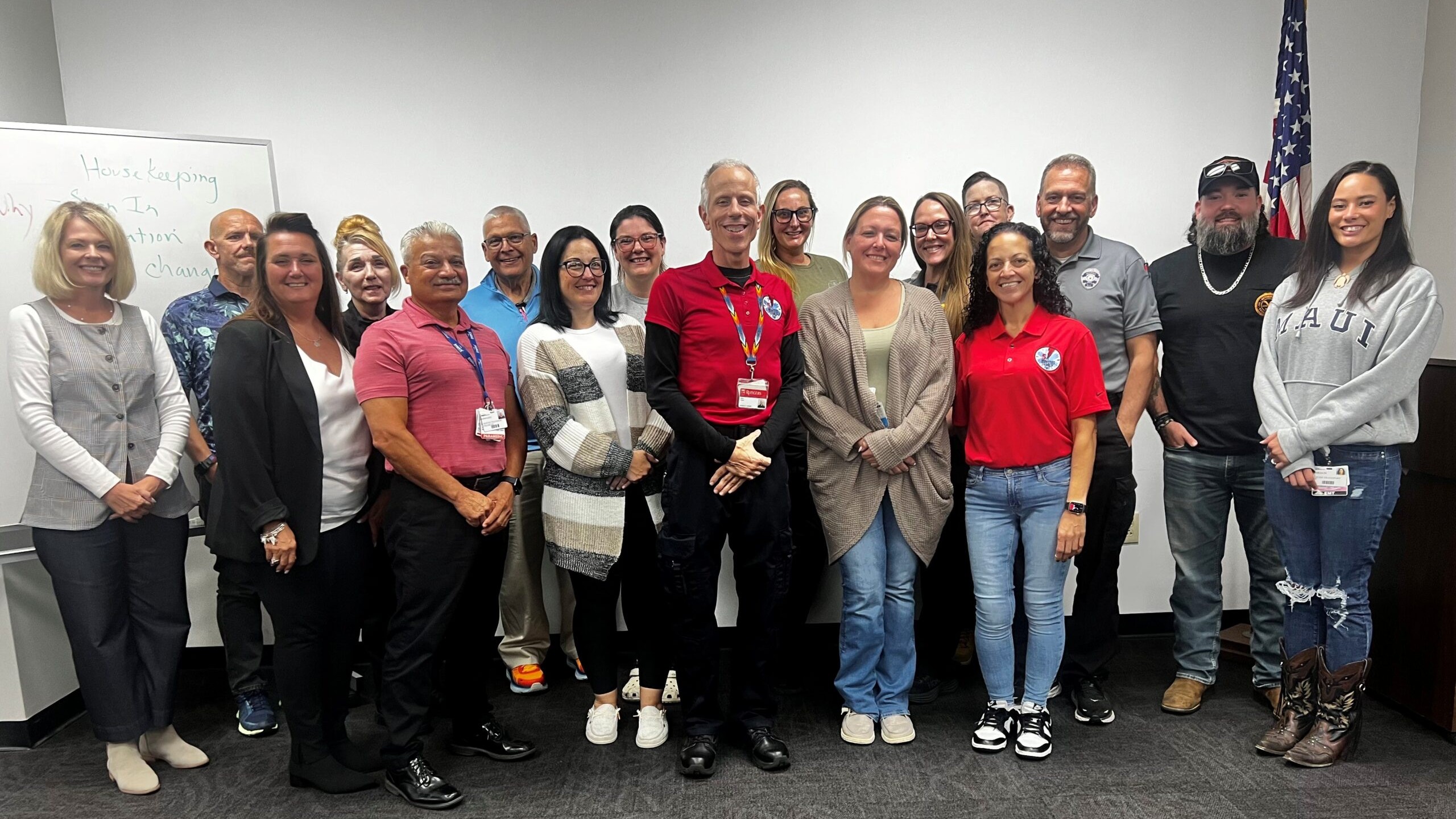
Five Minutes to Help training courses are offered in all 21 New Jersey counties at first responder facilities and training centers. The training consists of a 1-hour online course and a 4-hour course taught by EMS providers to expand on the foundational concepts covered in the introductory module.
Impact of the Five Minutes to Help training
More than 500 first responders have completed the 1-hour introductory course, and over 1,700 individuals, including 225 instructors, have completed the 4-hour provider-level course. Since the program's beginning in 2019, more than 100 in-person and virtual courses have been offered. The expansion to virtual training has enabled participation from first responders in states like Florida, Connecticut, and California.
Five Minutes to Help has led to a positive shift in beliefs and attitudes within the first responder community, which is essential to ensure compassionate and effective care during an overdose response. Neil Tucker, an EMS provider, is a Five Minutes to Help regional coordinator who supports instructors with planning and teaching classes. Since Neil became an instructor for the program in 2020, he has seen a shift in the EMS community's use of "a trauma-informed approach to treating overdose patients." Neil wants EMS providers "to walk away from the training with the resources and skills to help, because there is a solution."
Supporting other public health initiatives and policies
In addition to overdose reversal, EMS providers have a unique opportunity to expand access to medications for opioid use disorder (MOUD). The Five Minutes to Help program played a key role in influencing changes in opioid-related policyA to allow EMS providers to administer buprenorphine to treat opioid withdrawal or manage opioid use disorder (OUD) without first administering naloxone. This policy change significantly expands access to MOUD. In response, New Jersey developed a program to provide OUD education for emergency physicians and specially trained paramedics to improve the patient care experience, initiate MOUD with buprenorphine, and provide linkage to care. Since starting this program, providers have administered buprenorphine more than 300 times. The buprenorphine program is now being expanded statewide, focusing on areas with high rates of suspected overdoses.
In 2021, the state legislature passed the Naloxone Leave Behind policy, which requires first responders to offer resources and naloxone to a patient, friend, or family member after an overdose response if the patient refuses transport to the hospital. In support of the Naloxone Leave Behind policy, the New Jersey Department of Health developed resource recovery bags that contain naloxone and other resources for recovery, treatment, and risk reduction. Five Minutes to Help has increased awareness of the Naloxone Leave Behind policy and has supported the New Jersey Department of Health in distributing approximately 20,000 resource recovery bags to first responder agencies and community-based organizations.
New Jersey is in the process of implementing an electronic rapid referral platform to allow first responders to connect patients with care on the spot. Five Minutes to Help will incorporate information about this platform into training to support the program's expansion across first responder agencies statewide.
New Jersey is funded by CDC's Overdose Data to Action (OD2A) in States cooperative agreement to respond to the drug overdose crisis.
- Executive Directive No. 25-001: https://www.nj.gov/health/ems/documents/ed-25-001-bup.pdf