


At a glance
eNews is the monthly newsletter of the National Institute for Occupational Safety and Health (NIOSH). Each month includes an update from NIOSH Director Dr. John Howard, featured NIOSH research, new worker safety and health resources, upcoming meetings, and more!
From the Director's Desk
John Howard, M.D., Director, NIOSH
The Coal Workers’ Health Surveillance Program: A Legacy of Service
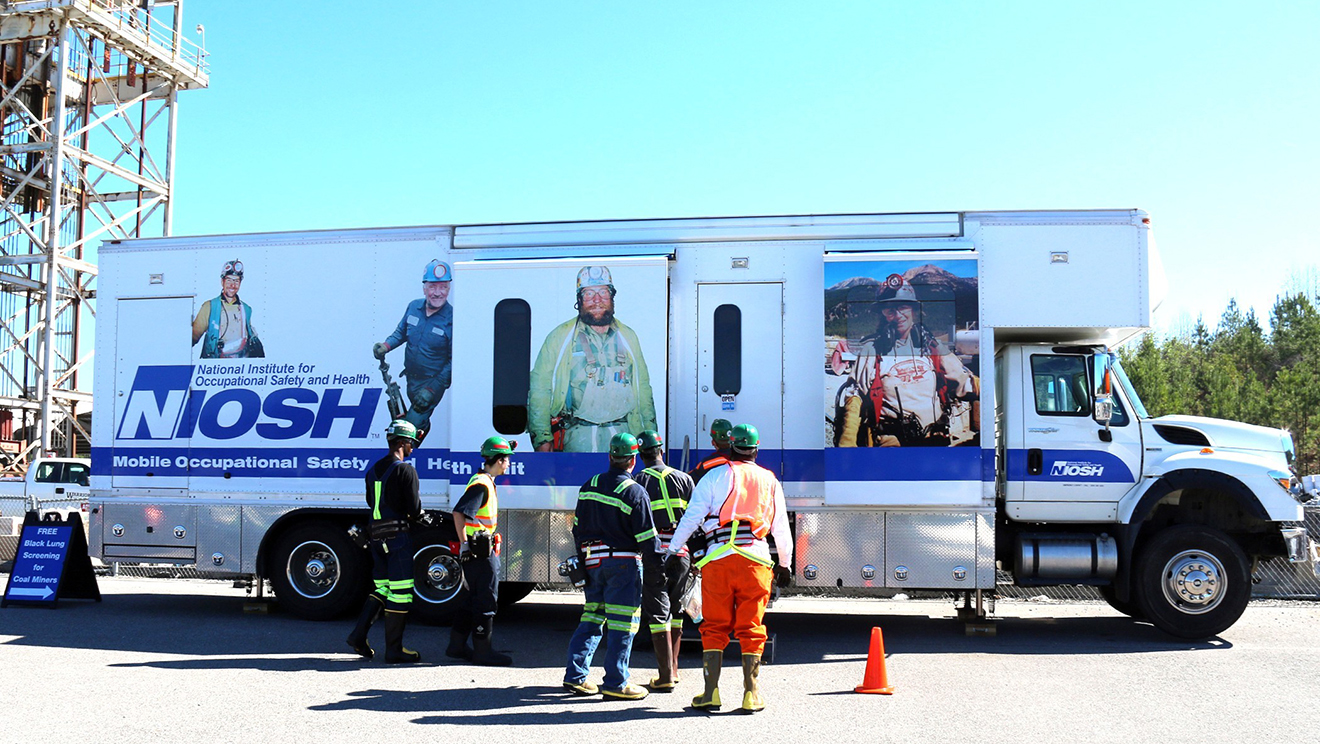
NIOSH's Mobile Occupational Safety and Health Unit parked outdoors, with several workers in safety gear standing in front of the vehicle. The truck displays large images of miners and the NIOSH logo. A sign nearby advertises free black lung screenings for coal miners.
Each year on December 6, we observe National Miners Day to honor our nation's miners. Coal miners are among these workers.
Coal mining is a vital part of the nation's energy mix and economic landscape. Protecting coal miners' health is an important part of coal mining. Coal miners are exposed to dust and other hazards that can threaten their long-term health.
For over 55 years, the NIOSH Coal Workers' Health Surveillance Program (CWHSP) has helped to safeguard the respiratory health of coal miners across the United States. The CWHSP was established under the Federal Coal Mine Health and Safety Act of 1969 to provide free, confidential health screenings for coal miners. The program has served generations of coal miners, offering chest x-rays and spirometry (lung function) tests to detect coal workers' pneumoconiosis (commonly known as black lung) and other respiratory diseases.
Black lung disease is progressive and incurable but can be prevented when exposures are controlled. Its worst effects can be avoided when disease is identified early. For coal miners with early stages of black lung, participation in the CWHSP offers an opportunity for a "Part 90 transfer"— the federally protected right to move to a less dusty area of a mine without losing pay. No other industry in the United States has a comparable nationwide health program. This positions the CWHSP as a model for how medical monitoring can protect workers from chronic occupational diseases.
Screening services
CWHSP also provides medical examinations to coal miners through participating healthcare facilities and its mobile examination unit. In fiscal year 2025 (October 1, 2024 – September 30, 2025), CWHSP processed 4,015 chest x-rays supported by 148 NIOSH-approved healthcare facilities.
A vital part of the CWHSP is its mobile examination unit, which brings screenings directly to miners in underserved areas. By expanding access, the program upholds its core mission of detecting respiratory disease in coal miners, regardless of where they live or work.
In 2025, the CWHSP conducted field surveys across northern Appalachia, including Pennsylvania, Ohio, Maryland, and West Virginia.
A banner year for spirometry
Spirometry is a breathing test that helps to identify black lung, asthma, chronic obstructive pulmonary disease (COPD), and other conditions affecting the lungs. The CWHSP spirometry program is supported by a network of 50 clinics certified to give spirometry tests. Having multiple clinics ensures access to essential lung function testing across the nation's coalfields. The spirometry component of the CWHSP achieved notable progress in fiscal year 2025, issuing reports for 1,934 spirometry tests, which is the highest number since 2020.
Supporting the nation's coal miners
The CWHSP provides miners with the information they need to protect their health and informs public health research and prevention. By identifying disease patterns in the workforce, the program contributes to improved dust control and strengthens occupational health guidance. In this way, the CWHSP delivers value not only to coal miners and their families, but to the entire nation.
Research Rounds
Evaluation Of Chemical Exposures Generated From N-free Nail Polishes
NIOSH study authors: Kimberly R. Anderson, Perri Callaway, and M. Abbas Virji
Why is this study important?
Nail-salon workers are exposed to dozens of chemicals, including formaldehyde, toluene, and benzene, that could affect reproductive health. Many of these workers are women of child-bearing age. To meet a growing demand for safer products, manufacturers are marketing nail polishes as being free from harmful ingredients ("n-free" products). However, studies have found that ingredient listings may be inaccurate, and products marketed solely for salon use are not required to list ingredients. Understanding the chemical ingredients in nail polishes may help protect workers using these products.
How did you do the study?
We used a stainless-steel chamber in a laboratory to simulate the environmental conditions of a nail salon and measured the amount of harmful chemicals in the air. To do so, we set the air flow in the chamber to match the air flow of a typical nail salon. We placed a manikin's hands, representing a customer, in the chamber and painted the manikin's nails using 19 different n-free nail products (80 trials total). During the nail painting and for two hours afterwards, we measured chemical levels in the air around the manikin and normalized the results to the mass of polish applied to the nails. We then compared these measurements to those obtained by using a standard nail polish that was not labeled n-free.
What did you find?
All the nail polishes tested, including those claiming to be n-free, contained formaldehyde, toluene, and benzene in various concentrations:
- Formaldehyde: 0.021 to 0.273 ppm/g, or parts per million per gram nail polish used during manicure
- Toluene: 0.068 to 0.534 ppm/g
- Benzene: 0.076 to 0.752 ppm/g
None of the nail polishes contained dibutyl phthalate or triphenyl phosphate. This was likely due to the measurement method not being sensitive enough to detect these compounds.
What are the next steps?
To reduce chemical exposures in nail salons, additional studies are needed to understand when and how these exposures occur. An important area to study is additional nail products for other manicure types (gel, dip, or acrylic) to better understand exposures that contribute to adverse health effects in nail salon workers.
Highlights
Working in Cold
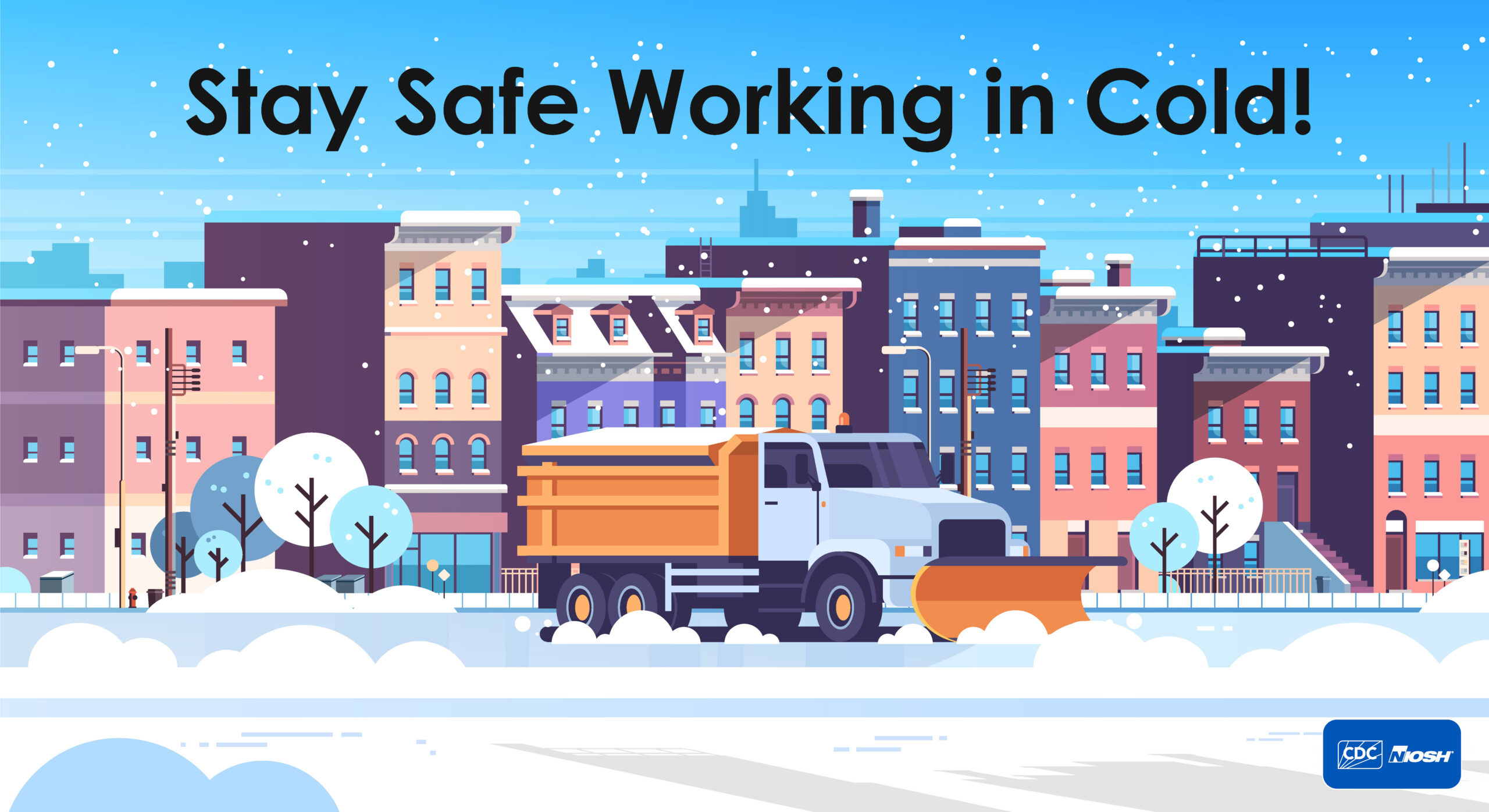
As winter approaches and the temperatures begin to drop, NIOSH wants to remind you of the importance of staying safe when working in cold weather. Workers exposed to extreme cold or cold environments may experience cold stress and are at risk for cold-related illnesses such as hypothermia, frostbite, trench foot, and chilblains. NIOSH resources are available to make sure you stay safe and warm throughout the winter. And don't forget – staying safe doesn't mean compromising your PPE! Use these resources to make sure you are safely wearing your PPE in cold weather.
Become an NFR Champion!
Join NIOSH in the fight to understand and reduce cancer in the fire service. Fire service and other organizations that actively promote and share the National Firefighter Registry (NFR) for Cancer with their networks can be recognized as NFR Champions. NFR Champions receive a certificate of appreciation, a website badge, and social media posts to announce their recognition. Twenty organizations have been recognized in 2025 so far. Visit the NFR Champions webpage to learn more.
NIOSH Evaluates Fraudulent Respirator Components
A new NIOSH PPE Case Report details the results of a pilot study testing of fraudulent respirator components. The study NIOSH found that nearly all fraudulent respirator components tested failed to meet all three required performance tests. This highlights the possibility that fraudulent products may provide consumers with a false sense of confidence that they are receiving the same level of protection as filters and cartridges that are part of a NIOSH Approved respirator configuration provide.
NIOSH Approved is a registered certification trademark of the U.S. Department of Health and Human Services (HHS) in the United States and several other countries.
Protecting First Responders with Truck-Mounted Attenuators
Wesley Attwood, PhD, Senior Investigator for the NIOSH Fire Fighter Fatality Investigation and Prevention Program, recently joined the Don't Risk It podcast. Dr. Attwood discussed truck-mounted attenuators as a risk mitigation tool for emergency service organizations to protect their crew. Learn how these energy-absorbing cushions can be mounted to emergency vehicles to help absorb the impact of impending vehicles and better protect responders.
Update on the World Trade Center Health Program's Youth Research Cohort
The World Trade Center (WTC) Health Program is making headway to establish a research cohort that will enable future studies on the health and educational impacts on anyone aged 21 years or younger at the time of their 9/11 exposures. The WTC Health Program is seeking researchers and community partners to collaborate on outreach, recruitment, and retention of potential youth research cohort participants. Share the recent notice of funding opportunity forecast with friends or colleagues to spread awareness on future opportunities to support this effort.
Federal Register Notices
Agency Forms Undergoing Paperwork Reduction Act Review: "Formative Respirator and Protective Clothing Laboratory Testing"
The notice was posted on November 21. Comments must be received by December 19.
New Communication Products
Annual Report

FACE Reports
- Agriculture Fatality Narrative: Slaughterhouse Worker Crushed in Cattle Chute Door— Washington
- Agriculture Fatality Narrative: Temp Worker Crushed by Rollaway Forklift at Family Farm—Washington (Spanish)
- Construction Fatality Narrative: Framer Falls 8 Feet from Rim Joist—Washington (In Spanish)
- Construction Fatality Narrative: Day Laborer Burned in Adhesive Explosion—Washington (In Spanish)
- Construction Fatality Narrative: Roofer Falls 45 Feet Through Skylight—Washington
Fire Fighter Fatality Investigation and Prevention Program Report
- Volunteer Firefighter Dies and Second Injured in Privately Owned Vehicle Crash—Louisiana (Report Slides)
PPE CASE Reports
Fraudulent Cartridges and Filters Fail to Meet NIOSH Performance Requirements
News From Our Partners
Northeast Center and New York Center for Agricultural Medicine and Health Announce 2025 Hero Award Recipient
Dr. Jennifer Lincoln of NIOSH is the recipient of the Northeast Center for Occupational Safety and Health eighth annual Hero Award. This award recognizes Dr. Lincoln's lifelong commitment to protecting the health and safety of America's agricultural, forestry, and fishing workers. Read the press release.