



Key points
- New World screwworm (NWS) is a species of fly that causes obligate myiasis in the living tissue of warm-blooded animals and humans.
- Infestations occur in people with breaks in the skin, no matter how small; they can also occur in the eyes, ears, nose, mouth, genitals, and anorectal area.
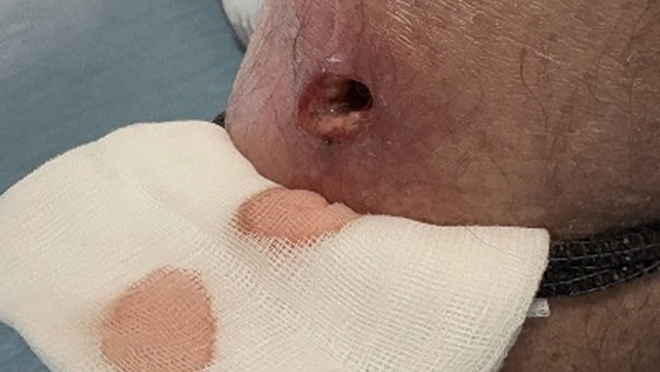
- NWS myiasis patients often have a rapidly worsening, foul-smelling wound with significant pain; some patients may see or feel larvae (maggots) moving in wounds.
- Treatment for NWS myiasis requires physical removal of all larvae.
- Report all suspected NWS to the local public health jurisdiction immediately.
Cause
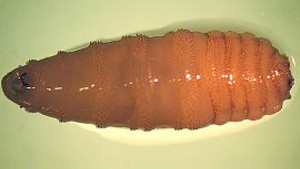
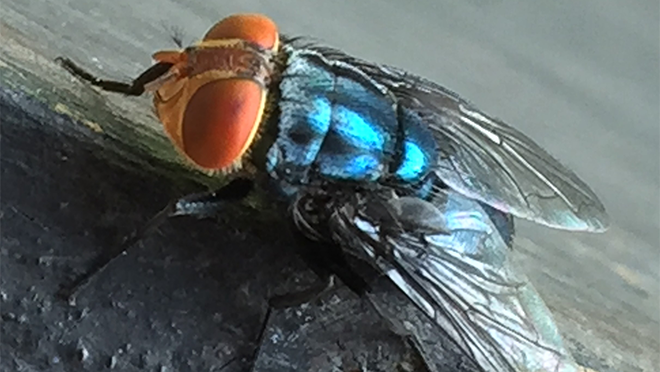
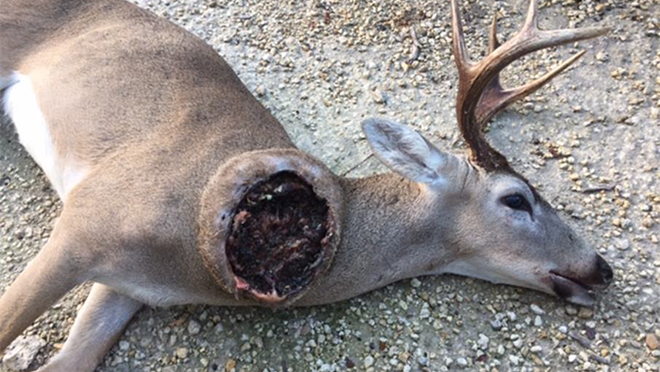
New World screwworm (NWS) infestation is a type of myiasis that occurs when NWS fly larvae (Cochliomyia hominivorax) feed on the living flesh of warm-blooded animals. Most NWS myiasis cases are reported in livestock, but they do infest pets, wildlife, birds, and humans. The screwworm flies are attracted to open wounds and mucous membranes, where they lay their eggs.
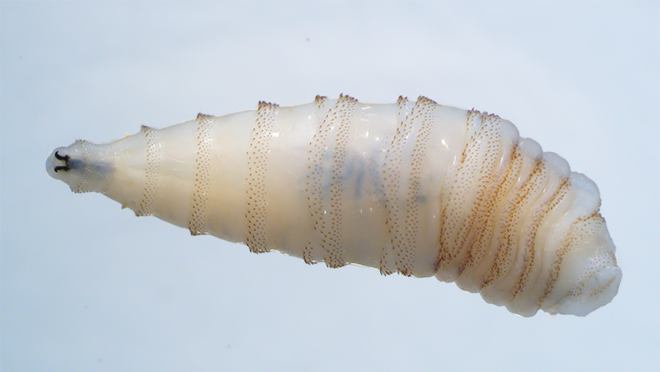
The name screwworm refers to the feeding behavior of the larvae as they burrow (screw) into healthy tissue. NWS larvae cause extensive damage by tearing into the host's tissue with sharp mouth hooks. The wound can become larger and deeper as more larvae hatch and feed on living tissue. Secondary bacterial infections can also occur because of NWS infestations.
Risk factors
NWS is endemic in the American tropics and subtropics, which includes most countries of South America, Cuba, Haiti, and the Dominican Republic. Central America and Mexico are experiencing a re-emergence of NWS that has resulted in cases in both animals and humans for the first time in decades. In the United States, cases have occurred in animals and in travelers returning from affected areas.
People at higher risk include those who live in or travel to areas with NWS flies and:
- Have open sores or wounds, even small wounds such as scratches, insect bites, or recent surgical sites.
- Have medical conditions that can cause bleeding or open sores (like skin or sinus cancer).
- Spend a lot of time outdoors.
- Sleep outdoors or are physically or mentally incapacitated and unable to keep flies away during the daytime.
How it spreads
New World screwworm infestations begin when a female fly lays eggs on a wound or orifice of a live, warm-blooded animal. The odor of a wound or body orifice such as the nasal cavity, eyes, ears, mouth, umbilicus of a newborn, or genitalia attracts female flies. Even very small wounds, such as a tick bite or superficial scratch, may attract a female fly to lay eggs.
One female can lay 200-300 eggs at a time and may lay up to 3,000 eggs during her 10- to 30-day lifespan. Female flies mate only once in their lifespan, a biological feature that allows for the use of sterile male flies to control and eliminate NWS populations.
Eggs hatch into larvae that burrow into the wound to feed on the living flesh. After about 7 days of feeding, larvae drop to the ground, burrow into the soil, and pupate. The adult screwworm fly emerges from the soil after 7-54 days depending on temperature and humidity. Both rural and urban environments can support the conditions required for the NWS lifecycle.
Clinical features
How to spot an infestation
Consider NWS in patients who
- Report recent travel to regions where NWS is present
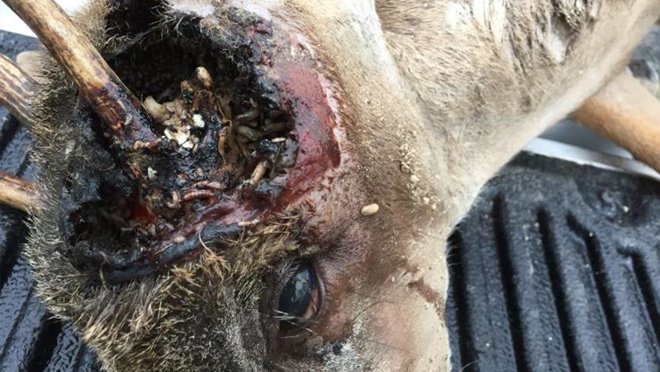
- Have visible larvae or egg masses in a wound, ears, eyes, nose, mouth, or other body orifice
- Have rapidly progressing and painful wounds with foul odor, bloody discharge, and swelling in otherwise healthy tissue
- Report sensation of movement in wounds or body orifices
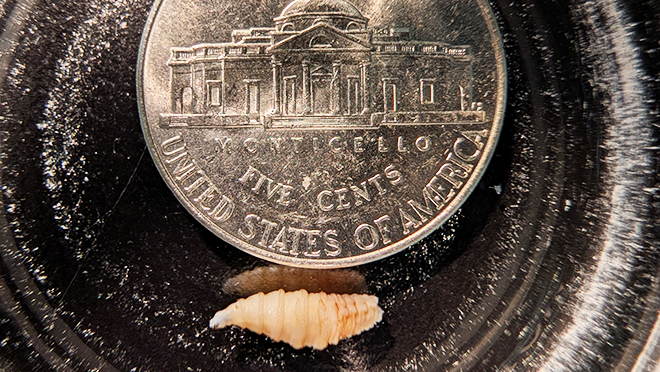
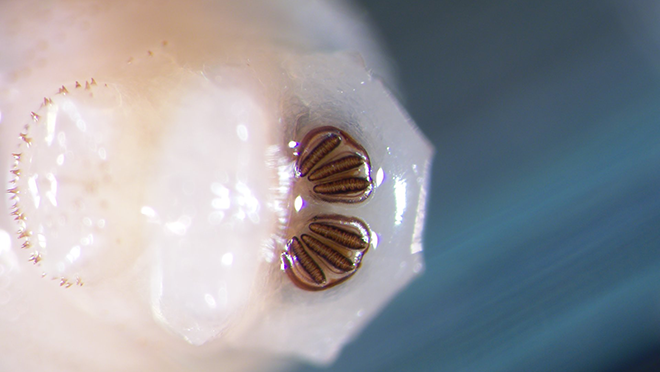
Because they feed on live flesh, NWS larvae may burrow deep into wounds or openings as they develop into later larval stages (i.e., instars). This is different from other species of larvae that may appear only around the outer surface of the wound.
Prevention
In areas where NWS is present, advise patients to
- Clean and cover all wounds, no matter how small or the location on the body.
- Protect their skin and prevent insect bites by
- Using an EPA-registered insect repellent.
- Treating clothing and gear with products containing 0.5% permethrin.
- Wearing loose-fitting, long-sleeved shirts and pants, hats and socks to limit access to your body by NWS flies and biting insects.
- Avoid sleeping outdoors where possible, especially during the daytime. If sleeping outdoors cannot be avoided, use a bed net or sleep inside a screened tent.
Specimen identification
Report all suspected human cases immediately to the local or state public health department (Epi on Call).
Larval species identification for suspected human cases is available through CDC's Diagnostic Parasitology Laboratory, DPDx, at dpdx@cdc.gov.
Specimen handling and submission
Submit larvae for clinical diagnosis and confirmation at CDC.
- Send at least 10 larvae. If you have fewer than 10, submit them all.
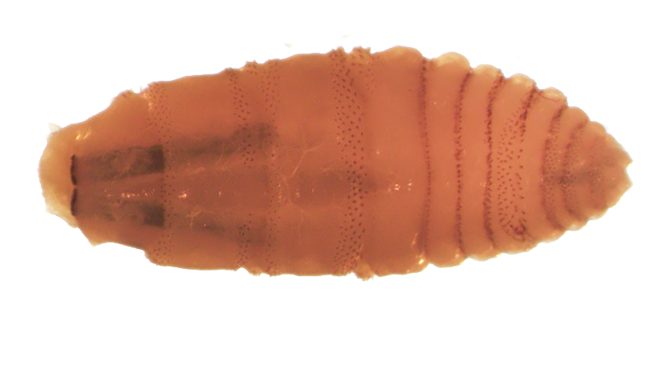
- Larvae of different sizes represent different developmental stages. If multiple stages of larvae are present in the lesion, try to include a representative sample from each stage. Email dpdx@cdc.gov for specimen submission instructions.
- Place larvae and eggs in a leak-proof container with alcohol, either 70% ethanol (preferred) or ≥70% isopropanol. The volume of liquid should be sufficient to fully submerge larvae and eggs.
- The alcohol will both kill and preserve them for identification.
- 5% – 10% formalin is an acceptable alternative preservative for identification if ethanol or isopropanol are not available.
- Collect the remaining larvae and eggs in a separate leakproof container, submerge them in alcohol, place the container into a zip-top plastic bag, and seal it. Dispose of the sealed bag in the trash or medical waste.
Do not throw any live maggots in the trash or outside as this could result in establishment of NWS populations in the local area.
Image gallery
Treatment
Use standard precautions when treating wounds and handling larvae.
Remove and kill ALL visible larvae and eggs in patients with suspected NWS. This may require surgical removal. Failure to kill and properly dispose of all larvae and eggs may result in the introduction and spread of NWS in the local environment (see specimen handling and submission).
Reexamine treated lesions after 24 – 48 hours to confirm no larvae remain. Remove and safely dispose of any remaining larvae as described above.
Monitor for and treat secondary bacterial infections as needed.
Direct clinical inquiries and patient management-related questions to your health department or to CDC's Parasitic Diseases Hotline (404-718-4745 or parasites@cdc.gov) during business hours, or to CDC's Emergency Operations Center (770-488-7100) after regular business hours.
Animal impact
NWS can be particularly devastating to livestock health, with serious economic impacts. Human cases can be an indication of a local population of flies and possible infestations in animals. Areas where human infestations are identified will need to be evaluated by agriculture, wildlife, and public health officials for implementation of control measures, therefore immediate reporting of human cases is critical.
Questions about infestations in any animal, whether livestock, pets, or wildlife, should be directed to a veterinarian or animal health official. Visit screwworm.gov for more information about NWS in animals.
Veterinarians should report any suspected animal cases immediately to their state animal health official and APHIS office. CDC cannot assist with clinical management or larval identification in animal myiases.
This page was last updated on this date. Updates may include minor edits, image changes, or other modifications to page content.
The information on this page was last reviewed by subject matter experts to ensure accuracy.