



At a glance
The Binational Border Infectious Disease Surveillance (BIDS) program works with U.S. southern border states to improve binational detection, reporting, and prevention of infectious diseases.
About BIDS
The BIDS program partners with the U.S.-Mexico Border Health Commission and the Naval Health Research Center to enhance surveillance and control of infectious diseases of binational importance. These diseases are ones that affect both the United States and Mexico, especially those that can spread through travel between the two countries. This work is essential to protecting the health of travelers and communities along the U.S. southern border region. In alignment with the Global Health Security Agenda, BIDS projects address priority diseases including tuberculosis, vector-borne and foodborne diseases, influenza and other respiratory diseases, and infections caused by antimicrobial-resistant bacteria.
Program goals
- Improve binational infectious disease surveillance along the U.S. southern border region by enhancing data and notification systems to track and respond to binational events
- Develop strategies to control infectious diseases in the U.S. southern border regionA
- Strengthen bilateral infectious disease preparedness and response through partnerships and implementation of the Operational Protocol for Binational Communication and Coordination on Disease Notifications and Outbreaks
Support to states
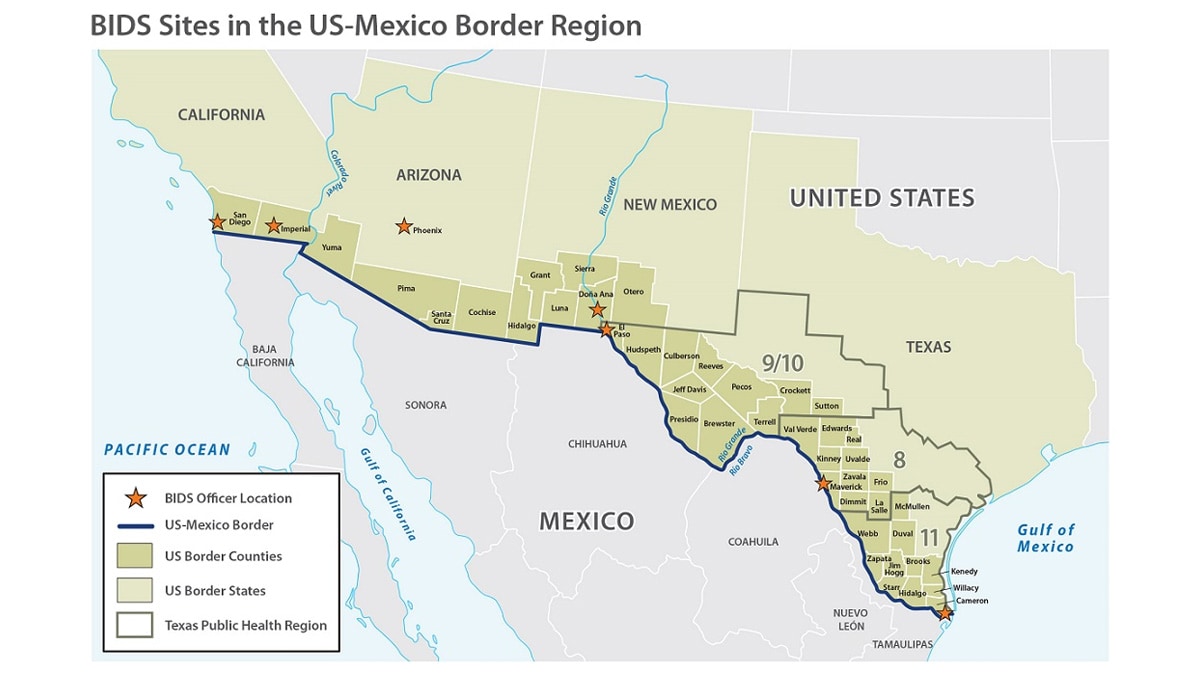
CDC provides guidance, coordination, resources, and technical assistance to state public health agencies to enhance disease detection and address unique epidemiologic and control needs of the diverse and dynamic border region. Projects involve local health agencies and other key partners.
State partners:
- Arizona Department of Health Services (ADHS)
- California Department of Public Health (CDPH)
- New Mexico Department of Health (NMDOH)
- Texas Department of State Health Services (DSHS)
Activities
Surveillance
BIDS partners tailor surveillance activities to local disease control priorities and may also conduct special projects to inform surveillance needs. Examples include:
- Enhancing surveillance systems to identify binational cases and facilitate binational contact investigations
- Surveillance for respiratory illnesses in border communities and travelers
- Conducting surveys at land ports of entry to understand travelers' mobility patterns, knowledge, attitudes, and practices related to infectious diseases
- Conducting investigations of binational contacts of people with reportable infectious diseases
Communication and preparedness
BIDS promotes systematic communication and preparedness among partners for infectious disease cases and outbreaks of binational importance.
Examples include:
- Creation and adoption of the:
- Technical Guidelines for United States-Mexico Coordination on Public Health Events of Mutual Interest
- Operational Protocol for Binational Communication and Coordination on Disease Notifications and Outbreaks
- Infectious Disease Prioritization for Multijurisdictional Engagement at the United States Southern Border Region
- Coordination and facilitation of public health preparedness exercises to build binational partnerships with Mexico and test communication pathways
BIDS past to present
U.S. and Mexican federal and border state health authorities have been collaborating since 1999 to detect and monitor infectious diseases along the U.S.-Mexico border. Since then, the BIDS program has evolved to address changing epidemiologic and preparedness priorities.
To learn more about how BIDS started, read the U.S.-Mexico Border Infectious Disease Surveillance Project: Establishing Binational Border Surveillance (2003)
- The U.S.-Mexico border region is made up of 44 counties across four U.S. states and 80 border municipios across six Mexican states within 62 miles (100 km) of the 2000-mile-long (3218 kilometers) international border line.