



At a glance
CDC works with the Mexico Ministry of Health (SALUD) to address public health challenges like infectious disease outbreaks and emergency and disaster preparedness and response. This partnership focuses on preventing disease threats by improving surveillance, including laboratory systems, and preventing and controlling antimicrobial resistance through joint efforts to strengthen workforce capacity, policy, communications, and health diplomacy.

About the CDC Mexico Country Office
The CDC Mexico Country Office (CDC Mexico) was established in 2011 as part of CDC's Division of Global Migration Health (DGMH), Southern Border Health and Migration Branch (SBHMB). CDC Mexico collaborates with Mexico health officials to prevent the spread of diseases among binational communities and mobile populations that travel between both countries.
As new health challenges emerge, CDC Mexico provides technical support for:
- Investigating and controlling binational and international infectious disease outbreaks
- Enhancing binational surveillance, laboratory capacity, and illness response
- Communicating with U.S. and foreign government officials on policies critical to binational health
CDC's impact in Mexico
Binational Technical Working Group (BTWG)
The BTWG was established in 2012 to address mutual public health concerns because of the interconnectedness between the United States and Mexico.
The BTWG assesses and advises on binational public health issues and assists with developing binational public health initiatives or policies for the two countries. This work is possible through collaboration among public health officials from U.S. and Mexico border states, CDC, and SALUD.
Co-led by CDC Mexico and SALUD, this group of subject matter experts meets regularly to exchange information about infectious diseases in the border region and discuss research initiatives, epidemiologic trends, and tools that can be implemented binationally.
Disease surveillance
CDC Mexico collaborates with the Binational Border Infectious Disease Surveillance (BIDS) program, working with U.S. southern border states to improve binational disease detection, reporting, and prevention of infectious diseases.
Since 2023, CDC Mexico has been supporting SALUD in developing a national primary care antimicrobial resistance (AMR) surveillance system and supporting Laboratory Response Network capacity-building and coordination.
Tuberculosis (TB)
TB remains a leading cause of infectious disease deaths worldwide. CDC Mexico provides technical support to fight TB in Mexico and works with the CureTB program to ensure patients relocating between countries get treatment for TB disease.
CDC Mexico supports the National Action Program for the Prevention and Control of Tuberculosis by studying the use of TB blood tests (also called interferon-gamma release assays or IGRAs) to diagnose TB infection in people with high-risk for developing TB disease, such as those with HIV, diabetes mellitus, and children under 5 years of age, who have had close contact with someone with infectious TB.
In previous years, through a cooperative agreement, CDC Mexico supported SALUD in the development of national TB surveillance platform that is now the gold standard for data collection for TB cases in Mexico.
Laboratory
Detecting threats early is critical to America's health security as it offers an opportunity to either contain pathogens before they reach the United States and to rapidly prepare for, and respond to, the medical and societal consequences that they can cause.
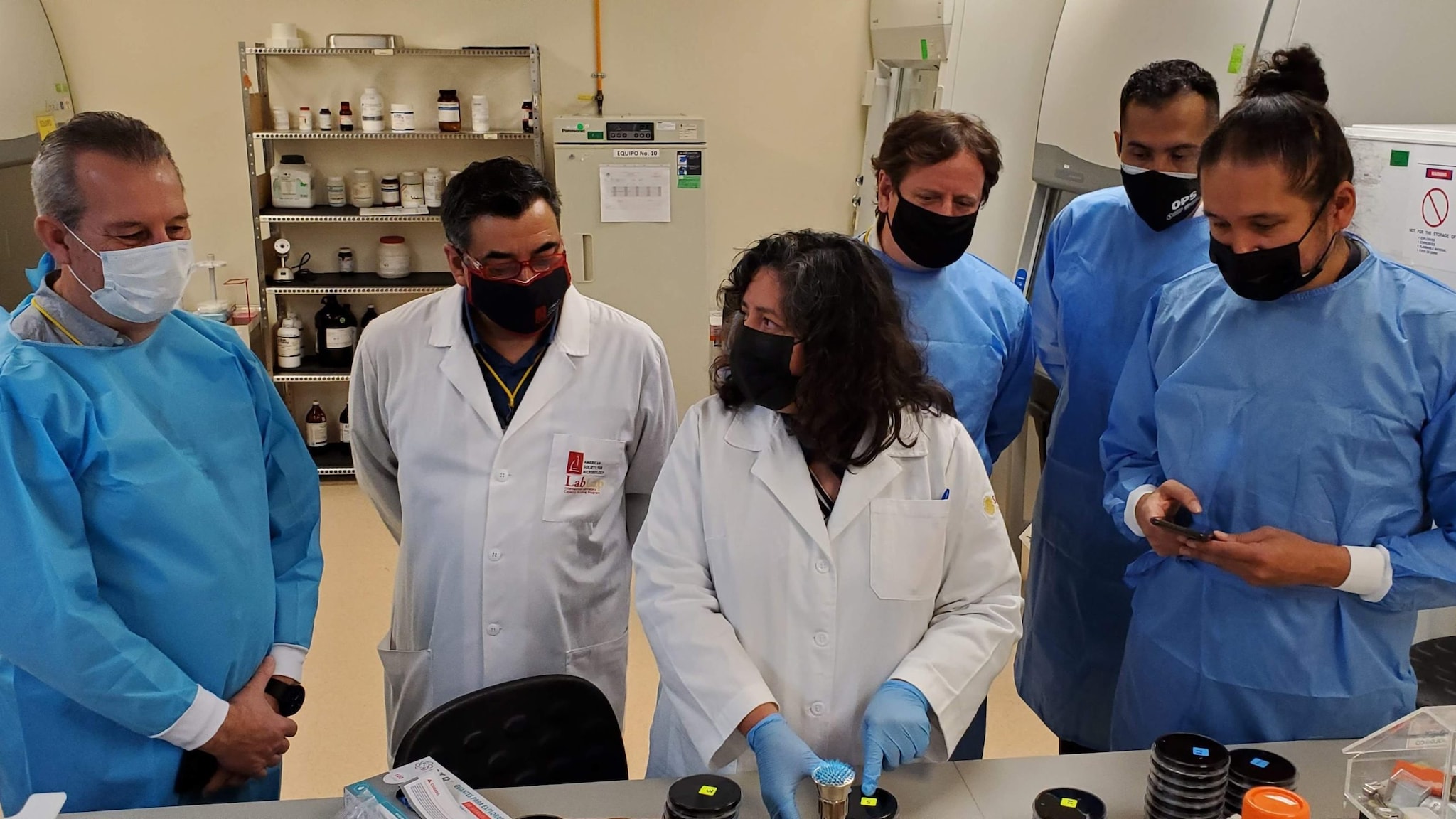
CDC Mexico works with SALUD to strengthen surveillance and laboratory capacity in the border regions and in Mexico, focusing on infectious disease monitoring, early detection, and rapid response capabilities. CDC Mexico's long-standing collaboration with InDRE has also resulted increased capacity around response efforts focused on avian influenza, pertussis, and tuberculosis.
Influenza
CDC and the Mexico Health Secretariat have a decades-long influenza surveillance collaboration. The year-round surveillance allows for early detection and identification of seasonal influenza viruses and new influenza A viruses that may be able to cause a pandemic. The collaboration is also using new technology to improve existing reporting tools.
COVID-19
CDC supported the Mexican Secretariat of Health with $3.168 million through a cooperative agreement with the U.S.-Mexico Foundation for Science during 2020 to 2022. Funds were used to conduct the first nationally representative COVID-19 serosurvey (investigation that measures the proportion of people in a community that have antibodies to a given germ in the blood), epidemiological surveillance, risk communication, and population mobility analysis into and throughout Mexico.
Policy, communications, and diplomacy
CDC'S health diplomacy strengthens Mexico's capacity to prevent, detect and respond to public health threats through public health systems. Regular, ongoing communication between CDC Mexico and SALUD subject matter experts and public health officials contribute to the mission of the U.S. Embassy in Mexico, which allows for efficient and effective creation of communications protocols producing a swift public health response.
Investing in global health initiatives and addressing global health challenges builds goodwill and trust, and reinforces the United States' position as an effective global health leader while championing healthier communities on both sides of the border.
- The U.S.-Mexico border region is made up of 44 counties across four U.S. states and 80 border municipios across six Mexican states within 100 km (62 miles) of the 2000-mile-long international border line.