 An official website of the United States government



Talk To Your Teen

Talking to your teen
Talking about drugs, alcohol, and mental health with your teen can feel awkward at first. But with practice, open and honest conversations can become a regular part of your relationship.


In a hurry to have a talk? Get prompts, and a few tips and stats, to start a conversation.
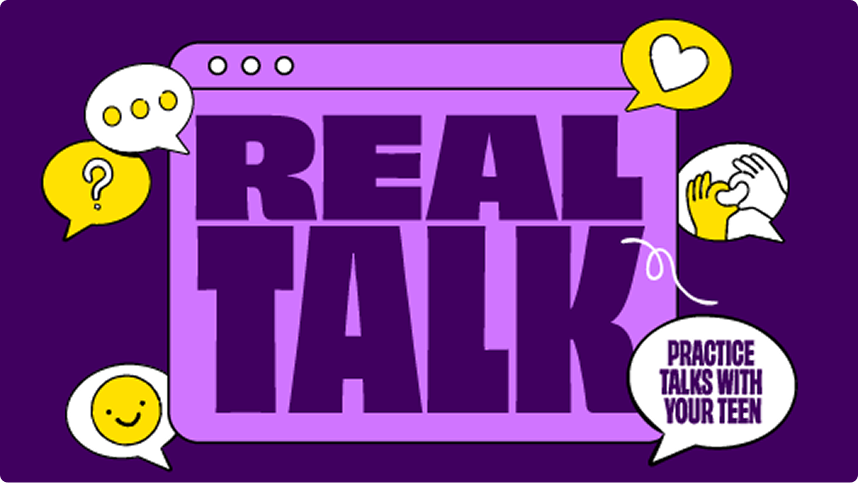
Are you worried about a change in behavior? Did you find something? Practice a conversation about common substance use and mental health concerns here.
These three tips can help you spark open and honest conversations.

Tip 1: A Little Prep Goes a Long Way
As a parent or caregiver, it’s important to understand how teens can be affected by substance use and mental health conditions—and how these two issues may be connected. Even though being a teen today looks different than when you were growing up (think social media and AI), many of the pressures and substance-related struggles teens face are still the same. Learning about today’s drugs and being open and honest can help you connect and guide your teen.
Tip 2: Create a Safe Space
Be sure to create a safe space for both adults and teens and lead with compassion. Instead of a pointed or leading question, be evenhanded and nonjudgmental in your approach. An example of nonjudgmental tone can be, “You’ve seemed down lately. Wanna talk?” Having a conversation while doing a shared activity or when drugs, alcohol, and mental health are in the news is also a natural way to encourage a more open conversation. You can use tools such as our the digital card game “Facts and Feels” that has questions and answers to help break the ice.
Tip 3: Reflect and Act
Now that you’ve had one conversation, encourage additional discussions and allow your teen time to reflect on some of the hard questions. And remember, it’s about presence, not perfection. Showing that you care can make a difference even if the conversation doesn’t go as planned. Be sure to remind them that the door is always open if they want to talk.

If you think your teen needs help
Even if you don’t have an immediate solution to their problems, being empathetic and showing that you will help them find a solution can mean the world. It’s important to remember that you aren’t in this alone. Between school counselors, free resources like 988 lifeline, and treatment centers, you can create a care team to help your teen get the help they need.

Keep the conversation going with this interactive question-based game about substance use, mental health, and the link between the two.