
Key points
- Raw chicken can contain foodborne germs that can make you sick.
- Use a food thermometer to make sure chicken is cooked to a safe internal temperature of 165°F.
- Keep raw chicken and its juices away from ready-to-eat foods, like salads or food that is already cooked.
- Raw chicken is ready to cook and doesn't need to be washed first.
Why it's important
In the United States, people eat chicken1 more than beef, pork, or turkey. When cooked, chicken can be a nutritious choice, but raw chicken can be contaminated with Campylobacter, Salmonella, or Clostridium perfringens germs.
If you eat undercooked chicken, you can get food poisoning. You can also get sick if you eat other foods or beverages that are contaminated by raw chicken or its juices.
CDC estimates that Salmonella causes more foodborne illnesses than any other bacteria. Chicken is a major source of these illnesses. Every year in the United States about 1 million people get sick from eating contaminated poultry.
Spotlight on Salmonella
Prevent food poisoning from chicken
If chicken is on your menu, follow these tips when shopping, cooking, and eating out to help prevent food poisoning.
At the store
Place chicken in a disposable bag before putting it in your shopping cart or put it in the bottom of the cart to keep raw juices from getting onto other foods.
In the refrigerator
Keep your chicken stored on the bottom shelf of the refrigerator in a sealed container or wrapped securely so the juice doesn't leak onto other foods.
Prepping chicken
- Wash hands with soap and water for at least 20 seconds before and after handling raw chicken.
- Raw chicken is ready to cook. It doesn't need to be washed first. According to a USDA study2, 1 in 7 people who cleaned their sink after washing chicken still had germs in the sink.
- If you choose to wash chicken, do so as safely as possible:
- Run the water gently over the chicken to reduce splashing.
- Immediately clean the sink and area around the sink with hot, soapy water and sanitize them thoroughly.
- Wash your hands for 20 seconds.
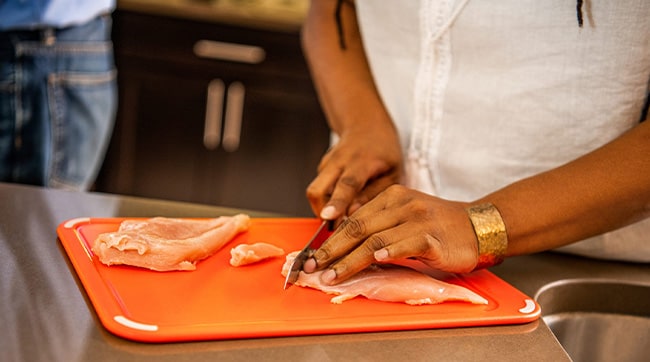
- Use a separate cutting board for raw chicken. Never place cooked food or fresh produce on a plate, cutting board, or other surface that previously held raw chicken.
- Wash cutting boards, utensils, dishes, and countertops with hot, soapy water after preparing chicken and before you prepare the next item.
While cooking
- Use a food thermometer to make sure chicken is cooked to a safe internal temperature of 165°F.
- If cooking a microwaveable meal that includes frozen raw chicken, handle it as you would fresh raw chicken. Follow cooking directions carefully to prevent food poisoning.
- If you think the chicken you are served at a restaurant or anywhere else is not fully cooked, send it back for more cooking.
After eating
Refrigerate or freeze leftover chicken within 2 hours (or within 1 hour if the food is exposed to temperatures above 90°F, like in a hot car or at a picnic).