



What to know
Proper vaccine storage and handling plays a critical role in efforts to prevent vaccine-preventable diseases. Vaccines and other immunizing agents (e.g., RSV monoclonal antibodies) exposed to temperatures outside the recommended ranges may have reduced potency, resulting in decreased protection and the need to revaccinate patients.
Cold Chain Basics
Effective storage and handling starts with maintaining a reliable vaccine cold chain—a temperature-controlled supply chain that includes all vaccine-related equipment and procedures. The cold chain begins with the cold storage unit at the manufacturing plant, extends to the transport and delivery of the vaccine and correct storage at the provider facility, and ends with administration of the vaccine to the patient.
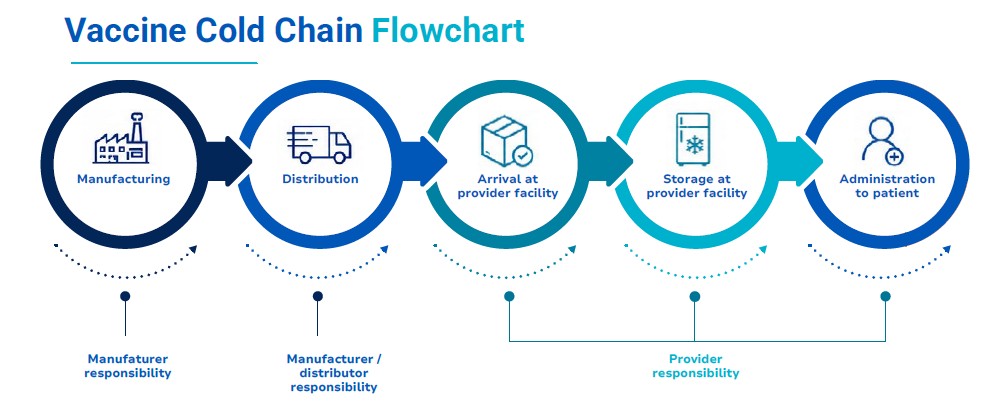
An effective cold chain depends on three key elements:
- Well-trained staff
- Reliable storage and temperature monitoring equipment
- Accurate vaccine inventory management
Why the Cold Chain Matters
Failure to maintain the cold chain can cause vaccines to lose potency so they become unusable. Potency decreases every time a vaccine is exposed to improper conditions, such as temperatures outside the recommended range at any point in the cold chain. For some vaccines, exposure to light also reduces vaccine potency. Once potency is lost, it cannot be restored. For refrigerated vaccines, a single exposure to freezing temperatures (0°C [32°F] or colder) can completely destroy vaccine potency.
Vaccine appearance is not a reliable indicator that vaccines have been stored in appropriate conditions. For example, inactivated vaccines—even when exposed to freezing temperatures—may not appear frozen, giving no visual indication of reduced or lost potency.
According to General Best Practices for Immunization,
- Vaccines stored at inappropriate temperatures should not be administered unless public health authorities or the manufacturer confirm they are safe and effective based on stability data.
- If such vaccines have already been administered, doses should generally be repeated.
Failure to maintain the cold chain can result in extra doses for patients, increased wastage and costs for providers, and damage to public confidence in vaccines. Most importantly, patients refusing revaccination can remain unprotected from potentially serious, vaccine-preventable diseases. By following proper storage and handling practices, providers can ensure patients receive effective vaccines.
VFC Reminder
VFC providers and other health care professionals who administer vaccines purchased with public funds should contact their immunization program for state-specific requirements related to procedures for maintaining an effective cold chain.