



At a glance
eNews is the monthly newsletter of the National Institute for Occupational Safety and Health (NIOSH). Each month includes an update from NIOSH Director Dr. John Howard, featured NIOSH research, new worker safety and health resources, upcoming meetings, and more!
From the Director's Desk
John Howard, M.D., Director, NIOSH
Protecting the Nation’s Firefighters
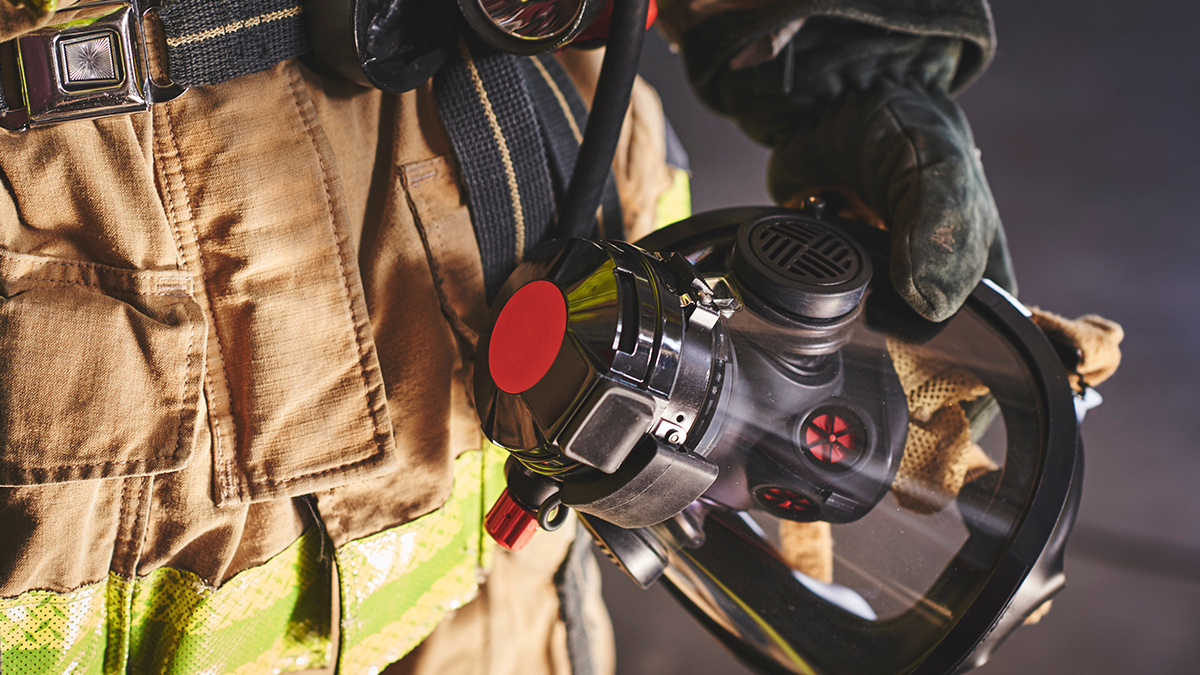
Across the United States, firefighters help to keep our communities safe, responding quickly to active fires, medical incidents, chemical spills, and other emergencies. The fire service is composed of a range of specialties, including wildland, structural, volunteer, and career firefighters. This means that these important workers may face a wide range of safety and health hazards as part of their work.
For NIOSH, protecting our nation's firefighters is a top priority. The Center for Firefighter Safety, Health, and Well-being is one way that we are working across our organization, the fire service, and other partners to better understand the hazards firefighters face. These include hazards from responding to fires and the long-term effects of their exposure during a fire event.
Our work has reached many milestones this year. For example, the National Firefighter Registry (NFR) for Cancer recently surpassed 30,500 enrolled participants. The NFR is the largest effort ever undertaken to understand and reduce risk of cancer among U.S. firefighters. Additionally, more than 40 fire departments are enrolled in the new NFR Gold Helmet Program. This designation means these departments have enrolled at least 50% of their active firefighters or more than 300 members in the NFR.
NIOSH also continues to update and publish new resources to help keep firefighters safe on the job. Some highlights include:
- The Firefighter Fatality Investigation and Prevention Program has published more than 30 reports so far this year. These reports share with fire departments the findings of line-of-duty death investigations to help prevent similar incidents from occurring in the future.
- A Morbidity and Mortality Weekly Report published in February focused on Maui County employees involved in the 2023 wildfire response. Investigators found that firefighters had higher concentrations of chemicals known as PFAS in their blood than other first responders, with long-tenured firefighters (30+ years) having the highest concentrations.
- A fact sheet provides employers and workers information on counterfeit and misrepresented respirators. It also has tips on how to tell if a respirator is approved by NIOSH.
- A Safety and Health Advisory educates fire departments on an issue with self-contained breathing apparatus facepiece lenses that are certified to the 2007 or earlier edition of NFPA 1981.
- NIOSH partnered with the Firefighter Cancer Support Network to develop several fact sheets that explain how to reduce exposure to contaminated gear on and off the fire scene.
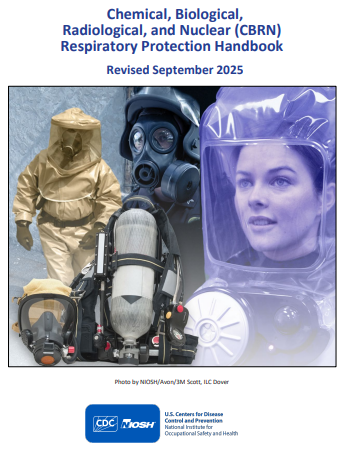
- Most recently NIOSH published the updated Chemical, Biological, Radiological, and Nuclear (CBRN) Respiratory Protection Handbook. The revised handbook expands the CBRN APR Protection List. The expanded list captures additional hazards that NIOSH Approved® Air-Purifying Respirators with CBRN canisters protect against.
If you would like to continue to learn more about NIOSH and our work to keep firefighters safe and healthy, please sign up for updates on the Center for Firefighter Safety, Health, and Well-being page. You can also use the contact box on that page if you are interested in learning more about our efforts to protect the health and safety of this important group.
Research Rounds
Shoulder-assist Exoskeleton Effects on Balance and Muscle Activity During a Block-laying Task on a Simulated Mast Climber
Study authors: Liying Zheng, NIOSH; Christopher Pan, NIOSH; Leonardo Wei, Texas Tech University; Hossein Bahreinizad, University of Florida; Suman Chowdhury, Texas Tech University, University of Florida; Xiaopeng Ning, NIOSH; and Felipe Santos, Texas Tech University
Why is this study important?
Construction workers face a higher risk of work-related musculoskeletal disorders (MSDs) compared with other workers. Recent studies in other industries have shown that an exoskeleton, an external support worn on the body, can reduce the risk of MSDs. The effectiveness of exoskeleton uses in construction—particularly on unstable, elevated work platforms—remains mostly unexamined. The current study focused on whether exoskeletons can reduce shoulder strain without compromising worker stability at heights.
How did you do the study?
We used special tools to measure muscle activity and balance during simulated construction tasks in a laboratory setting. These tasks included lifting a 35-pound cinder block onto a table at different heights. Study participants included seven men, 21–50 years old, who had worked in construction for at least three months. Each participant performed the lifting tasks while wearing three different exoskeleton models. They did this as they stood on an unstable surface designed to simulate an elevated construction platform. In 2023, NIOSH analyzed data collected at Texas Tech University from 2021-2022.
What did you find?
Our results showed that the tested exoskeletons provided minimal and inconsistent benefits in reducing shoulder muscle strain during the simulated construction tasks. Furthermore, balance decreased while wearing the exoskeletons, thereby increasing the risk of falls, particularly when working on unstable surfaces and at heights.
What are the next steps?
Rapid advancements in exoskeleton and other assistive technologies are anticipated. However, we stress the need for comprehensive evaluations of both balance impacts and effectiveness before such interventions are widely used in construction.
Highlights
Employer and Worker Resource for Hurricane Season
NIOSH offers Hurricane and Flood Key Messages for Employers, Workers, and Volunteers, Third Edition, which highlights recommendations for responding to specific hazards associated with hurricanes, storms, and floods. It is available in multiple languages for employers, emergency response and recovery workers, and volunteers.
New Training on Contamination Control Strategies Available
A free, interactive training course on Contamination Control Strategies for the Fire Service is now available. This course was developed by NIOSH and the Fire Safety Research Institute. It provides up-to-date information about firefighters' risk of cancer, exposure pathways, and various control measures to help lessen their exposures. The course also provides a short module about the National Firefighter Registry (NFR) for Cancer.
Safe-in-Sound Award Winner Announced
NIOSH announced the Kansas City National Security campus, a Department of Energy Facility, as the 2025 recipient of the annual Safe-in-Sound Award. This award recognizes organizations that excel in hearing loss prevention initiatives and efforts. The Kansas City National Security campus prevents hearing loss among their workers by using programs like Buy Quiet and other prevention methods.
PPE and Respirator Approval Program Web Updates
The NIOSH Personal Protective Equipment and Respirator Approval Program web pages have been updated and moved. These pages provide information about NIOSH Approved® respirators, including how to identify approved products, types of respiratory protection, tips for use, and information for respirator approval holders. Please update your bookmarks to Personal Protective Equipment and Respirator Approval Program.
HHE Annual Report Available
The NIOSH Health Hazard Evaluation (HHE) Program has released its 2024 Annual Report. Learn about the work the program did throughout 2024.
New Communication Products
Booklet
Commercial Fishing Fatality Summaries
Fact Sheet
Safety and Health Advisory
Technical Reports

Immediately Dangerous to Life or Health (IDLH) Value Profiles
Fire Fighter Fatality Investigation and Prevention Program Reports
- One Firefighter Dies During Unprotected Search in Nine-Apartment Building that was Originally Constructed to be a Single-Family House − Hawaii (Report Slides)
- Career Firefighter Dies after being Trapped by Collapse of Two Vacant Commercial Buildings—New York (Report Slides)
Health Hazard Evaluation Reports
- Exposure to Lead during Work on and Near Lead-Sheathed Telecommunication Cables
- Occupational Exposure to Illicit Drugs Among Library Employees
- Evaluation of Metals Exposure in a Metal Powder Additive Manufacturing Facility
- Evaluation of Blastomycosis Outbreak Among Workers at a Pulp and Paper Mill
- Evaluation of Exposures and Health Concerns at a Coffee Roasting and Packaging Facility
- Evaluation of Indoor Dampness, Mold, and Ventilation at a College
- Evaluation of Ergonomic Risks, Musculoskeletal Disorders, and Peracetic Acid Exposure Among Employees at a Pork Processing Plant in Pennsylvania
- Evaluation of Potential Hazards During Growing and Manufacture of Cannabis Products at an Indoor Cultivation and Retail Facility
News From Our Partners
US Department of Labor Renews National Alliance to Enhance Worker Safety in Recycling Industry
The U.S. Occupational Safety and Health Administration (OSHA) renewed its alliance with the Recycled Materials Association (ReMA) with the shared objective of improving the safety and health of workers in the recycling industry. During the two-year agreement, OSHA and ReMA aim to produce valuable resources, including educational articles, fact sheets, and toolkits designed to prevent and reduce workplace hazards.
Register for the 4th International Symposium to Advance Total Worker Health®
Registration for the International Symposium to Advance Total Worker Health® is now open. The symposium is the premier gathering where thought leaders, researchers, practitioners, employers and policymakers come together to learn, network, and share insights that make a difference. The symposium will be held October 21-25 virtually and in person at the National Institute of Health.