



Key points
- Topical application assays help quantify and compare insecticide resistance between susceptible and wild mosquito populations.
- In the assay, insecticide is applied directly to an adult mosquito’s body.
- The lethal doses and resistance ratio is calculated to determine the level of insecticide resistance.
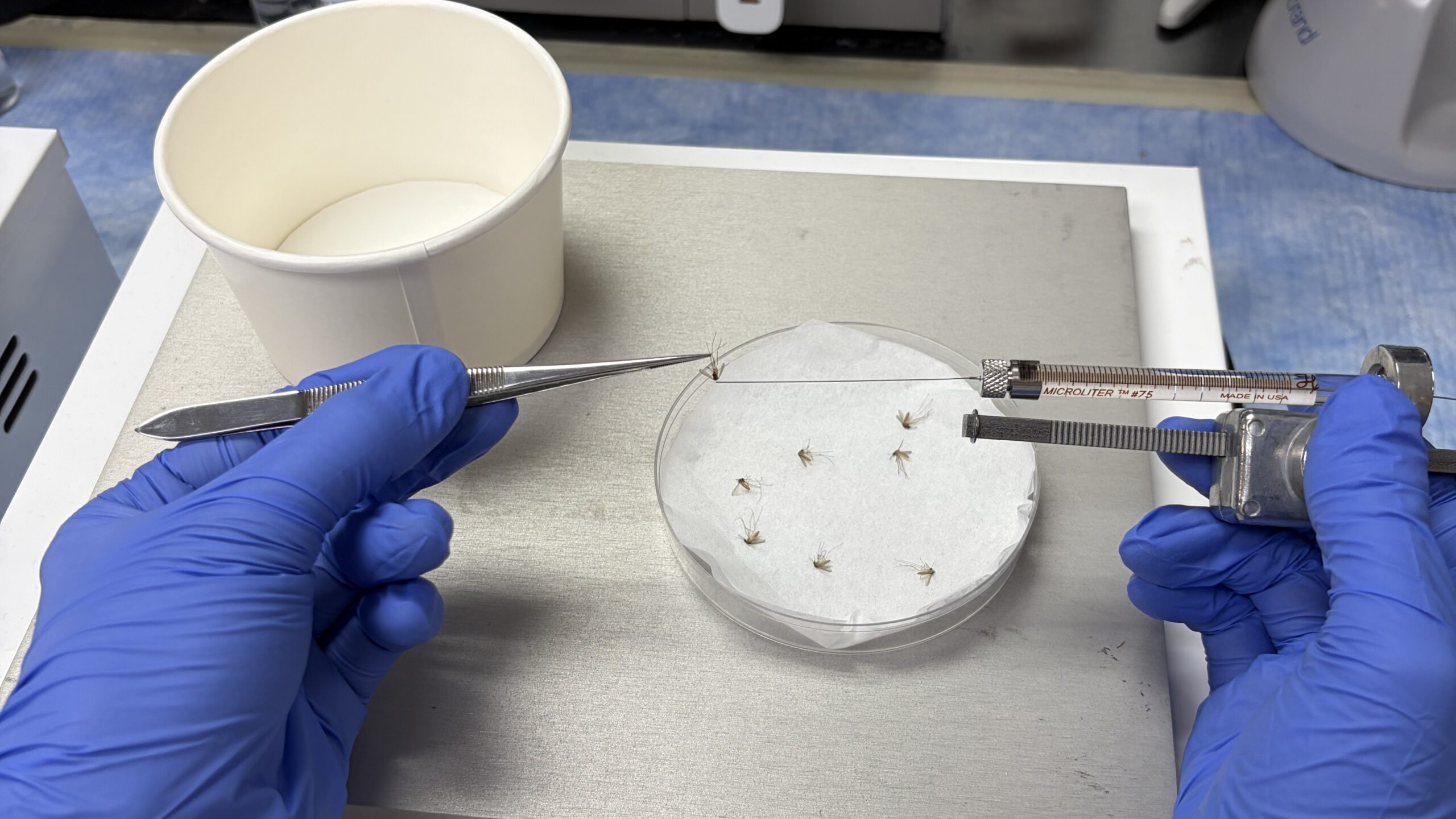
About topical application assays
Topical application assays help mosquito control programs quantify and monitor insecticide resistance and compare susceptible and wild populations. These assays require specialized equipment and more training than CDC's Bottle Bioassay.
To conduct topical application assays, precise amounts of insecticide are applied directly to an adult mosquito’s thorax using a micro syringe. A range of insecticide concentrations are used to determine the dose required to kill 50% of the population (LD50).
How topical application assays work
Steps to conduct a topical application assay:
- Apply a range of insecticide concentrations to a susceptible or reference mosquito population and a field mosquito population.
- Monitor post-exposure mortality, usually at 24 hours after exposure.
- Calculate LD50s for tested populations.
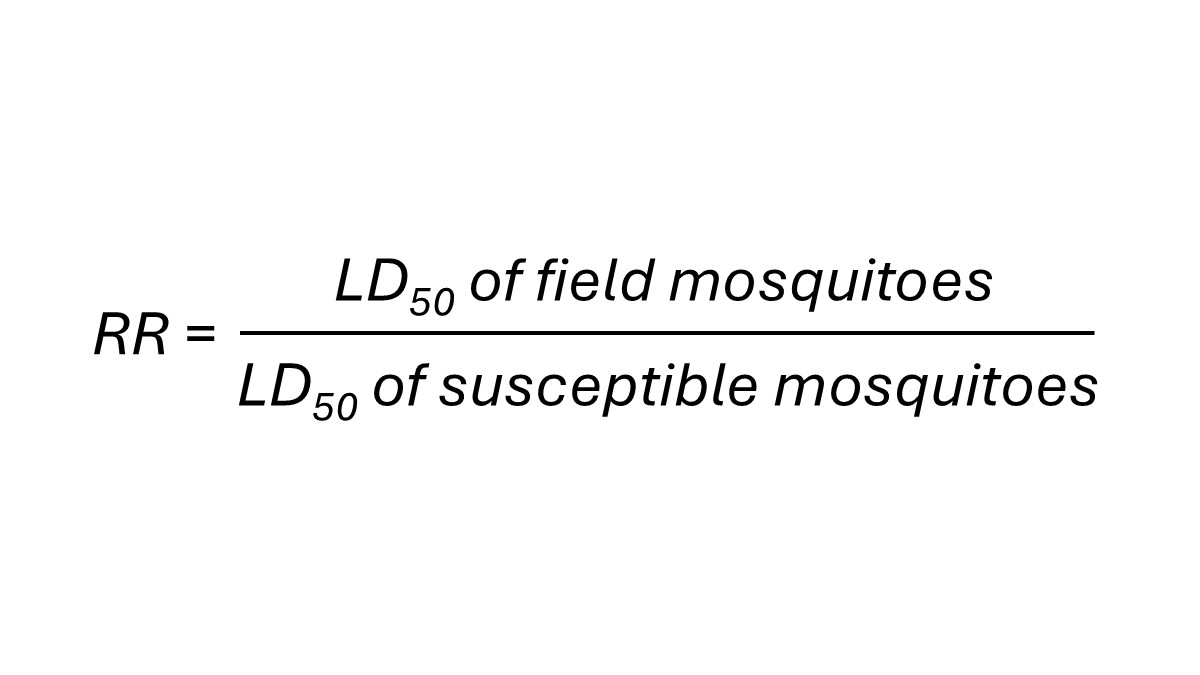
- Calculate a Resistance Ratio (RR) from the LD 50s.
Calculating RRs
Resistance levels
Level of resistance
Resistance ratio
Low
Less than 5
Moderate
5–10
High
Greater than 10