



Key points
- The CDC bottle bioassay measures insecticide resistance in mosquitoes by determining if an insecticide’s active ingredient can kill target mosquito populations within a certain time frame.
- Results of the CDC bottle bioassay can reveal when there is resistance to specific active ingredients and help inform mosquito control decisions.
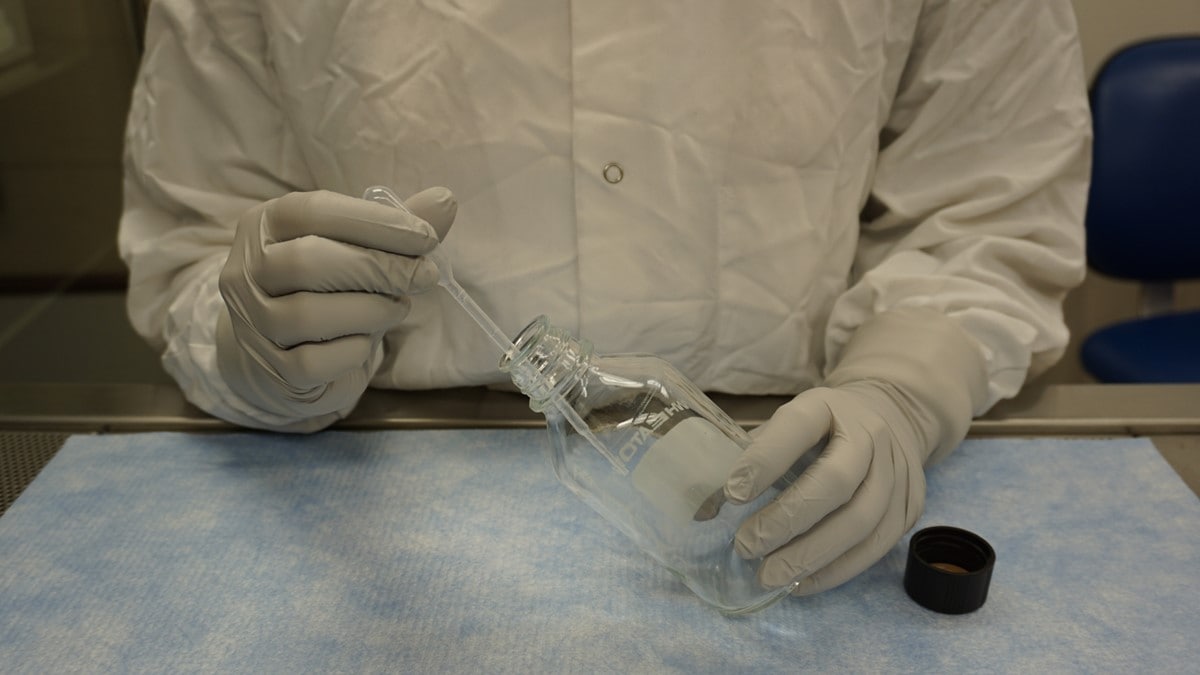
About the CDC bottle bioassay
The CDC bottle bioassay is a simple, rapid, and economical test that determines if an insecticide’s active ingredient can kill target mosquito populations within a certain time frame. The test requires minimal training to characterize insecticide resistance within mosquito populations and detect changes in resistance over time. The results can help guide the choice of insecticide used for spraying.
How the CDC bottle bioassay works
- Coat a bottle with a known amount of insecticide active ingredient (diagnostic dose).
- Place mosquitoes inside the bottle and observe for 2 hours.
- Resistance is determined by the percentage of mosquitoes that die (mortality rate) at the pre-determined threshold time (diagnostic time).
CDC bottle bioassay diagnostic doses and times
CDC determined bottle bioassay diagnostic doses and times for numerous mosquito species against different insecticide active ingredients. The recommended testing conditions were developed separately for use in the continental United States, U.S. territories, and freely associated states and for use globally (see appropriate manual listed below for your location). This is due to differences in mosquito populations, different goals of vector surveillance, and varied operational control strategies among regions.
The current diagnostic doses and times can be used as a starting point for determining diagnostic doses and times for additional species if susceptible colonies or populations are available. Once developed, the test can be routinely used for insecticide resistance testing.
Resistance levels
Information for United States and U.S. territories
Programs in the United States, U.S. territories, and freely associated states can order free CDC bottle bioassay kits during the annual ordering period of April 1-September 30. New kit orders are accepted only during this period. Kits include the necessary supplies to conduct the CDC bottle bioassay to support operational decisions. Kits are not available from October 1-March 31, but technical assistance remains available.
- Send an email to CDC at USbottleassaykit@cdc.gov and request an order form during the annual ordering period (April 1-September 30) or request technical assistance (all year round).
- Detailed instructions: CONUS Manual for Evaluating Insecticide Resistance in Mosquitoes Using the CDC Bottle Bioassay Kit.
Information for global use
Temporary program pause
International institutions and programs can order a bottle bioassay kit or only insecticide active ingredients. Kits include bottles and the necessary laboratory supplies to conduct the bioassay.
- To order a bottle bioassay kit or insecticide active ingredients, contact CDC at bottleassay@cdc.gov.
- Detailed instructions: Global Manual for Evaluating Insecticide Resistance Using the CDC Bottle Bioassay
Resources
- Manual for the United States: CONUS Manual for Evaluating Insecticide Resistance in Mosquitoes Using the CDC Bottle Bioassay Kit (suggested citation: Centers for Disease Control and Prevention. Nov 2024. CONUS manual for evaluating insecticide resistance in mosquitoes using the CDC bottle bioassay kit.)
- Manual for global use: Global Manual for Evaluating Insecticide Resistance Using the CDC Bottle Bioassay (suggested citation: Centers for Disease Control and Prevention. March 2023. Global manual for evaluating insecticide resistance using the CDC bottle bioassay.)
- Hemme RR, Vizcaino L, Harris AF, et al. Rapid screening of Aedes aegypti mosquitoes for susceptibility to insecticides as part of Zika emergency response, Puerto Rico. Emerg Infect Dis. 2019;25(10):1959-1961.
- Scott ML, Hribar LJ, Leal AL, McAllister JC. Characterization of pyrethroid resistance mechanisms in Aedes aegypti from the Florida Keys. Am J Trop Med Hyg. 11 January 2021.
- Collection of videos on the following topics:
- Testing for resistance in larval mosquitoes – an overview (supplemental material)
- Sphaericus test and results
- Methoprene test and results
- Bti testing and results
- Spinosad testing and results