



What to know
- Laboratory Leadership Service (LLS) officers perform service while learning.
- The LLS fellowship equips laboratory scientists with the skills and knowledge to become the next generation of public health laboratory leaders.
- Discover how LLS officers learn, serve, and make a difference.

About
LLS officers perform service while learning. Protecting public health and safety is a team effort. It takes a multidisciplinary team of public health and scientific experts to address public health threats. Laboratory scientists play a critical role on this team. The LLS program gives PhD scientists a unique opportunity to go beyond the bench. Officers engage in guided instruction and hands-on problem-solving alongside the public health professionals that protect America's health and safety 24/7.
The LLS fellowship equips laboratory scientists with the skills and knowledge to become the next generation of public health laboratory leaders. Officers conduct cutting-edge research, support rapid response to disasters and disease outbreaks, and help investigate emerging health threats. They also enhance the laboratory systems and practices essential for public health. LLS seeks laboratory scientists looking to take their careers to the next level while delivering real benefits to communities nationwide.
What LLS officers learn
LLS officers gain invaluable public health expertise and leadership skills through rigorous training, mentorship, and hands-on experiences in the field; at CDC; or in state, territorial, or local public health laboratories.

LLS officers work on projects for their assigned lab, respond to emerging public health needs, and receive mentorship from CDC and other public health experts during their 2-year fellowship. An officer's training is aligned with competencies that prepare them for leadership roles in public health laboratory science careers.
Officers gain and apply skills in:
- Leadership.
- Laboratory quality management.
- Biosafety science.
- Bioinformatics.
- Applied research.
- Communications.
- Emergency response.
- Laboratory program management.
As CDC disease detectives, they train alongside Epidemic Intelligence Service (EIS) officers and other disciplines as interdisciplinary team leaders or integral members. LLS emphasizes health equity in applied public health practice. LLS's training competencies provide officers with diverse perspectives and experiences in laboratory leadership, ensuring officers are well-equipped to address complex public health challenges.
About 90% of officers’ curriculum consists of hands-on assignments under the guidance of seasoned mentors and supervisors. The remaining 10% occurs through rigorous didactic course work, case studies, and exercises.
Examples of fellowship training activities include, but are not limited to:
- A rigorous, one-month summer orientation in Atlanta, Georgia, at the beginning of the fellowship.
- Two-week onsite immersive training experience at a state, tribal, local, or territorial public health lab for enhanced perspective of public health laboratory services and to prepare for potential emergency response deployment.
- One-week interactive workshop on safety risk assessments, scientific writing, and risk communications.
- Additional one-week workshop that provides essential training in leadership, effective communications, and career planning.
- Practical, applied field investigations and applied laboratory research to help address urgent public health problems.
- Comprehensive laboratory safety risk assessments to help improve the safety culture in CDC or other public health laboratories.
- Laboratory quality management systems evaluation to ensure that labs provide consistent and reliable data.
- Using innovative technologies to conduct and analyze bioinformatics, surveillance, laboratory, and other data that help inform public health practice.
- Opportunities to present findings from investigations and studies during agency seminars and at national and international conferences.
- Applying effective communication principles when presenting findings or preparing written materials or during news media interviews.
- Networking opportunities and collaboration with EIS officers and other CDC fellows during didactic training, public health investigations and events.
LLS officers complete the program’s Core Activities of Learning (CALs), based on competencies published by CDC and Association of Public Health Laboratories (APHL):
- Conduct applied laboratory research to address a public health or safety-related issue.
- Conduct a safety risk assessment to evaluate the probability and potential consequences of exposure to a given hazard.
- Evaluate a laboratory quality management system.
- Incorporate bioinformatics principles into applied public health laboratory science.
- Give a 10- to 20-minute oral presentation to a scientific audience.
- Give an in-depth public health talk on the officer's original LLS work or field of study.
- Write a first-author scientific manuscript for a peer-reviewed journal.
- Participate in laboratory operations management.
- Communicate complex scientific concepts to an external lay audience.
- Provide service to public health laboratories.
How LLS officers serve
LLS training is largely hands-on and experiential. Officers perform assignments primarily within their host laboratories, but they also serve the agency and other public health labs by supporting outbreak investigations, leading Lab-Aids, supporting EIS officers on Epi-Aids, or providing laboratory expertise for large-scale public health responses.

LLS officers provide on-the-job service to CDC, state, or local public health laboratories, as assigned. Officers actively support the mission objectives of their host labs daily through hands-on service. This may involve making applied research contributions, conducting risk assessments, supporting laboratory operations, or participating in other routine, high-performance activities.
Examples of officers’ on-the-job service include:
- Developing quality management system materials for the population-based HIV impact assessment in Zambia.
- Creating laboratorian competency assessment procedures for inactivating pox and rabies viruses.
- Training laboratory scientists on antifungal susceptibility testing and building global laboratory capacity to detect drug-resistant fungal infections.
- Conducting cutting-edge applied public health laboratory research, such as developing new bioinformatics tools to investigate bacterial meningitis outbreaks or investigating the spread of hard-to-treat, antibiotic-resistant bacteria.
- Developing audit procedures and tools to assess a public health laboratory’s compliance with diagnostic testing regulations.
- Investigating occupational health hazards—such as chemical exposure and particulate inhalation risks—of nail salon workers and exposures during acrylic manicures.
- Responding to emerging public health threats, like Zika virus, measles, COVID-19, and monkeypox.
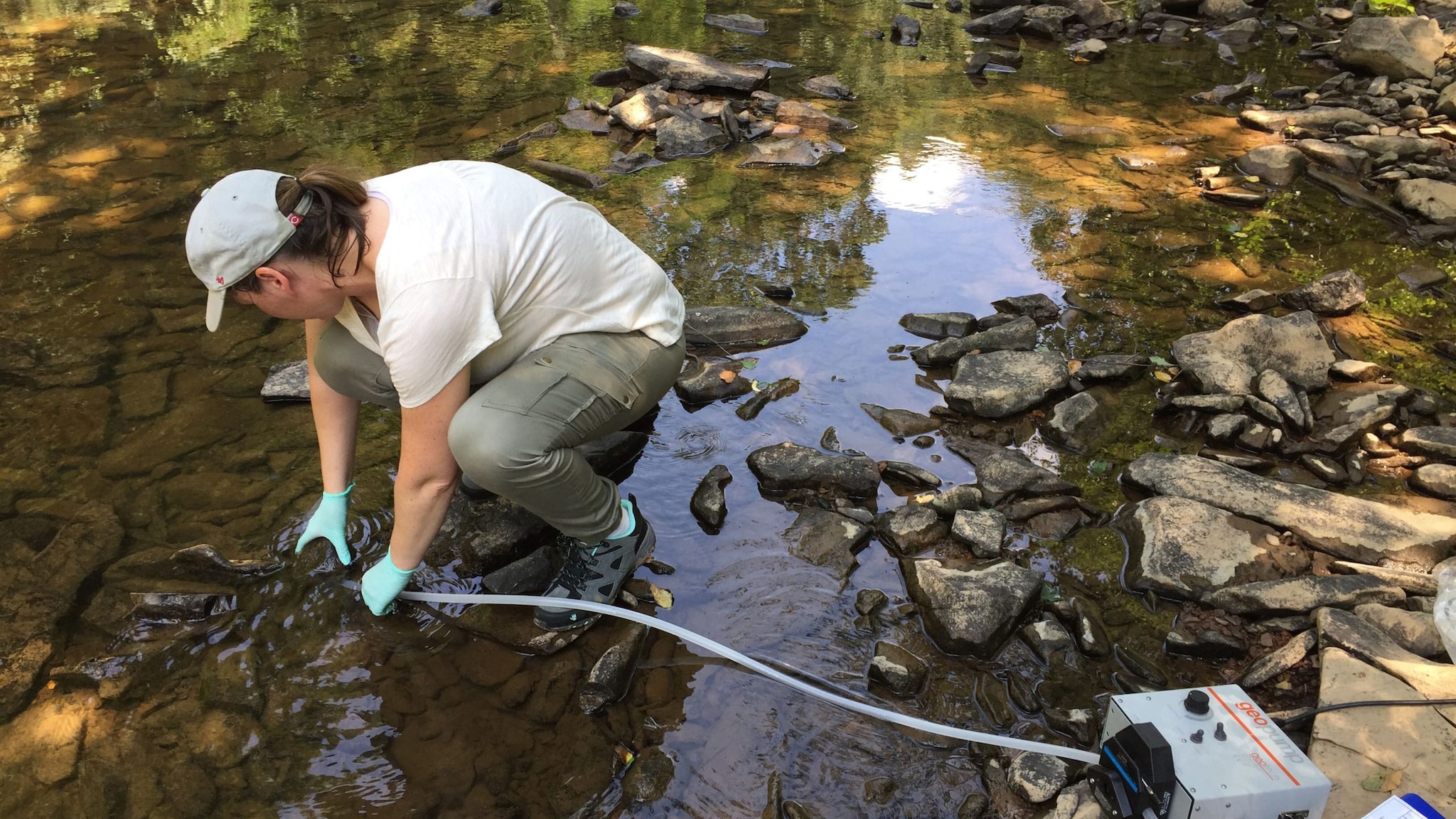
LLS officers and EIS officers frequently collaborate on field investigations and outbreak responses. Whenever possible, the LLS and EIS programs combine the laboratory and epidemiologic expertise of their officers so these disease detectives can apply a comprehensive approach to complex public health issues.
LLS officers often have the opportunity to lead a Lab-Aid. A Lab-Aid is a mechanism for providing rapid, short-term support to state, territorial, local, and federal public health labs for critical laboratory testing or operational needs. During a Lab-Aid, an LLS officer assumes a leadership role, supported by a CDC subject matter expert, to address an urgent public health concern.
A Lab-Aid may involve:
- Conducting lab safety risk assessments.
- Advising on lab quality issues or systems to help improve the reliability and reproducibility of lab data.
- Standing up or strengthening the lab component of a surveillance program.
- Assisting with bioinformatics or advanced molecular detection workflows or analyses.
- Providing lab expertise or assistance for outbreak investigations.
- Building capacity or providing laboratory operations support.
Examples of officers collaborating on “joint” Lab-Aids or Epi-Aids include:
- Investigating the spread of adenovirus among outpatients of a substance abuse treatment center.
- Building laboratory-based surveillance for blood lead testing in the US Virgin Islands.
- Determining the source of Burkholderia pseudomallei contamination in freshwater aquarium animals and plants.
- Enhancing Nebraska’s public health surveillance systems to detect the Raccoon Rabies Virus variant.
- Providing critical laboratory support for patient testing and diagnosis during a leptospirosis outbreak in the US Virgin Islands.
- Providing onsite sampling and testing for Escherichia coli contamination at chicken farms identified as the source of an outbreak.
- Assessing self-reported health, barriers to housing, and encampment-related health hazards of the unhoused population in Denver, Colorado.
Specific examples include:
- Providing training on rabies diagnostic assays to partners in the New York City Public Health Laboratory.
- Helping partners in the New York City, Hawaii, and California Departments of Health onboard new assays to detect Legionella.
- Outbreak investigation, response, specimen management, training, and laboratory risk assessments for anthrax surveillance in Indonesia.
- Providing capacity-building support to public health labs in Puerto Rico and the US Virgin Islands after hurricane damage destroyed their facilities.
- Optimizing public health laboratories’ quality management systems and infrastructure.
- Assessing and improving the Maine He.alth and Environmental Testing Laboratory Safety Program
LLS officers provide service to CDC, supporting large-scale responses to protect public health. LLS officers are key responders during large-scale public health responses. Their unique training and expertise is highly valued and sought. LLS officers demonstrate their commitment to public health through field deployments service to state and local laboratory jurisdictions; and support for CDC's laboratories and Emergency Operations Center (EOC). Some of the ways LLS officers have supported large-scale public health responses include:
- During the Ebola response, LLS officers provided support to international ministries of health for laboratory operations and logistics support for specimen handling.
- LLS officers were the first CDC monkeypox deployers in the field and served in critical agency leadership roles during the response.
- LLS officers partnered with health officials in Ghana to support the global polio eradication efforts.
- During the COVID-19 response, the LLS program shifted the focus of all LLS officers' training and service activities to fully support CDC's response efforts to stop the spread of the virus. Officers deployed directly to state and local public health labs to provide technical and operational support, while others deployed with epidemiologists to help facilitate patient contact tracing. Several officers deployed to quarantine areas and stations to support specimen handling, tracking, and testing logistics, while other officers remained at CDC to provide technical expertise for reference testing or assume leadership and response coordination roles in the agency's EOC.
Where LLS officers work
LLS officers are integral members of the CDC workforce, assigned to public health laboratories across state, territorial, local, and tribal jurisdictions. Additionally, some officers are assigned to CDC laboratories in Atlanta and other cities. Assignments are determined for each year's incoming class according to the best possible match between an officer's education, skills, and experience and the host laboratory's needs. LLS officers may not interview nor match with a host site laboratory where they have worked for more than 180 consecutive days within the two years of the fellowship start date. The 180-day limitation is calculated based on the fellowship start date (not the application date) and includes any team-level position (staff member, fellow, contractor, or visiting scientist) at CDC or a state, territorial, or local health department.