What to know
- Foods may be unsafe to eat after a disaster or emergency.
- Prepare for emergencies and take steps during and after power outages, floods, and other emergencies to keep food safe.
- If you're unsure if a food is safe to eat after an emergency, throw it out.
Why it's important
If you are in a disaster or emergency, take steps to prevent illness from unsafe food. Refrigerated or frozen foods may not be safe to eat after a loss of power. Food that may have had contact with floodwater or storm water may also be unsafe to eat.
Prepare for emergencies
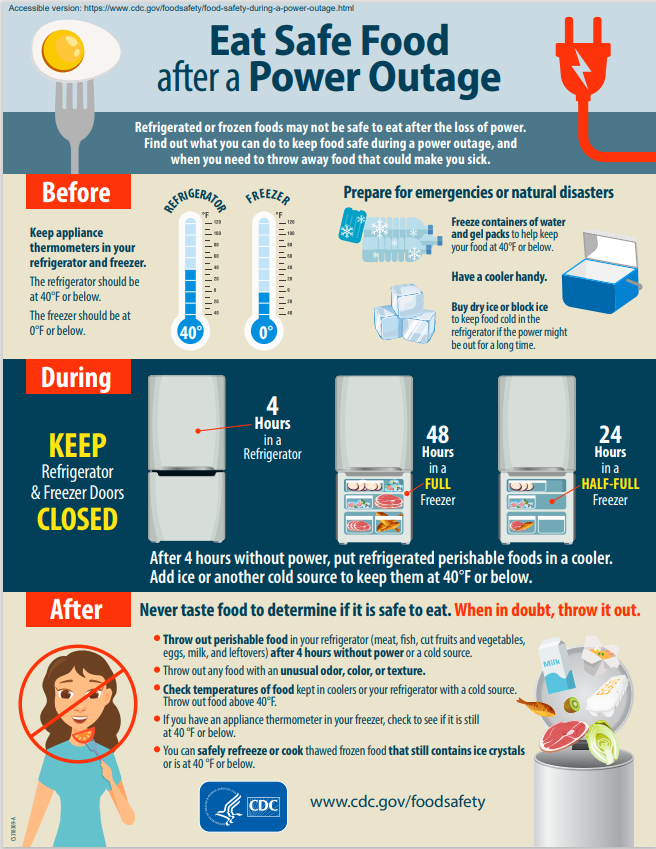
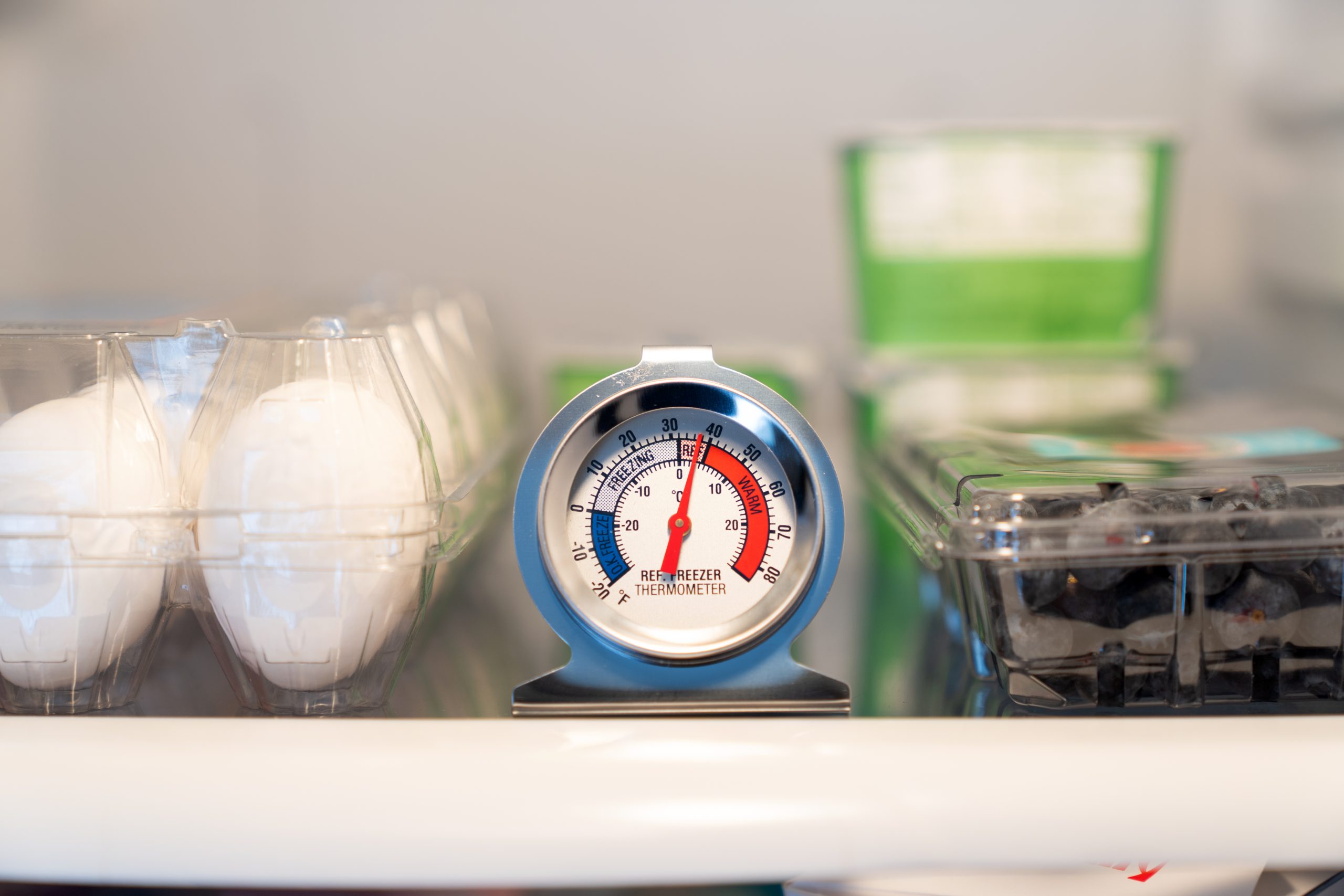
- Keep appliance thermometers in your refrigerator and freezer. The refrigerator should be at 40°F or below. The freezer should be at 0°F or below.
- Freeze containers of water and gel packs to help keep food at 40°F or below.
- Have a cooler and frozen gel packs ready in case you have to remove food from the refrigerator to keep it cold.
- Buy dry ice or block ice to keep food cold in the refrigerator if you think the power could be out for a long time.
Steps to take during a power outage
- Keep refrigerator and freezer doors closed.
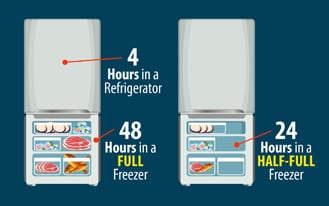
- If the doors stay closed, food will stay safe up to: 4 hours in a refrigerator, 48 hours in a full freezer, 24 hours in a half-full freezer.
- If the power has been out for 4 hours, and a cooler and ice are available, put refrigerated perishable foods in the cooler. To keep them at 40°F or below, add ice or a cold source like frozen gel packs.
Steps to take after a power outage
- Never taste food to know if it is safe to eat. When in doubt, throw it out.
- Throw out perishable food in your refrigerator (meat, fish, cut fruits and vegetables, eggs, milk, and leftovers) after 4 hours without power or without a cold source like ice. Throw out any food with an unusual smell, color, or texture.
- If you have an appliance thermometer in your refrigerator, check to see if it is still at 40 °F or below.
- Check temperatures of food kept in coolers or your refrigerator with an added cold source. Throw out food that has thawed or is above 40°.
- You can safely refreeze or cook thawed frozen food that still contains ice crystals or is at 40 °F or below.
Steps to take after a flood
Throw away these foods
- Perishable food that has not been refrigerated or frozen properly due to power outages
- Food that may have come in contact with floodwater or stormwater
- Food with an unusual smell, color, or texture
- Food in packages that are not waterproof
- Food in cardboard containers, including juice/milk/baby formula boxes
- Food containers with screw caps, snap lids, crimped caps, twist caps, flip tops, and snap tops
- Home-canned foods and canned foods or food containers that are bulging, open, or damaged
- Throw out cans or food containers that spurt liquid or foam when you open them or contain food that is discolored, moldy, or smells bad
When in doubt, throw it out!
Unsafe food can make you sick even if it looks and smells normal.
Clean and sanitize food-contact surfaces that have been flooded
Throw out wooden cutting boards, baby bottle nipples, and pacifiers if they have come into contact with floodwaters. Sanitizing methods are not effective for removing contaminates in floodwater from these items.
Clean and sanitize dishes, utensils, and other surfaces that touch food (like refrigerator drawers or kitchen countertops) in a four-step process:
Steps to take
- WashWash with hot, soapy water.
- RinseRinse with clean, safe water.
- SanitizeMake a solution of 1 cup (8 oz/240 mL) of unscented household chlorine bleach in 5 gallons of clean water. Soak items for 1 minute in the beach solution (solution should completely cover the items). For items that you can't put in the solution (like countertops), apply solution with a cloth.
- DryAllow to air dry.
How to save commercially prepared food
This includes food in cans, plastic, or metal pouches (like flexible, shelf stable juice packages).
Steps to take
- Remove labelsRemove labels if possible. Note the expiration date.
- Wipe away dirtBrush or wipe away dirt or silt.
- WashWash cans and pouches with hot, soapy water.
- RinseRinse cans and pouches with clean, safe water.
- SanitizeSanitize cans and pouches in one of two ways: Place them in a solution of 1 cup (8 oz/240 mL) of unscented household bleach in 5 gallons of water for 15 minutes, OR put them in a pot of water, bring to a boil, and continue boiling for 2 minutes.
- Re-labelRe-label cans or pouches with a marker. Include the expiration date.
- UseUse food in cans or pouches as soon as possible.