



At a glance
Foodborne outbreak investigations are successful more often when they include data collected through epidemiologic investigation, laboratory testing, and environmental health assessment.
Key takeaways
Successful outbreak investigations identify the food item(s), germ(s), and contributing factors of the outbreak. Identifying these data points can help stop the current outbreak and prevent more in the future.
Why this is important
This study adds to evidence showing the importance of a unified public health response during a foodborne outbreak investigation that includes epidemiologists, laboratorians, and environmental health professionals. The results of this study can help guide state and local health departments when investigating a foodborne illness outbreak.
What we learned
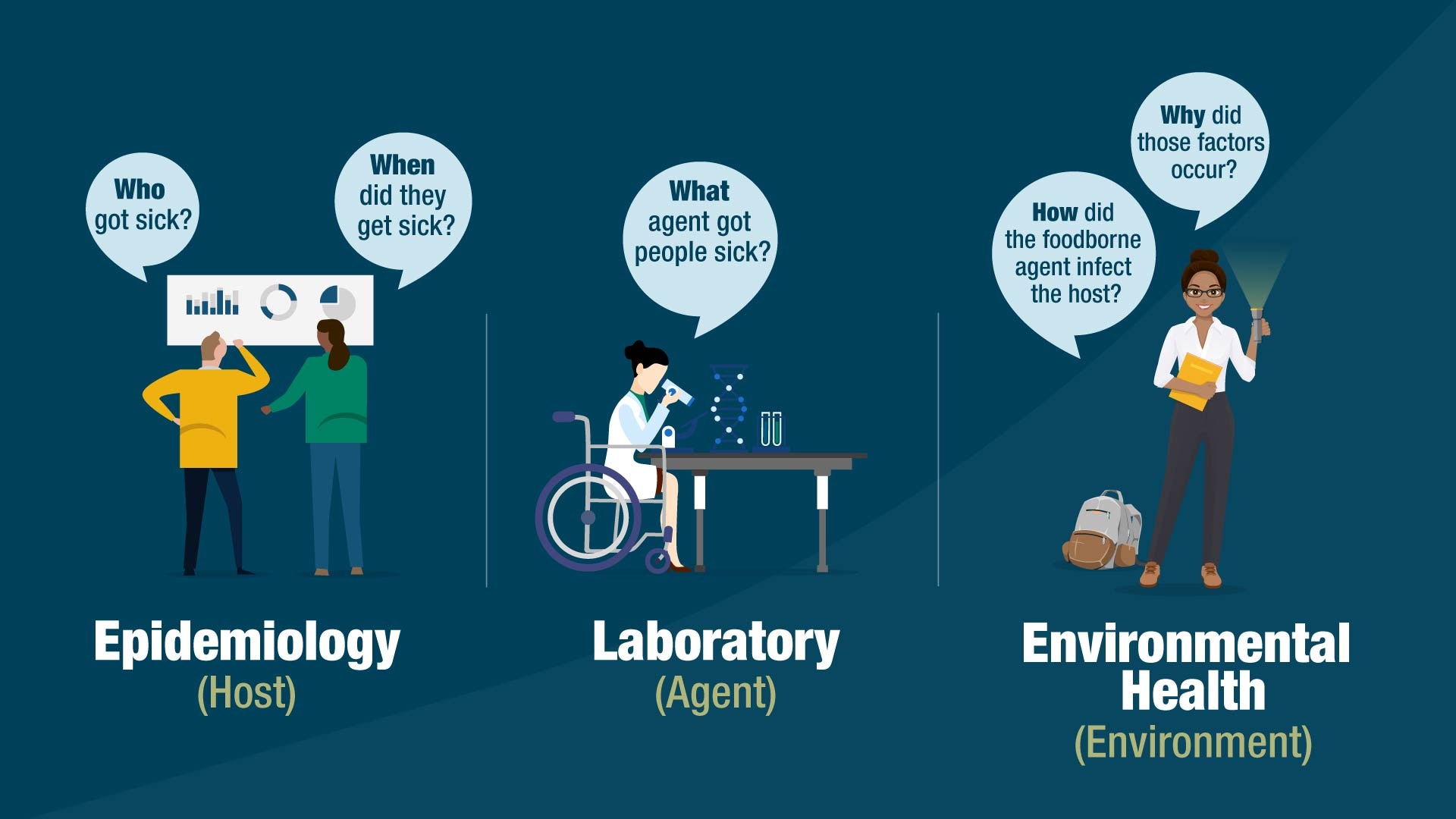
We analyzed data from outbreaks reported to our National Environmental Assessment Reporting System (NEARS). The analysis revealed that successful investigations occur more often when investigators do these activities:
- Use robust epidemiology investigation techniques, such as a cohort study, to identify the food associated with the outbreak and people who got sick
- Collect and test clinical samples from people who got sick to identify what made people sick
- Conduct a thorough environmental assessment of the outbreak environment to identify root causes and factors that led to the outbreak
- Epidemiologists conduct activities such as interviewing the people who got sick (hosts) to determine their symptoms and what foods they recently ate.
- Answers the questions: Who got sick and where? What foods did they eat?
Laboratory
Environmental health
More information
- Journal article this plain language summary is based on
- Study data
- More about contributing factors and environmental assessments
- CDC's Environmental Assessment Training Series
- More key findings from investigation data, including on outbreak data on contributing factors and issues affecting use of environmental assessments
This page was last updated on this date. Updates may include minor edits, image changes, or other modifications to page content.
The information on this page was last reviewed by subject matter experts to ensure accuracy.