


About
The NIOSH National Firefighter Registry (NFR) for Cancer is the largest effort ever undertaken to understand and reduce risk of cancer among U.S. firefighters. The newsletter delivers the latest news on the NIOSH NFR for Cancer. Subscribe for updates on our recent milestones and upcoming activities.

Greetings from the manager of the NFR for Cancer
Spring is an exciting time for the NFR for Cancer program. Like many of you, we are looking forward to warmer weather and sunshine, but we are also excited for the upcoming conferences, meetings, and other events. There, we'll be sharing updates and encouraging firefighters nationwide to participate.
Over the last several months, nearly 2,500 new firefighters have joined each month on average, bringing total participation to more than 48,000 firefighters. You can track these numbers and explore other summary information on our data dashboard.
We've also seen a big increase in the number of Gold Helmet departments, with 155 departments across 32 states earning this recognition. Below you will learn more about an exciting initiative in Pennsylvania to further increase firefighter participation and Gold Helmet departments across the state.
We're always looking for creative ways to build awareness and support firefighters with enrollment, including through partnerships with state and local organizations. If you have an idea, please do not hesitate to reach out. We're also happy to send communication materials to help support your efforts.
If your organization has been promoting the NFR this year, please let us know. After your organization has completed three promotional activities, we will gladly recognize your organization as an NFR Champion for 2026. To inquire, email us at NFRegistry@cdc.gov.
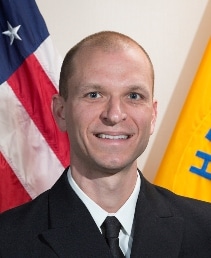
Kenny Fent, Captain, U.S. Public Health Service, Manager, National Firefighter Registry for Cancer (NFR)
Firefighter spotlight: Captain Trey Foust
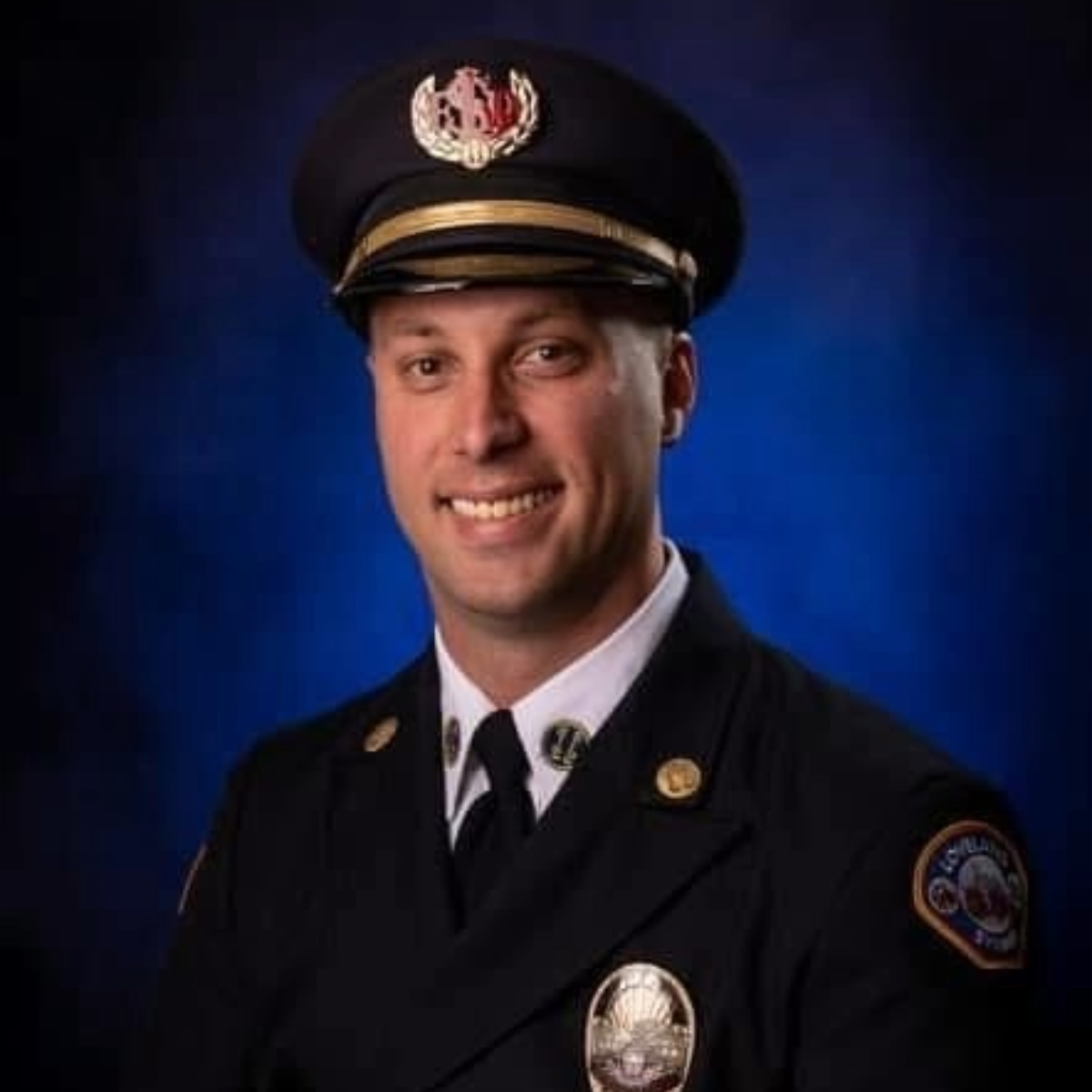
Every firefighter's story matters. In this newsletter, hear from Trey Foust, Captain of the Community Risk Reduction Division at Loveland-Symmes Fire Department in Ohio. Captain Foust, a second-generation firefighter, has been a firefighter for 15 years starting as a volunteer in Randolph County, Indiana. He obtained a bachelor's degree from Eastern Kentucky University in Fire, Arson, Explosion Investigation and is a Credential Fire Officer through the Center for Public Safety Excellence.
“The Pain I Couldn’t Ignore”
I first started noticing something was wrong when the pain began.
At first, it wasn't anything extreme—just enough to catch my attention. But it didn't go away. It got worse. Walking became uncomfortable, and even simple, routine parts of my job—like performing fire inspections and doing daily tasks—started to feel harder than they should have. That's when I knew something wasn't right.
Like most people, I tried to push through it. You tell yourself, "It's nothing. Maybe it's just a strain. Maybe it'll pass." But it didn't pass.
It was a Sunday morning when everything changed. The pain became unbearable. No more ignoring it, no more waiting, I knew I needed to get to the hospital. So, my wife and I went.
A few days later, I heard the words no one expects to hear: "You have testicular cancer and you will need chemotherapy and radiation."
It didn't feel real. Just days before, I was living my normal life—working, moving, doing my job, and enjoying time with my family. Now everything had changed.
About a week later, I had surgery, and then came the treatment plan, doctor's visits, follow-ups, and recovery. I had to learn how to adjust to a new normal while still trying to process everything that had just happened. Then, finally, I got some good news after a doctor's appointment: no radiation or chemotherapy was needed.
But I didn't have to go through this alone — support was always there.
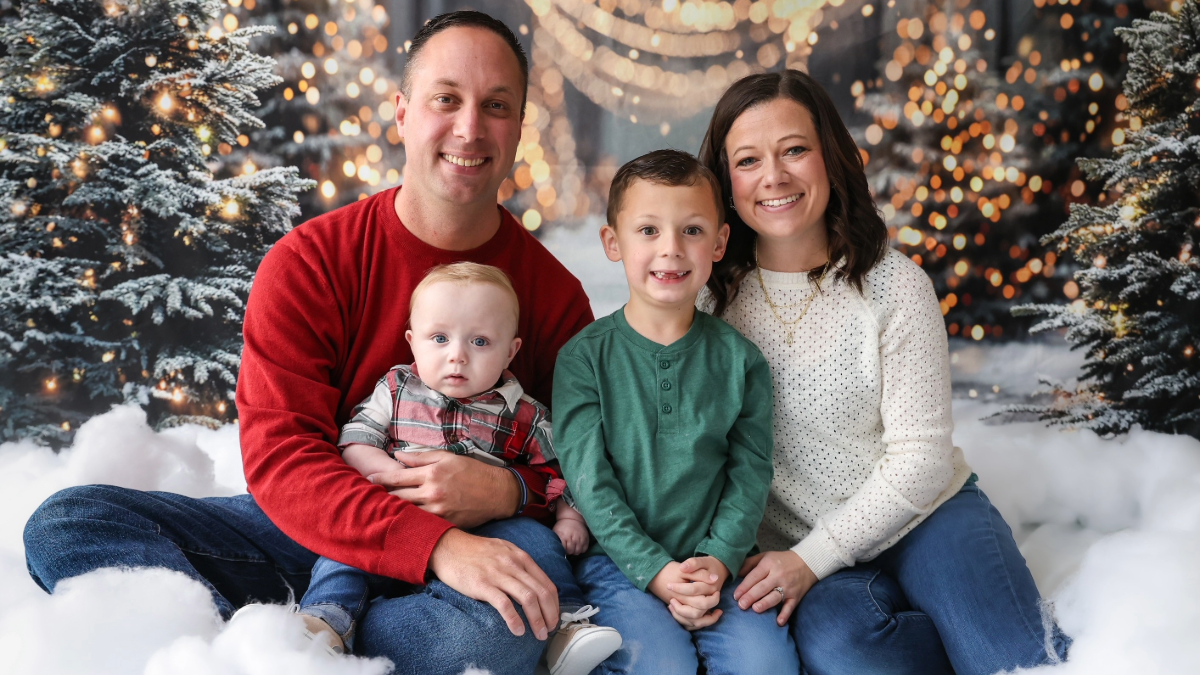
My family showed up immediately, and so did my fire department and my church family. Meals were brought. Messages came in. People checked in, prayed, and stepped up in ways I'll never forget. That support carried me more than I can put into words.
Because even with all of that, the battle doesn't just end. People often think once surgery is over, it's behind you. But the reality is different. Every few months, it comes back in a different way — blood draws, CT scans, then waiting for the results.
That part is its own kind of challenge. It's the mental side. The wondering. The quiet moments before appointments where your mind starts to go places you don't want it to.
But it's also a reminder. A reminder to pay attention to your body. A reminder not to ignore the signs. And a reminder of how important it is to have people around you when life takes a turn you never saw coming.
If I could tell firefighters one thing, it would be this: Take care of your body. Wash your gear. Wear your PPE. And always be aware.
The job teaches us to look out for everyone else. This experience taught me how important it is to look out for yourself too.
I'm still in the fight. But I'll never fight it alone.
Protecting the Fire Service Together
Stories like Captain Foust's remind us how important it is to understand and reduce cancer risks in the fire service. His department, Loveland-Symmes Fire Department, helped pilot-test the NFR and was the first Gold Helmet recipient, showing their commitment to firefighter health. If you're a current or former U.S. firefighter, you can support this effort by joining the NFR today. Your story matters and can help save lives.
FDIC 2026 Highlights
At the FDIC International Conference last week, we teamed up with the Firefighter Cancer Support Network (FCSN) to promote the NFR and other critical NIOSH work. The NFR team shared booth space with FCSN, and we enjoyed speaking with everyone who stopped by. FCSN also helped highlight the NFR through other conference activities, including the 5 Alarm 5K to Remember. During the opening session on Thursday, FDIC showed one of our NFR videos. Thank you to FDIC, FCSN, and everyone we interacted with for a great week!
Pennsylvania Launches Statewide NFR Challenge
The Pennsylvania Office of the State Fire Commissioner (OSFC), an NFR Champion, recently launched an ambitious statewide challenge to enroll as many current and former Pennsylvania firefighters as possible and reach 1,000 Gold Helmet Departments by the end of 2026. OSFC is encouraging department leaders to become champions for the NFR and set aside time for registration during meetings, incorporate enrollment into the onboarding process for new recruits, promote participation on social media, and more.
We are deeply grateful to OSFC for their partnership and dedication to advancing firefighter health and safety.
American Lung Association Fight for Air Climb – Firefighter Challenge
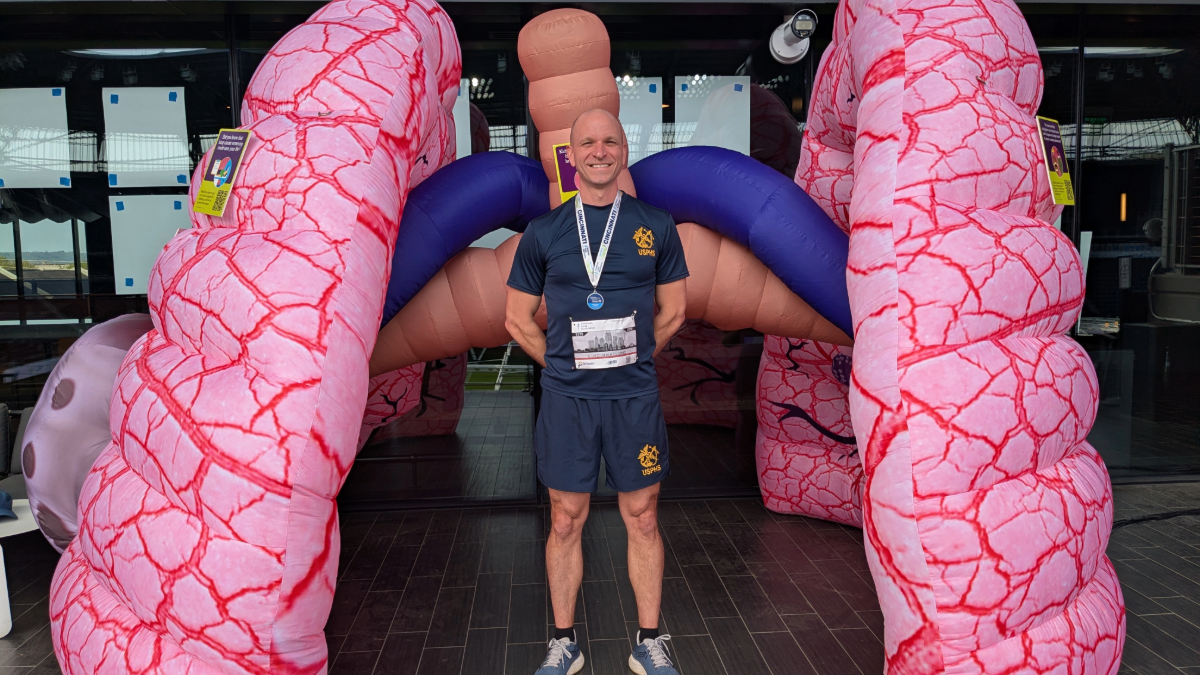
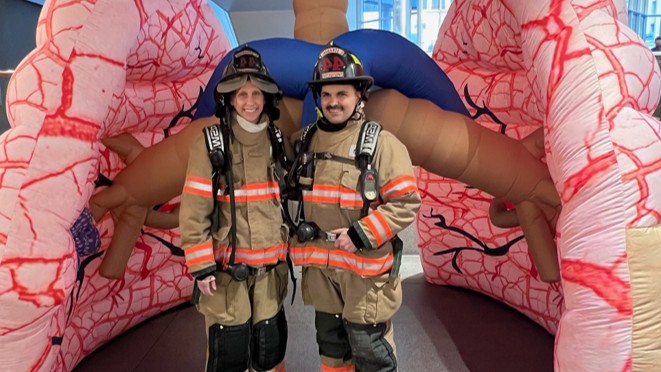
The NFR was proud to sponsor the American Lung Association's Fight for Air Climb in Cincinnati, Ohio. Held at TQL stadium on April 12th, the event brought together participants from across the region to raise funds and climb in support of clean air and lung health. The Firefighter Challenge drew strong participation from area departments, and many stopped by the NFR table to learn more and pick up materials to bring back to their stations.
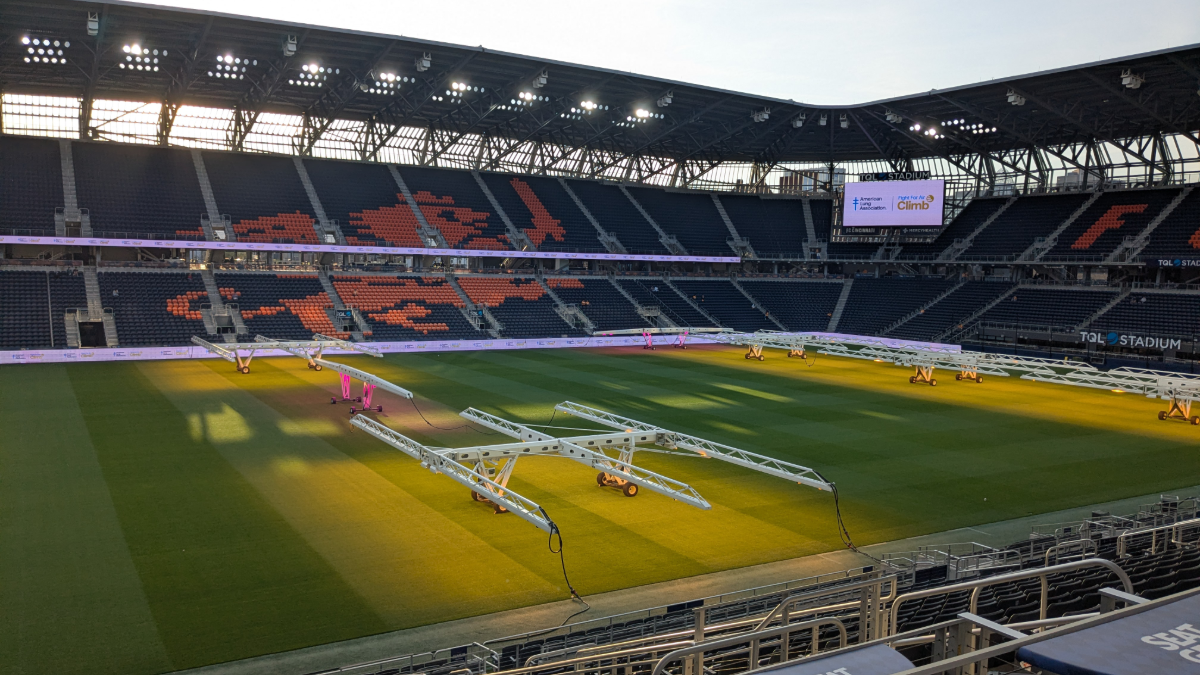
Following the event, the American Lung Association sent participating firefighters an email highlighting the importance of the NFR and how to register. NFR materials were available for participants at the Fight for Air Climb in Pittsburgh, Pennsylvania, on March 28th.
Gold Helmet initiative
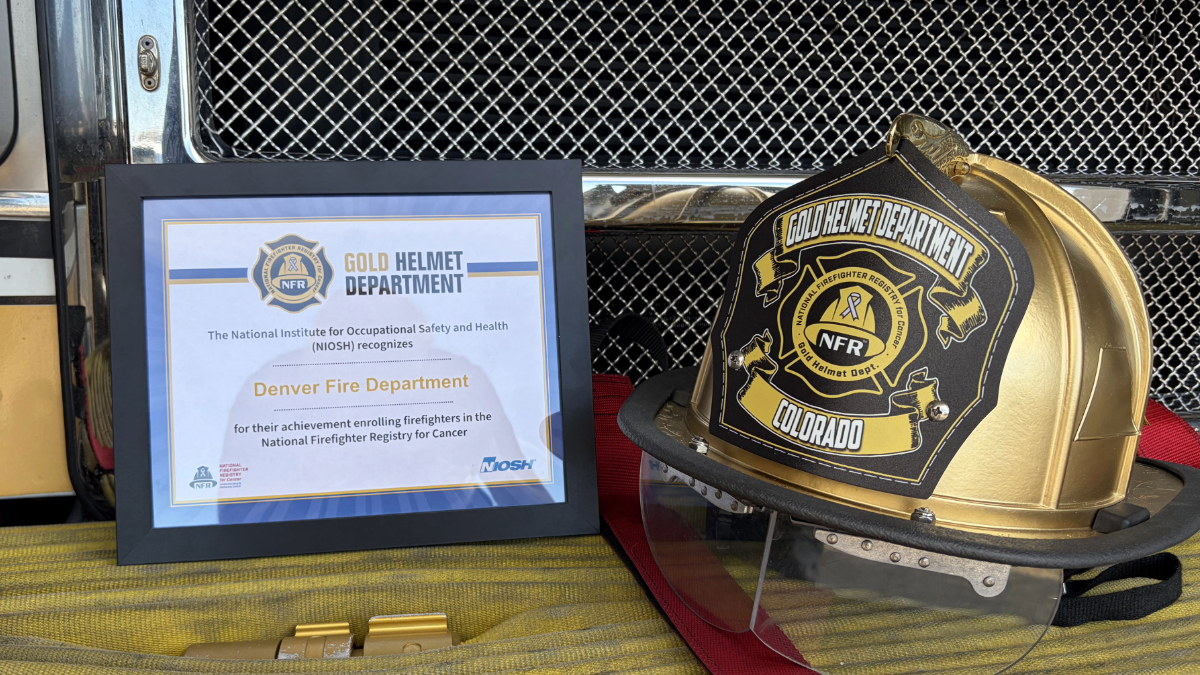
The list of Gold Helmet Departments continues to grow! Congratulations to the 155 fire departments from 32 states who have achieved Gold Helmet status.
Newest Gold Helmet Departments
Abbeville County Fire Service, SC
Johnson County Consolidated Fire District No 2, KS
Andover Fire-Rescue, KS
Kayenta Township Fire Department, AZ
Bettendorf Fire Department, IA
Lower Paxton Township Bureau of Fire, PA
Branson Fire Rescue, MO
Limerick Fire Department, PA
Campbell County Fire Department, WY
Lincoln Fire and Rescue, NE
Castle Rock Fire and Rescue Department, CO
Louisville Fire Protection District, CO
Central Arizona Fire and Medical, AZ
Loveland Fire Rescue Authority, CO
Charleroi Fire Department, PA
Manheim Township Fire Rescue, PA
Chartiers Township Volunteer Fire Department, PA
Mountain View Fire Rescue, CO
Chanhassen Fire Department, MN
Navajo Nation Fire and Rescue, AZ
City of Fairfield Fire Department, CA
New Albany Fire/Rescue, MS
City of Hays Fire Department, KS
North Platte Fire Department, NE
City of Monroe Fire Department, GA
Palm Beach County Fire Rescue, FL
City of Surprise Fire-Medical Department, AZ
Palm Harbor Fire Rescue, FL
Catoosa County Fire Department, GA
Philipsburg City Fire Department, KS
Denver Fire Department, CO
Poudre Fire Authority, CO
Dormont Fire Department, PA
Rogers Fire Department, AR
East Lake Tarpon Special Fire Control District, FL
Rural Metro Fire, AZ
East Petersburg Fire Company #1, PA
Safety Harbor Fire Department, FL
Garden City Fire Department, KS
Scottsdale Fire Department, AZ
Gladstone Fire Department, MO
South Adams County Fire Department, CO
Globe Fire Department, AZ
South Metro Fire Rescue, CO
Heber-Overgaard Fire District, AZ
Town of Clayton Fire Department, NC
Hopi Fire/Rescue, AZ
Thurston Volunteer Fire Department, GA
Hualapai Fire and EMS, AZ
Victoria Fire Department, KS
Hutchinson Kansas Fire Department, KS
New NIOSH Resources to Protect Firefighters
Hazardous substances from fire incidents can transfer from firefighters' gear to their skin, equipment, and stations. Reducing exposure to these substances is important, as some have been linked to negative health outcomes for firefighters including cancer.
To help with this, NIOSH recently published two Science Bulletins that highlight ways to protect firefighters from contaminated gear:
- Protecting Firefighters from Contaminated Gear explains how cleaning gear and skin on scene, and properly removing, bagging, and storing gear can help limit exposure.
- Laundering Gear to Protect Firefighters highlights NIOSH research on gear laundering methods to better protect firefighters from harmful exposures.
Scientific publications
NFR researcher Alex Mayer recently co-authored a Fire Fighter Cancer Cohort Study (FFCCS) paper (lead author: Dr. Jackie Goodrich) that showed measurable biological changes in firefighters who responded to the train derailment and fire in East Palestine, Ohio, compared to those who did not.
Specifically, the study found significant alterations in 17 microRNAs, which are molecules that regulate gene activity, some of which are associated with various diseases. The specific microRNAs affected are linked to pathways involved in cancer, as well as cardiovascular and neurodegenerative conditions. This suggests the exposure had meaningful biological effects and indicates that even a single large-scale incident can lead to lasting changes in gene regulation. However, it is still unclear whether these changes will lead to long-term health problems or represent temporary/adaptive responses.
Conferences and meetings
Representatives from the NFR program continue to attend conferences and meetings to share information about the NFR and provide direct enrollment support to firefighters throughout the United States. NFR staff are also available to provide virtual presentations upon request (subject to availability). If you know of any upcoming fire service conferences, meetings, or other gatherings of fire personnel, email us at NFRegistry@cdc.gov. We'd love to connect!
Learn more about how NIOSH helps firefighters
In addition to the NFR, NIOSH conducts research and provides various services to support firefighter safety and health. To stay informed about NIOSH firefighter work, sign up for email updates or visit our Center for Firefighter Safety, Health, and Well-being page.
This page was last updated on this date. Updates may include minor edits, image changes, or other modifications to page content.
The information on this page was last reviewed by subject matter experts to ensure accuracy.