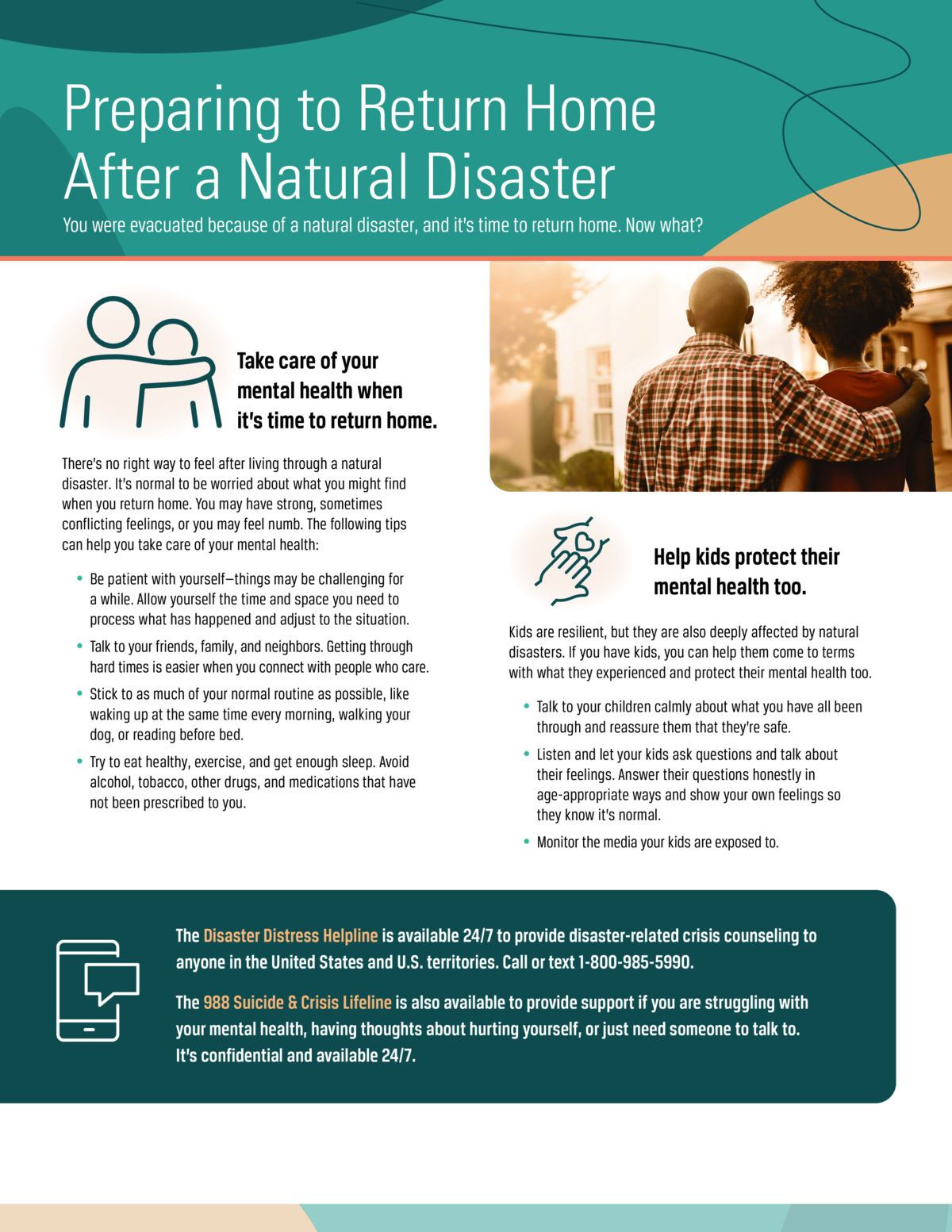
At a glance
- You were evacuated because of a natural disaster, and it's time to return home. Now what?
- Although natural disasters are predictable, they often lead to similar challenges. The following guidelines can help you with some common issues you may encounter when returning home.
Preparing to Return Home

Take care of your mental health when it's time to return home.
There’s no right way to feel after living through a natural disaster. It’s normal to be worried about what you might find when you return home. You may have strong, sometimes conflicting feelings, or you may feel numb. The following tips can help you take care of your mental health:
- Be patient with yourself—things may be challenging for a while. Allow yourself the time and space you need to process what has happened and adjust to the situation.
- Talk to your friends, family, and neighbors. Getting through hard times is easier when you connect with people who care.
- Stick to as much of your normal routine as possible, like waking up at the same time every morning, walking your dog, or reading before bed.
- Try to eat healthy, exercise, and get enough sleep. Avoid alcohol, tobacco, other drugs, and medications that have not been prescribed to you.
Help kids protect their mental health too.
Kids are resilient, but they are also deeply affected by natural disasters. If you have kids, you can help them come to terms with what they experienced and protect their mental health too.
- Talk to your children calmly about what you have all been through and reassure them that they’re safe.
- Listen and let your kids ask questions and talk about their feelings. Answer their questions honestly in age-appropriate ways and show your own feelings so they know it’s normal.
- Monitor the media your kids are exposed to.
Key Health and Safety Recommendations
Make sure your home is safe to enter.
- Follow guidance from local authorities and only go back to your home once you’ve been told it’s safe to do so. Keep in mind that even if authorities say it’s safe, you still need to be careful.
- Don’t go inside your home if there is obvious damage, like downed power lines, downed trees, or cracks in your home’s walls or foundation. Have a professional inspect the home for safety before going inside.
- Try to return to your home during the day so that you do not have to use any lights.
- Assume that your home may have limited or no utility services, like power, water/sewer, and trash pickup.
- Never turn the power on/off or use an electrical tool or appliance that is wet or when you are standing in water.
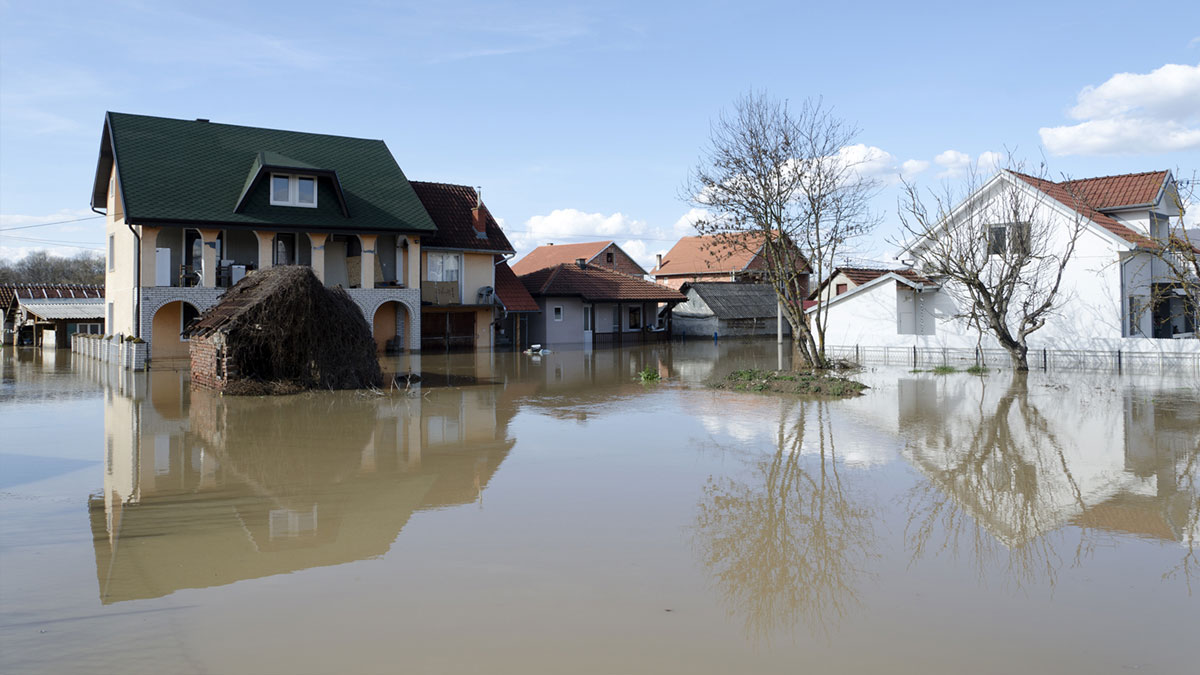
Stay out of floodwater.
- Stay out of floodwater—it can contain germs, chemicals, and other things that can hurt you or make you sick.
- If your skin comes in contact with floodwater, wash the area with soap and clean water as soon as possible. If you don’t have soap or clean water, use alcohol-based wipes or sanitizer.
Protect yourself from carbon monoxide poisoning.
Carbon monoxide is a gas that you can’t see or smell, but if it builds up in your home, it can cause illness and death.
- Never use portable gasoline or coal-burning equipment (like generators) or camp stoves inside your home, basement, or garage. Keep these items outside and at least 20 feet from any windows, doors, or vents.
- Use a battery-operated or battery-backup carbon monoxide detector any time you use a generator or anything else that burns fuel.
Make sure food and water are safe to eat and drink.
- Throw away any food that may have come in contact with floodwater or stormwater and foods that may not have been properly refrigerated because of power outages. Even if food doesn’t look or smell bad, it can still make you sick. When in doubt, throw it out!
- Follow advice from local officials on whether it’s safe to drink or use tap water.
Clean up mold safely.
If your home was flooded, there may be mold growing in your home, even if you can’t see it.
- Before you start cleaning up mold, put on an N95 respirator mask, goggles, and protective gloves.
- Open doors and windows to air out the home before spending any time indoors.
- Throw away any items that absorbed water, like rugs, mattresses, and stuffed animals.
- Clean hard surfaces with household cleaners, soap and warm water, or a bleach solution of no more than 1 cup of bleach in 1 gallon of water. Never mix bleach with any other cleaners.
Returning home after a natural disaster can be hard and stressful. Pace yourself as you begin cleanup activities, take breaks, and drink water, especially if it is hot outside. Get plenty of rest and seek out the support of others when you need it.