



At a glance
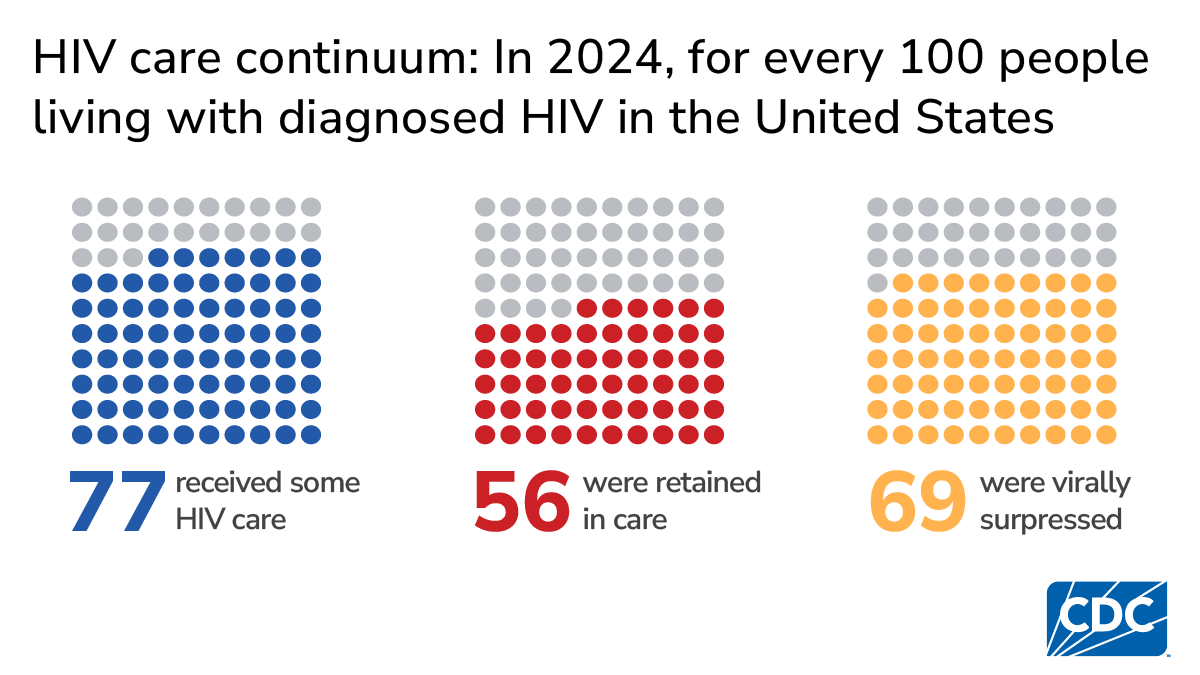
In 2024 in the United States, among nearly 39,000 persons aged 13 years and older who received an HIV diagnosis, 83% were linked to care within one month of diagnosis. Among more than 1.1 million people living with diagnosed HIV at year-end 2024, 77% had received some care, 56% were retained in care, and 69% had achieved viral suppression. These data highlight the need for continued efforts to meet national HIV prevention and care goals.
Current data release
Key findings
National overview
This release presents data on key indicators used to monitor national HIV prevention and care outcomes in the United States and 7 territories and freely associated states (American Samoa, Commonwealth of the Northern Mariana Islands, Guam, Puerto Rico, the Republic of the Marshall Islands, Republic of Palau, and U.S. Virgin Islands). These indicators assess progress across the HIV care continuum and broader prevention efforts. Data included in this release address stage of disease at diagnosis, linkage to and receipt of HIV medical care, viral suppression, deaths from any cause, survival following HIV diagnosis or stage 3 (AIDS) classification, and perinatal HIV exposure.
This data release presents the results of focused analyses of National HIV Surveillance System (NHSS) data used to measure and monitor progress toward U.S. national HIV prevention and care goals.
Important notes:
- Data are presented for persons with diagnosed HIV reported to the Centers for Disease Control and Prevention (CDC) through December 2025.
- Data are provisional with a 12-month reporting delay for assessing diagnoses, deaths, and diagnosed prevalence for the year 2024.
- This release marks the first inclusion of data from the Republic of the Marshall Islands in numbers, rates, and percentages of stage 3 (AIDS) classification at HIV diagnosis, and deaths and survival of persons with diagnosed HIV.
- Highlighted findings are based on 12 or more cases. Numbers less than 12, and percentages and rates based on these numbers, should be interpreted with caution.
- Data should be interpreted with caution for jurisdictions with incomplete death ascertainment for 2024 deaths or with laboratory reporting lapses in 2024. This overview summarizes the data presented in this data release. For complete results, refer to the figures and tables. See NHSS Technical Notes information on definitions and data specifications. Additional stratifications and years of data can be accessed through NCHHSTP AtlasPlus.
HIV continuum of care
Among more than 1.1 million people living with diagnosed HIV at year-end 2024, 77% had received some care, 56% were retained in care, and 69% had achieved viral suppression. These data highlight the need for continued efforts to meet national HIV prevention and care goals.
Stage of disease at diagnosis
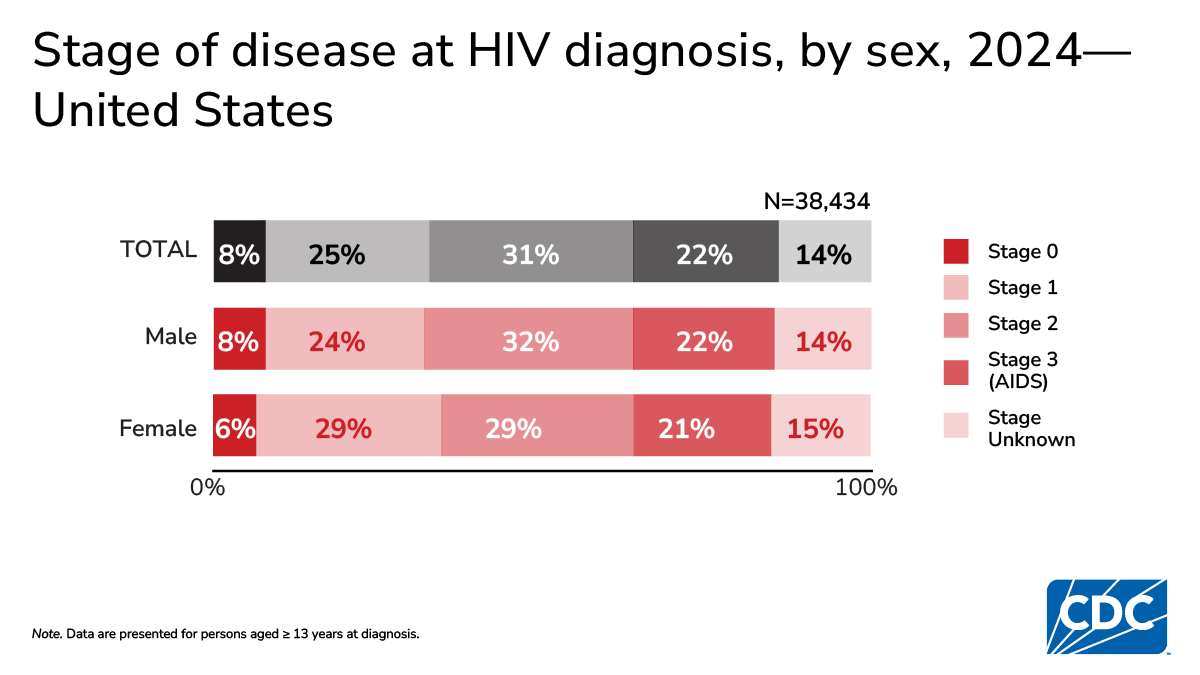
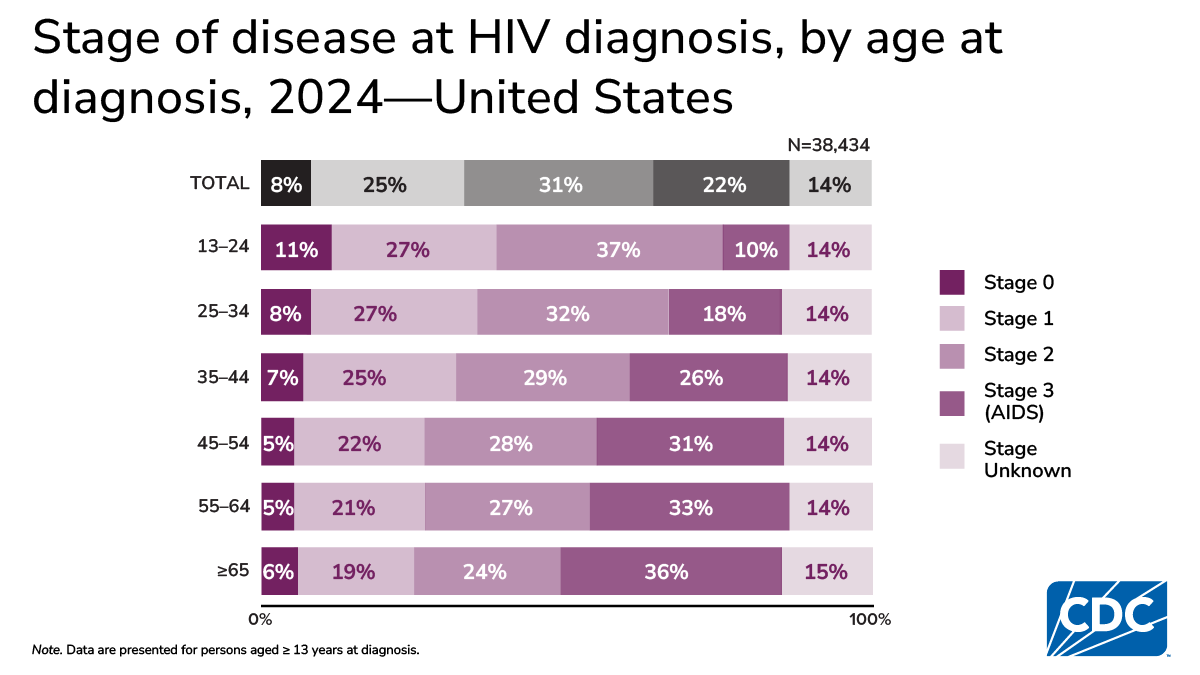
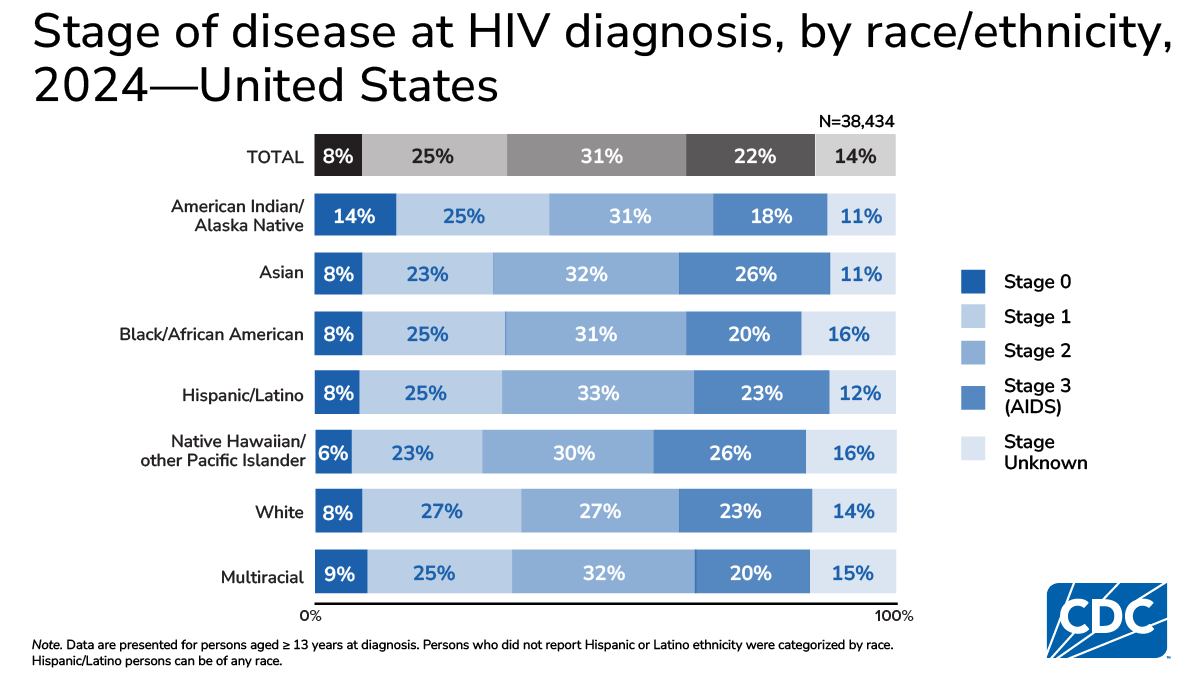
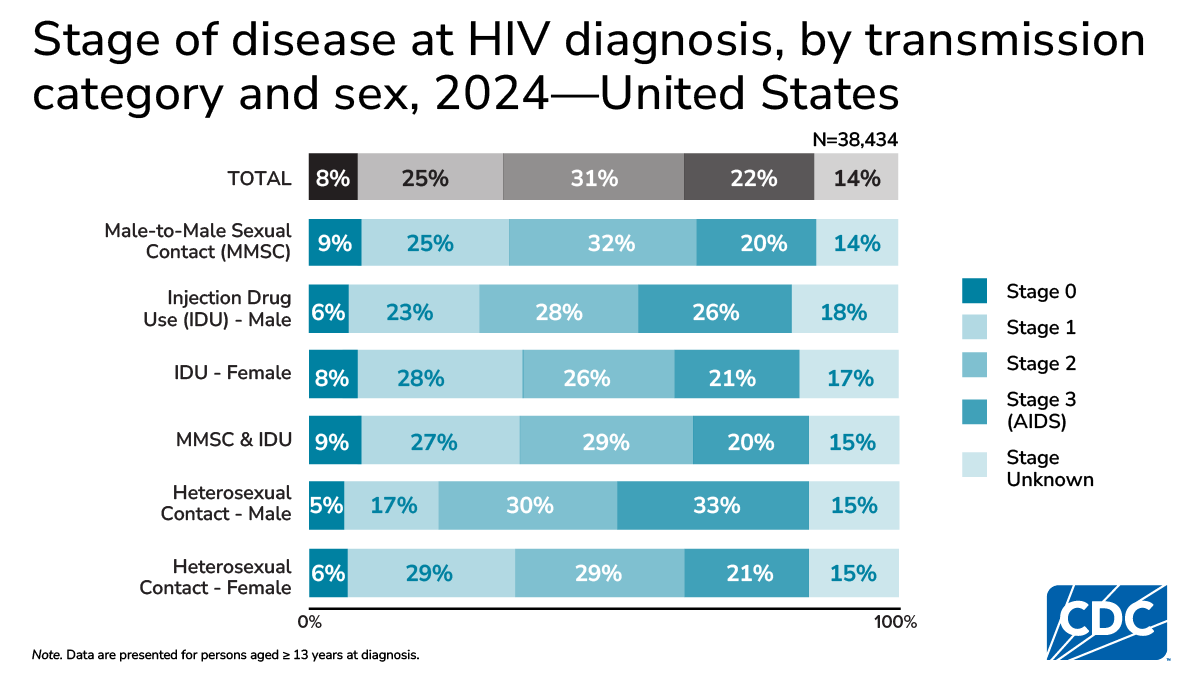
In 2024, among 38,434 persons aged 13 years and older with HIV diagnosed in the United States, 2,997 persons (7.8%) received a stage 0 classification, indicating very early detection of HIV infection. Early (stage 0) diagnoses are a positive indicator of HIV prevention and screening efforts as early diagnoses reflect timely testing and opportunities to rapid linkage to care.
Highest percentages of early (stage 0) diagnoses:
- males (8.2%)
- persons aged 13–24 years (11.2%)
- American Indian/Alaska Native persons (14.1%)
- persons with HIV attributed to male-to-male sexual contact and injection drug use (9.0%) and male-to-male sexual contact (8.8%)
In comparison, among the 38,434 persons aged 13 years and older diagnosed with HIV in 2024 in the United States, 8,341 persons (21.7%) received a stage 3 (AIDS) classification, reflecting late-stage disease at diagnosis and missed opportunities for earlier testing. The higher percentage of stage 3 classifications relative to stage 0 highlights the need to expand screening coverage and strengthen efforts to promote earlier diagnosis.
Highest percentages of late (stage 3, AIDS) diagnoses:
- persons aged ≥ 65 years (35.5%)
- Asian (25.6%) and Native Hawaiian/other Pacific Islander (25.6%) persons
- persons with HIV attributed to heterosexual contact (25.1%)
- persons residing in the Northeast (23.0%) and West (22.6%)
Linkage to care and viral suppression
Linkage to HIV medical care within 1 month
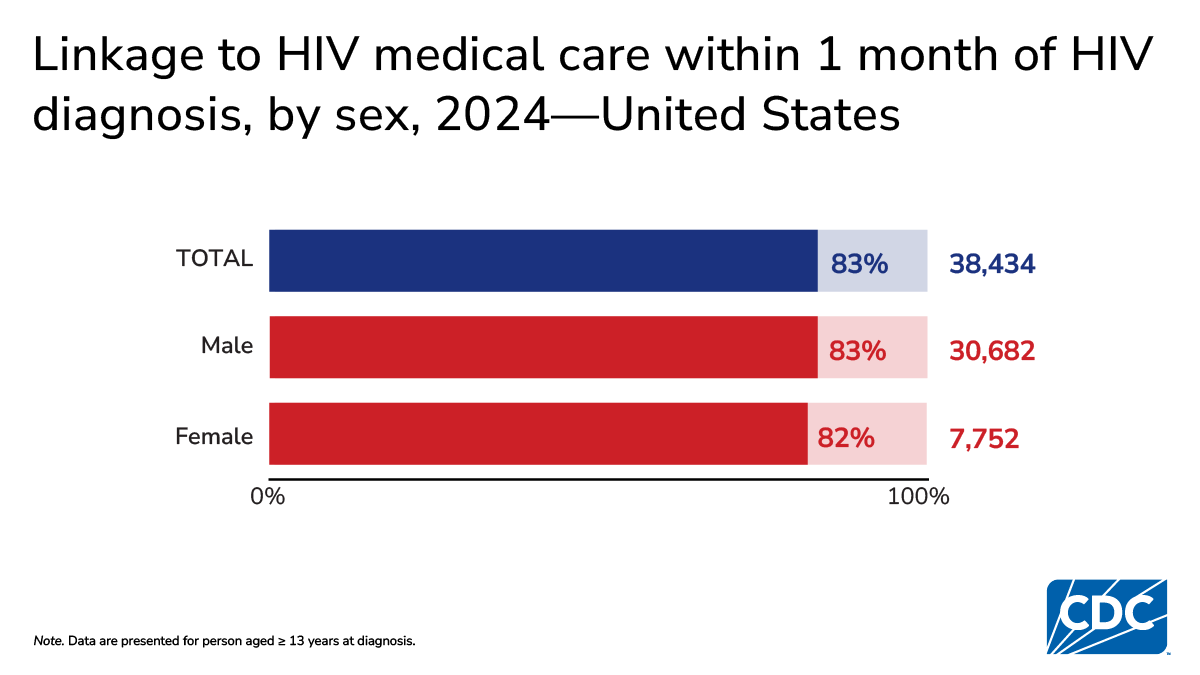
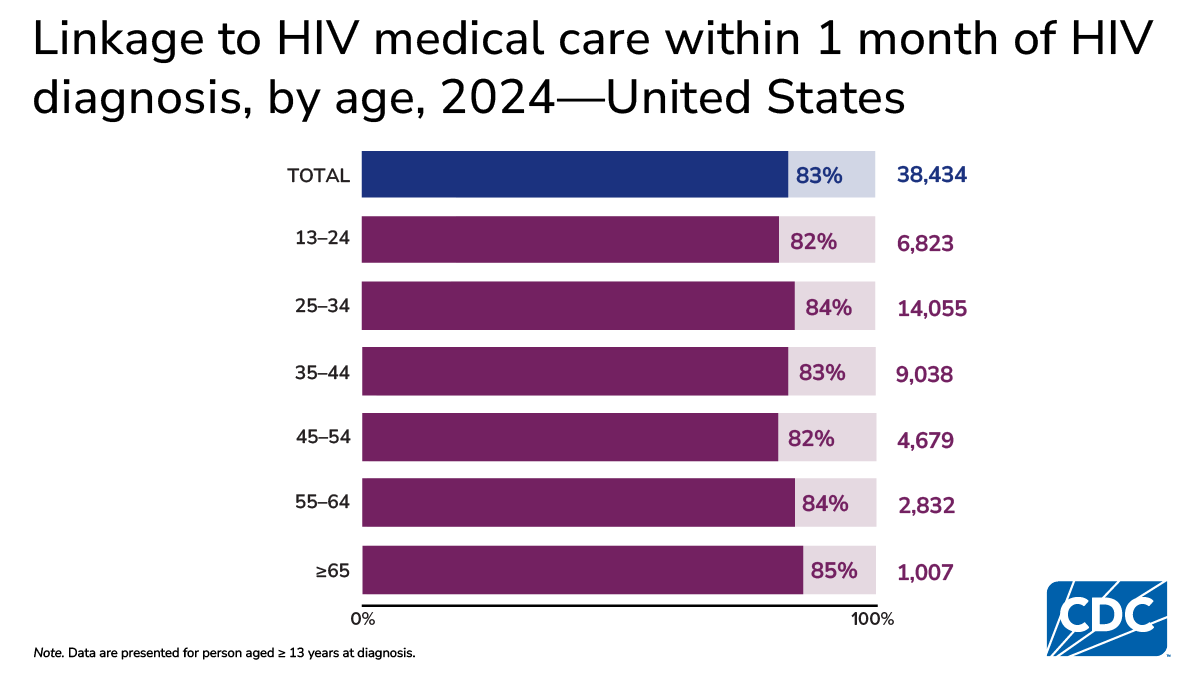
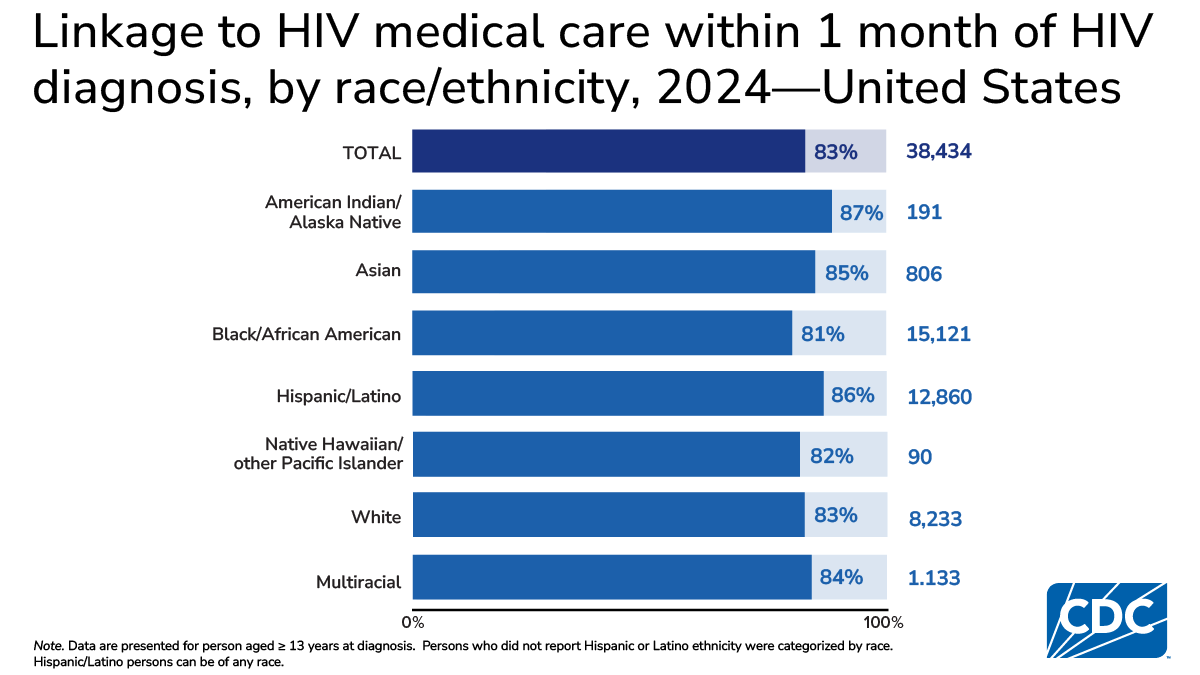
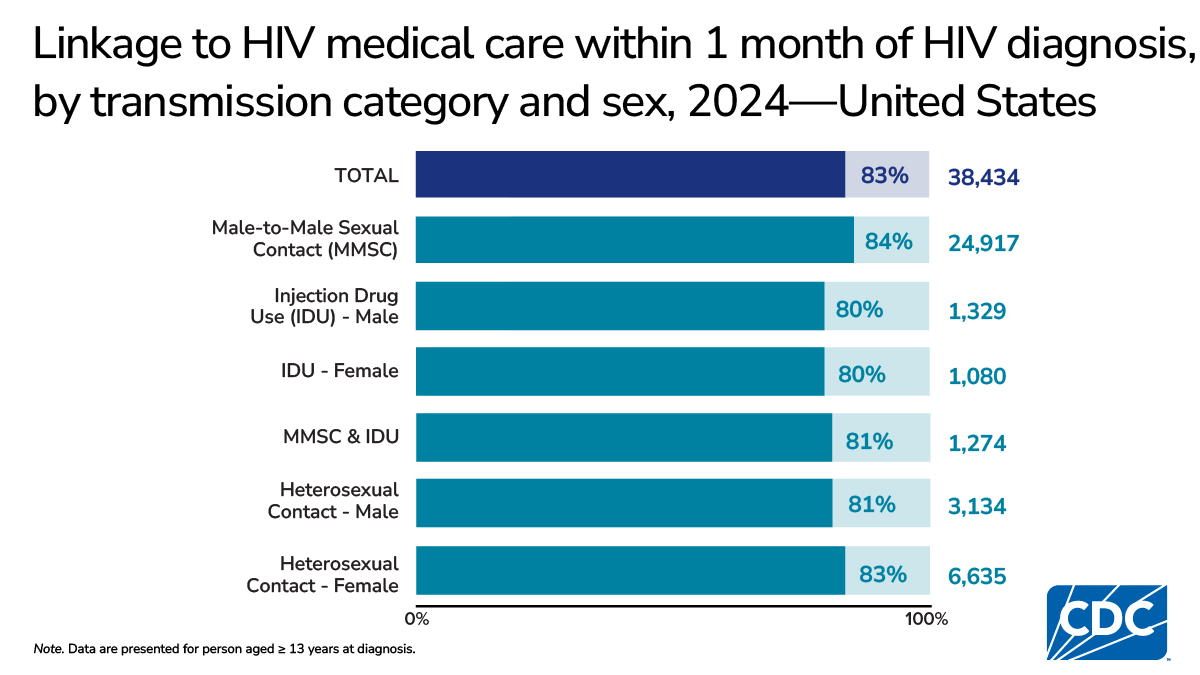
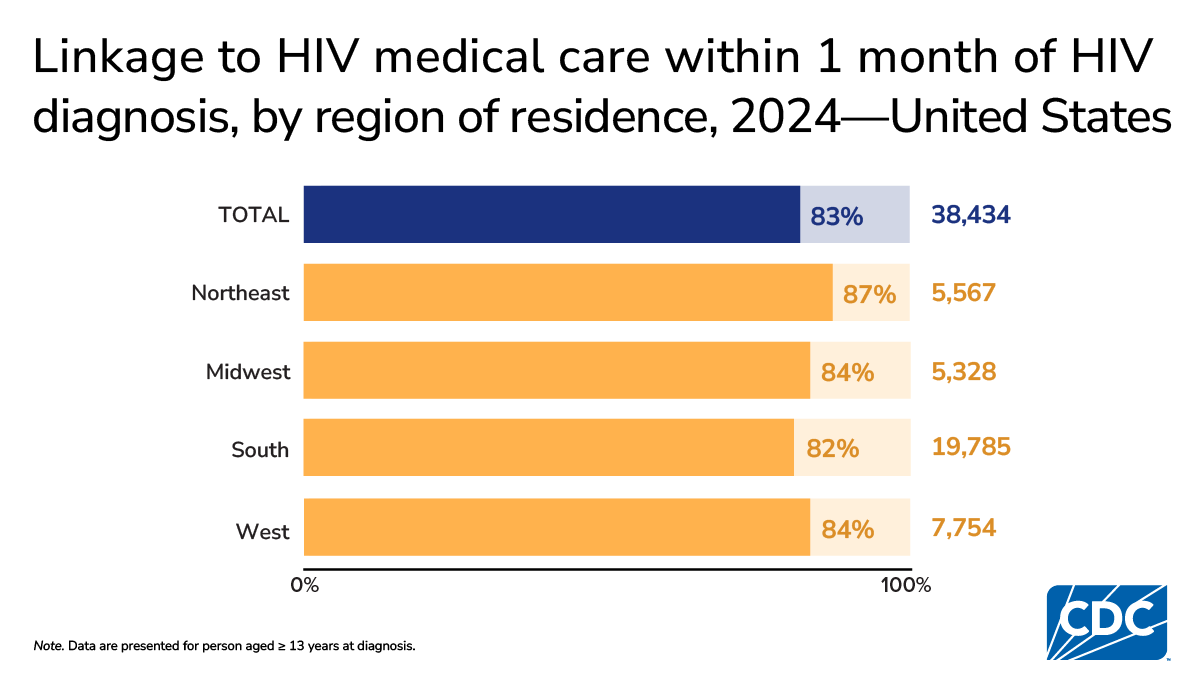
Timely linkage to HIV medical care is essential to ensure rapid treatment initiation, improved health outcomes, and reduced HIV transmission. In the United States, among persons aged 13 years and older with HIV diagnosed during 2024, 83.1% were linked to HIV medical care within 1 month of diagnosis. Delays in linkage represent missed opportunities to initiate treatment promptly and may result in poorer health outcomes and ongoing risk of transmission. Groups with the lowest linkage percentages indicate where intensified efforts are needed to improve timely engagement in care.
Lowest percentages of linkage to care:
- females (82.2%)
- persons aged 13–24 years (82.0%) and persons aged 45–54 years (82.3%)
- Black/African American persons (80.8%)
- persons with HIV attributed to injection drug use (80.2%) and male-to-male sexual contact and injection drug use (80.9%)
- persons residing in the South at the time of diagnosis (81.5%)
Viral suppression within 6 months of HIV diagnosis
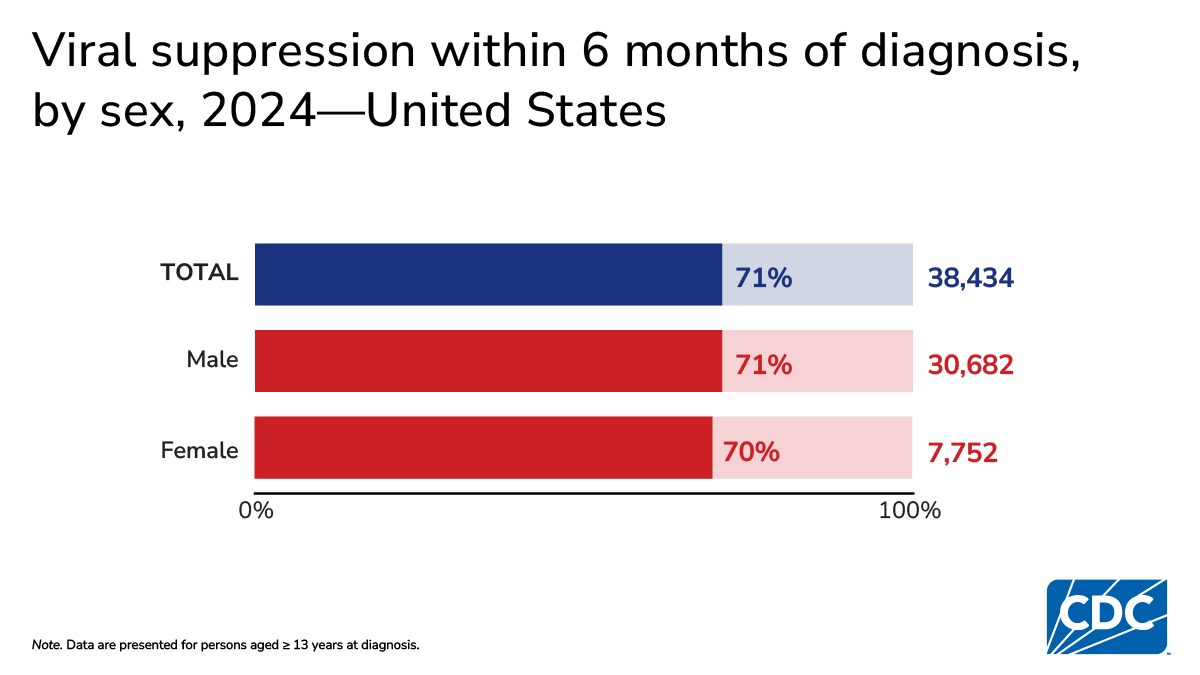
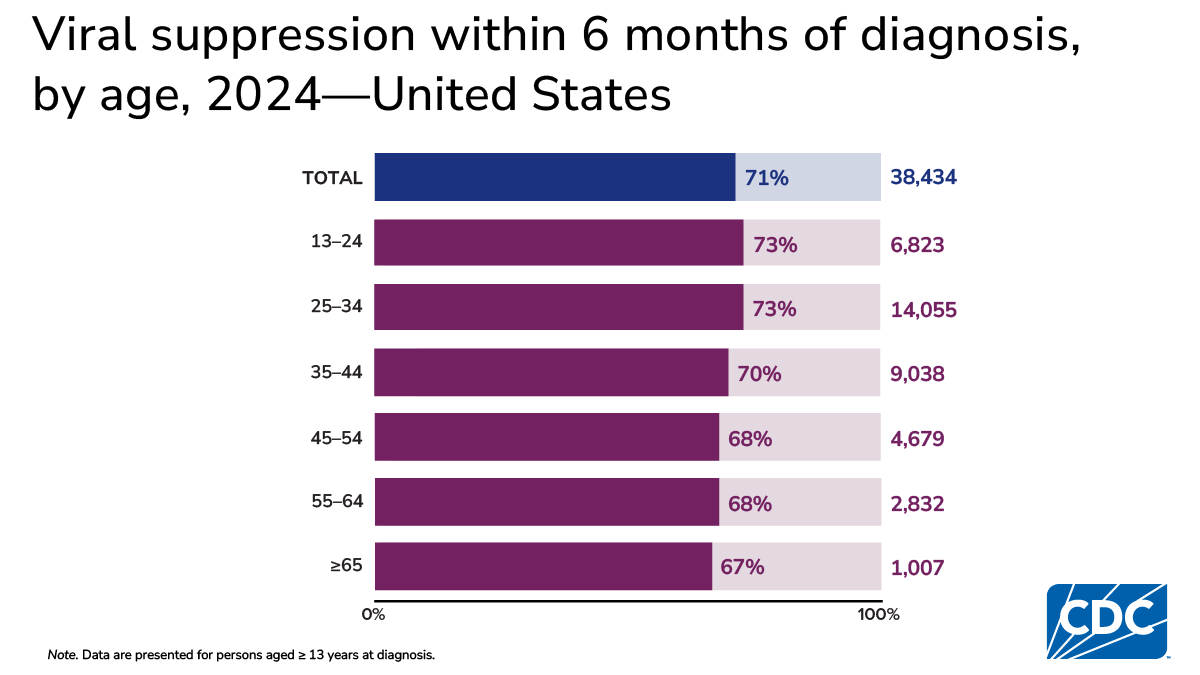
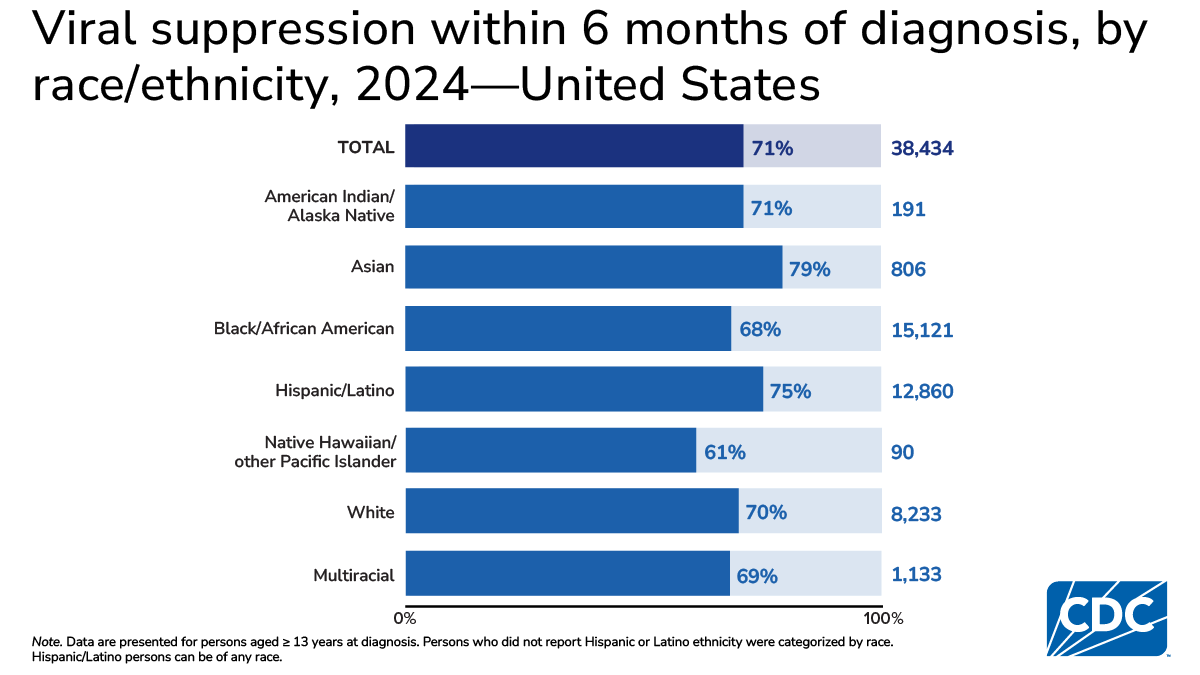
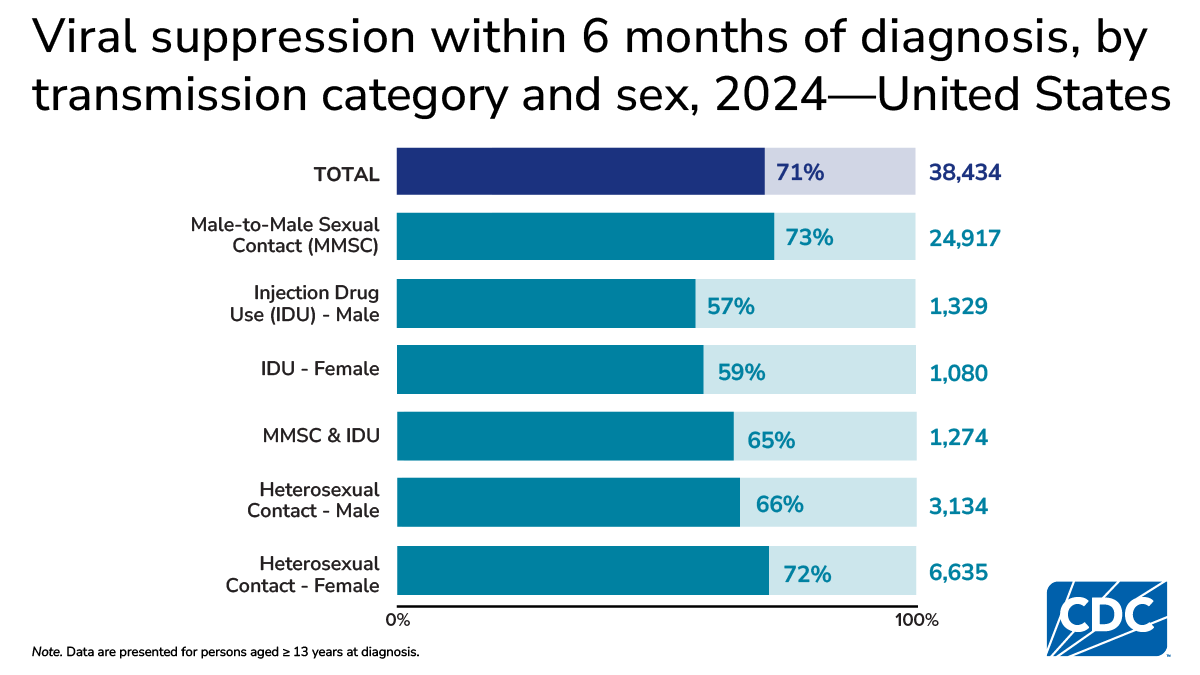
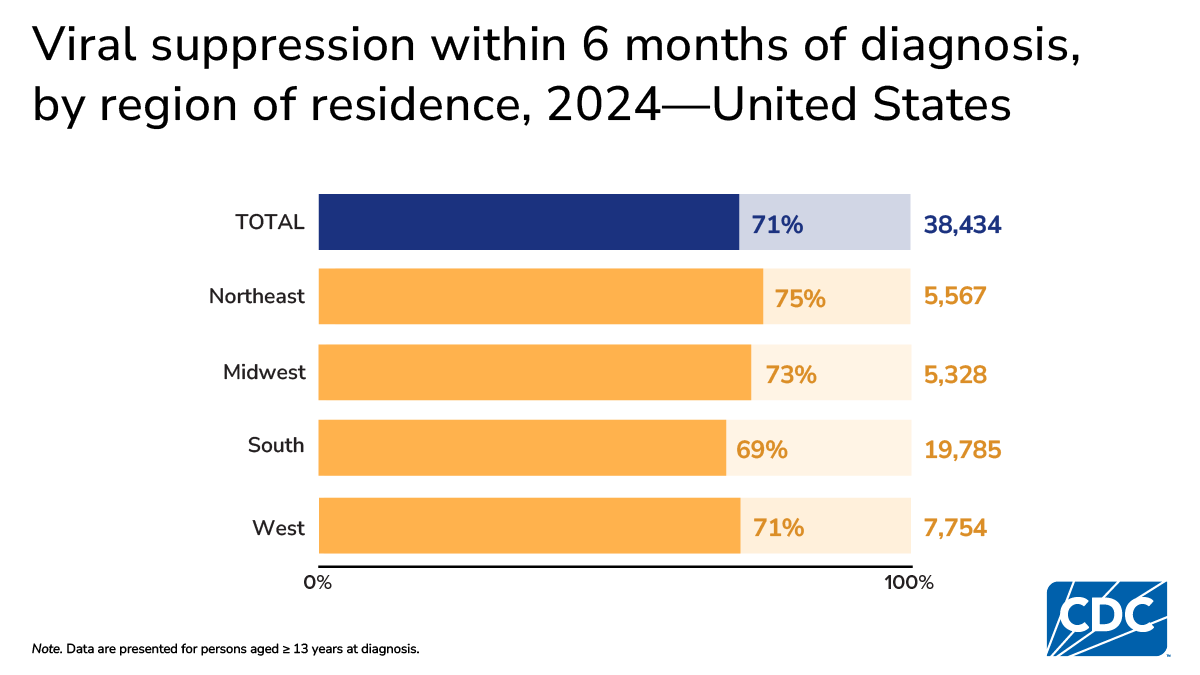
Viral suppression soon after diagnosis improves individual health outcomes and effectively eliminates the risk of sexual HIV transmission. Early viral suppression is a critical indicator of successful treatment engagement and continuity of care. In the United States, among persons aged 13 years and older with HIV diagnosed during 2024, 71.1% achieved viral suppression within 6 months of diagnosis. Delays in viral suppression represent missed opportunities to optimize health outcomes and prevent HIV transmission.
Lowest percentages of viral suppression:
- females (70.3%)
- persons aged ≥ 65 years (67.4%) and persons aged 55–64 years (67.7%)
- Native Hawaiian/other Pacific Islander persons (61.1%)
- persons with HIV attributed to injection drug use (57.9%)
- persons residing in the South at the time of diagnosis (69.2%)
Receipt of medical care and viral suppression during 2024
Receipt of medical care during 2024
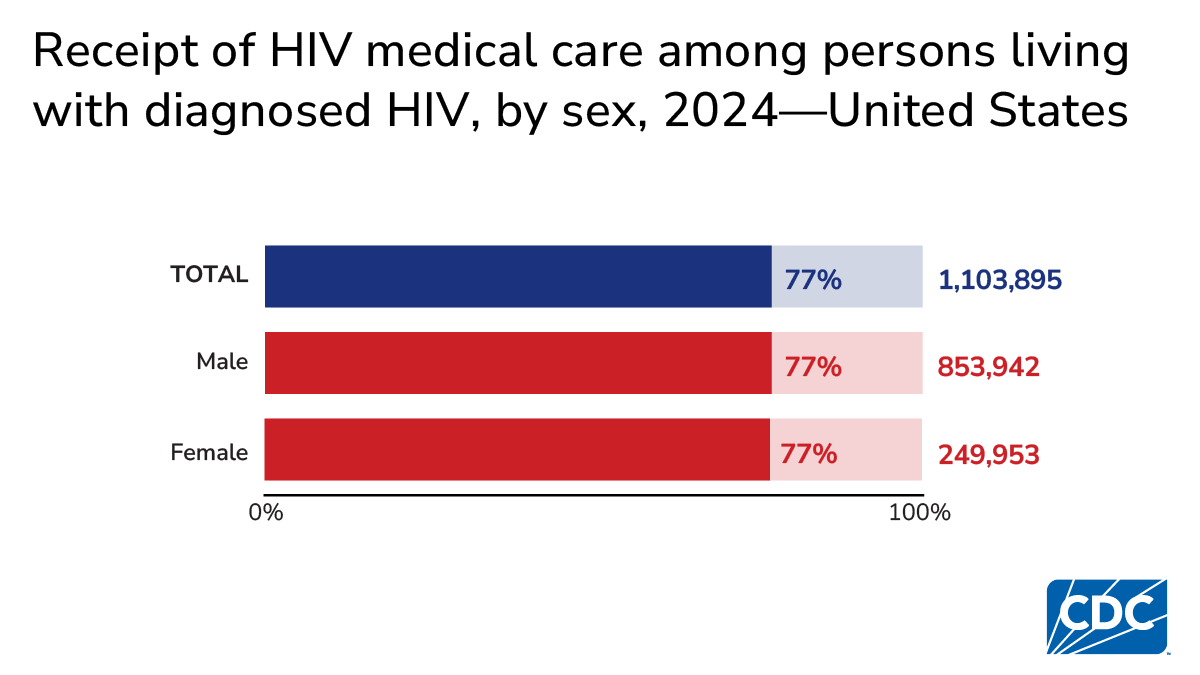
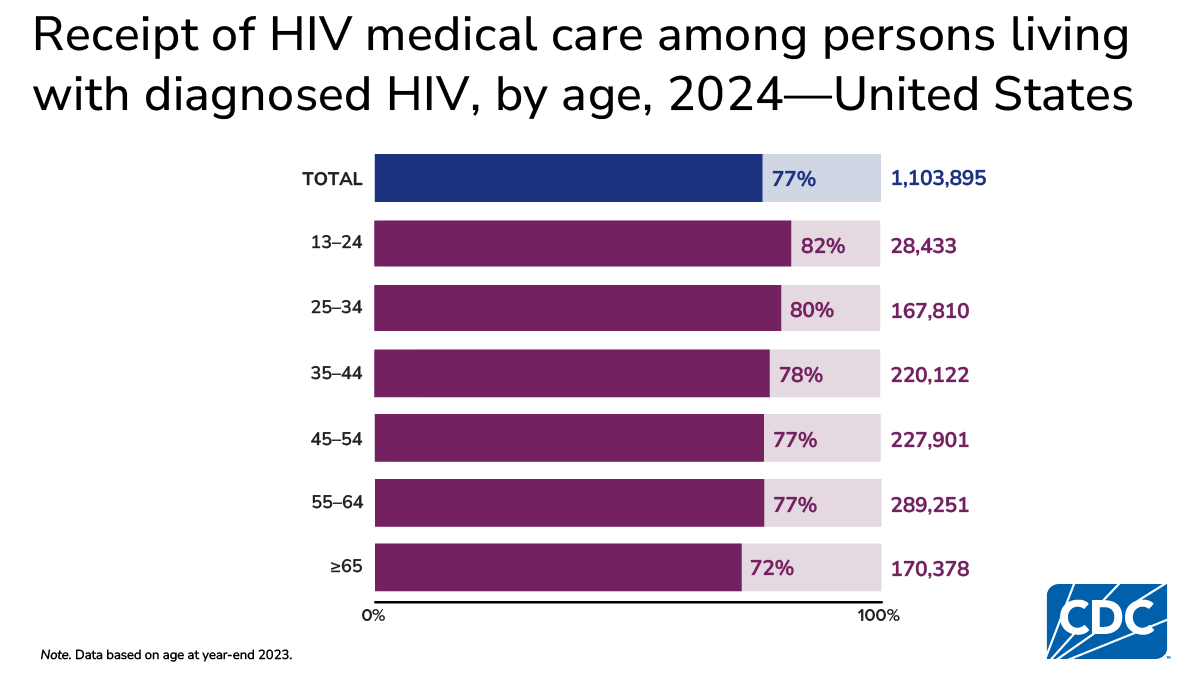
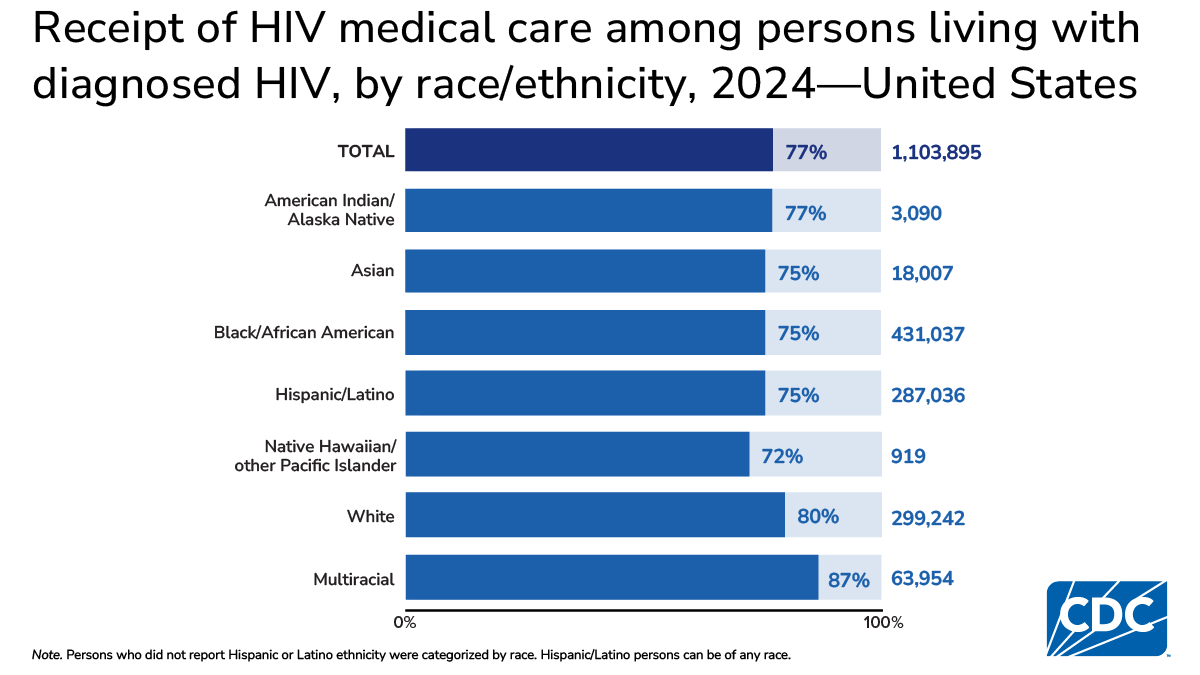
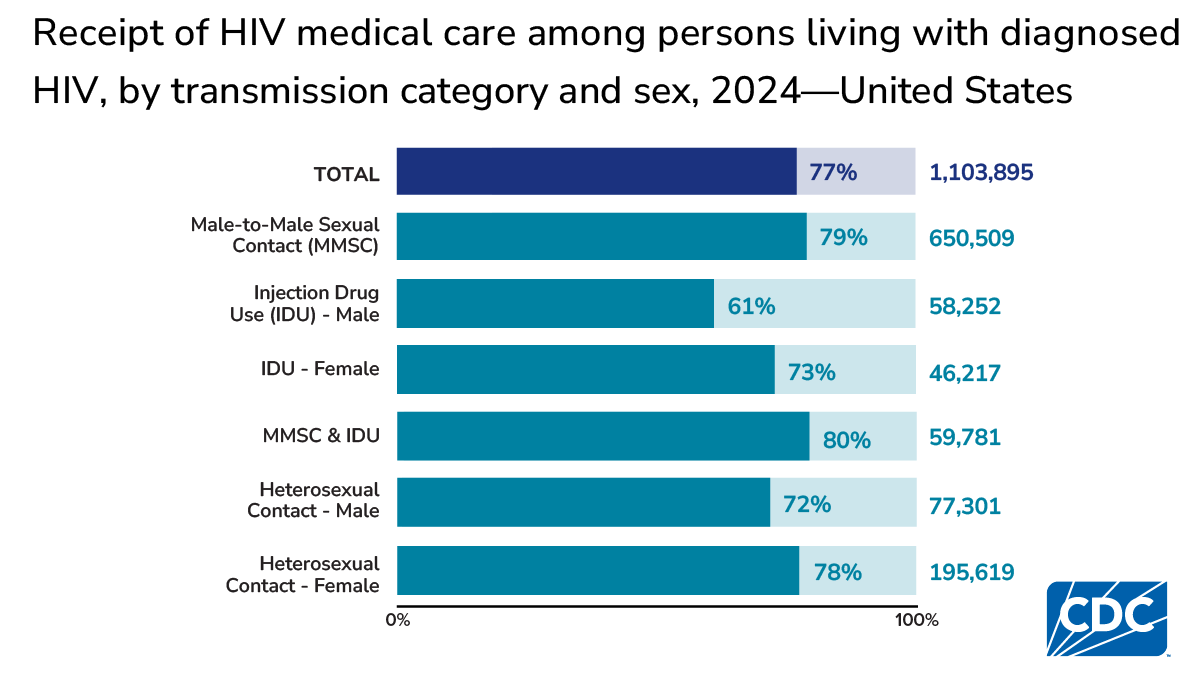
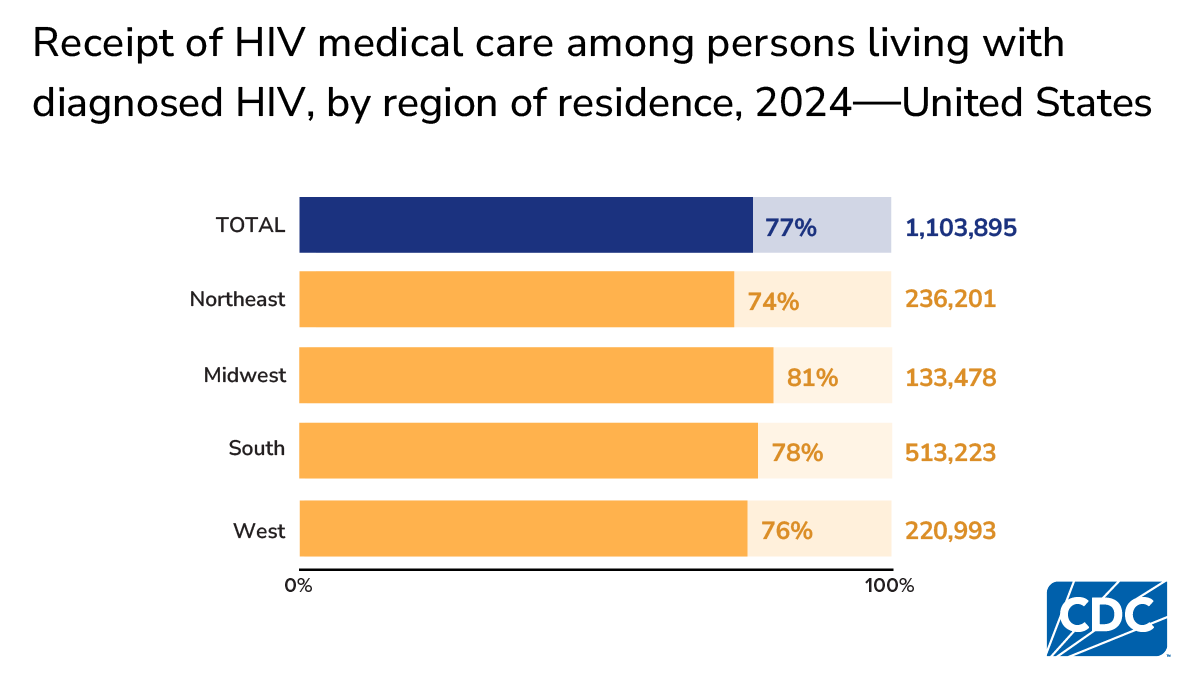
Receipt of ongoing HIV medical care is essential to ensure sustained treatment, monitor disease progression, and support viral suppression. Regular engagement in care is a fundamental component of effective HIV treatment and prevention efforts. In the United States, among 1,103,895 persons aged 13 years and older with HIV diagnosed by year-end 2023 and alive at year-end 2024, 77.0% received any HIV medical care in 2024, defined as at least 1 CD4 or viral load test. Lack of engagement in care is concerning because it may result in delayed treatment adjustments, poorer health outcomes, and reduced likelihood of achieving and maintaining viral suppression.
Lowest percentages of receipt of care:
- females (76.6%)
- persons aged ≥ 65 years (71.5%)
- Native Hawaiian/other Pacific Islander persons (72.1%)
- persons with HIV attributed to injection drug use (66.3%)
- persons residing in the Northeast (73.8%)
Viral suppression during 2024
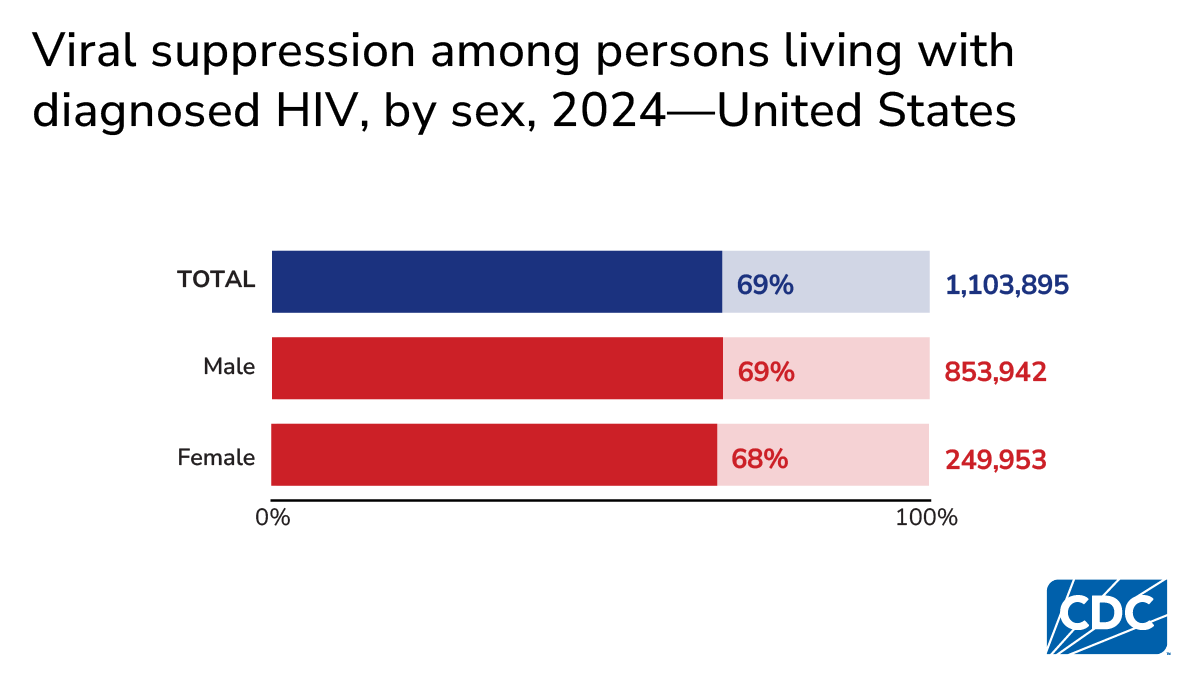
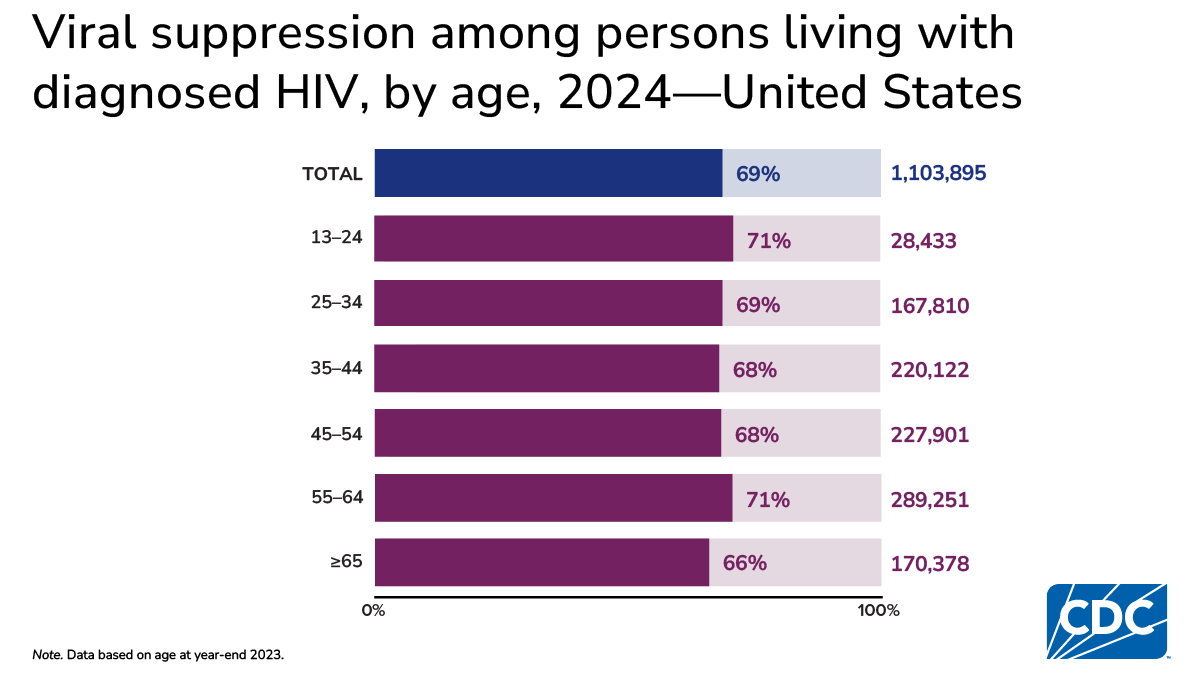
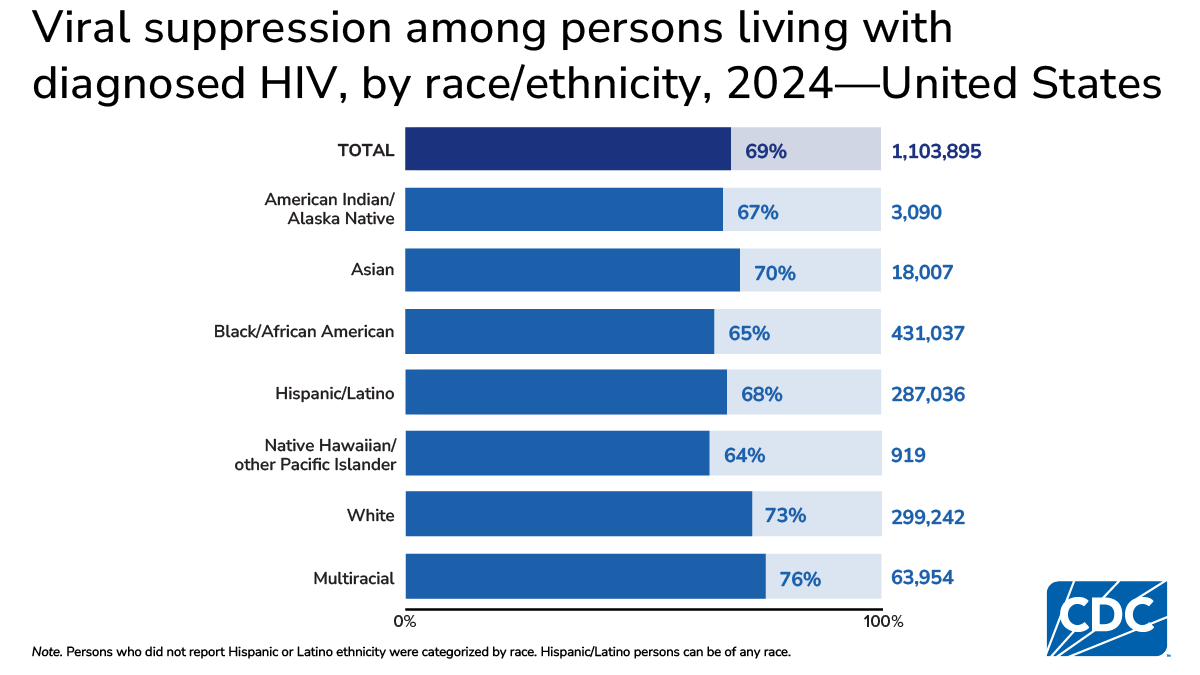
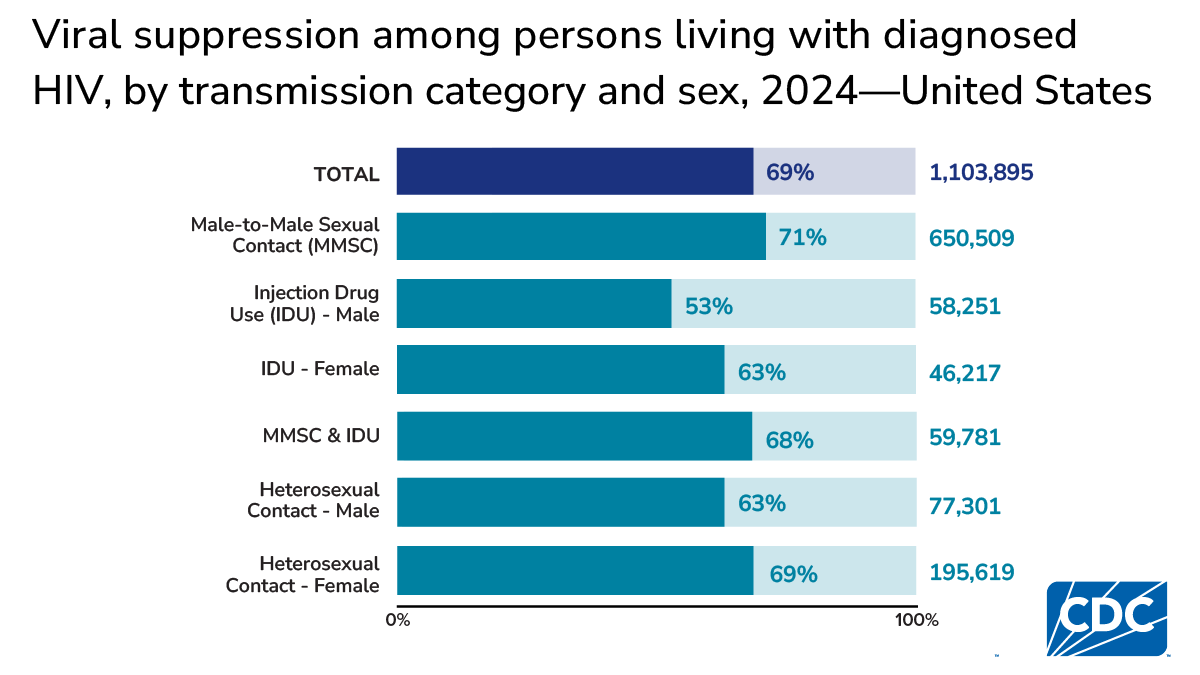
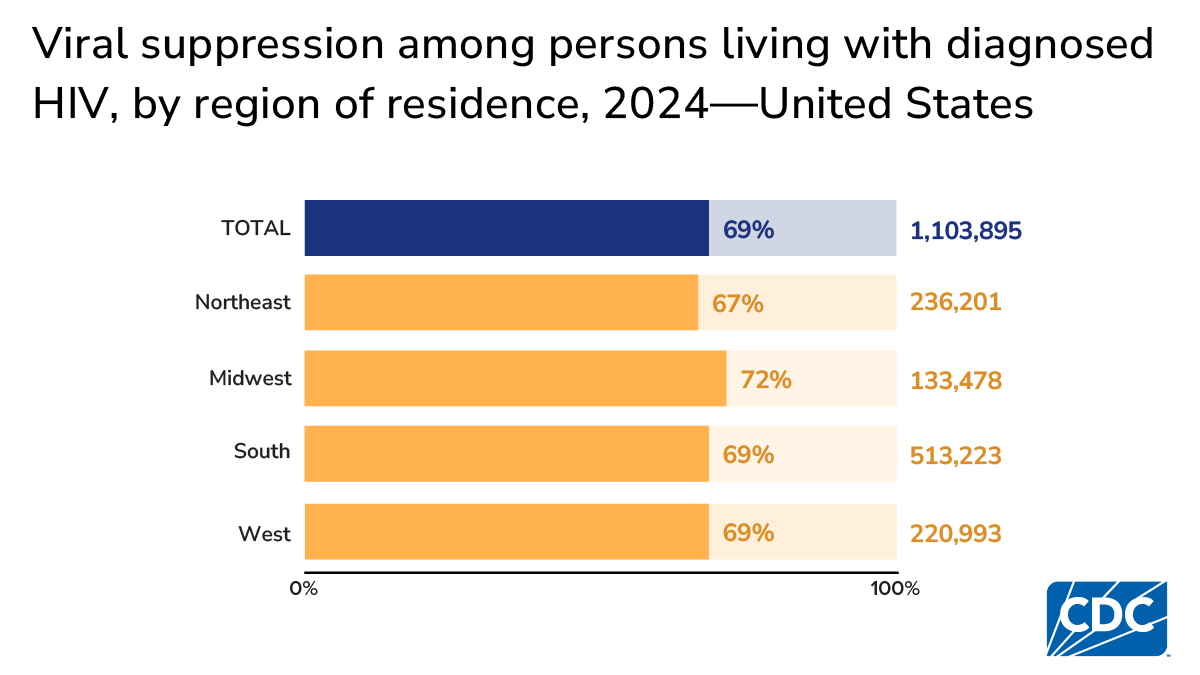
Viral suppression is the primary clinical goal of HIV treatment because it improves individual health outcomes and eliminates the risk of sexual HIV transmission. At the population-level, viral suppression is central to HIV prevention efforts and a key indicator of treatment program success. In the United States, among 1,103,895 persons aged 13 years and older with HIV diagnosed by year-end 2023 and alive at year-end 2024, 68.5% had viral suppression during 2024. Lower levels of viral suppression at the population level are concerning because they are associated with poorer health outcomes and continued potential for HIV transmission.
Lowest percentages of viral suppression:
- females (67.8%)
- persons aged ≥ 65 years (65.8%)
- Native Hawaiian/other Pacific Islander persons (63.9%)
- persons with HIV attributed to injection drug use (57.2%)
- persons residing in the Northeast (66.7%)
Technical notes
Information on HIV surveillance in the United States, including protocols for data presentation by sex, age, race/ethnicity, transmission category, geographic designations and data limitations, is available in the Technical Notes for NHSS.
Acknowledgments
HIV Surveillance Branch
Division of HIV Prevention
National Center for HIV, Viral Hepatitis, STD, and TB Prevention
Centers for Disease Control and Prevention
Publication of this data release would not have been possible without the contributions of the state, territorial, and freely associated state health departments and the HIV surveillance programs that provided surveillance data to CDC.
Suggested citation
All material contained in this data release is in the public domain and may be used and reprinted without special permission; however, citation of the source is appreciated.
Centers for Disease Control and Prevention. Monitoring selected national HIV prevention and care objectives by using HIV surveillance data—United States and 7 territories and freely associated states, 2024. Published May 18, 2026. Accessed [date]. https://www.cdc.gov/hiv-data/nhss/national-hiv-prevention-and-care-outcomes.html