



What to know
Individuals and groups that partner with CDC can use this ADHD Awareness Toolkit to engage audiences, promote ADHD awareness, and offer resources tailored to the needs of families, adults, healthcare providers, and educators.
Overview
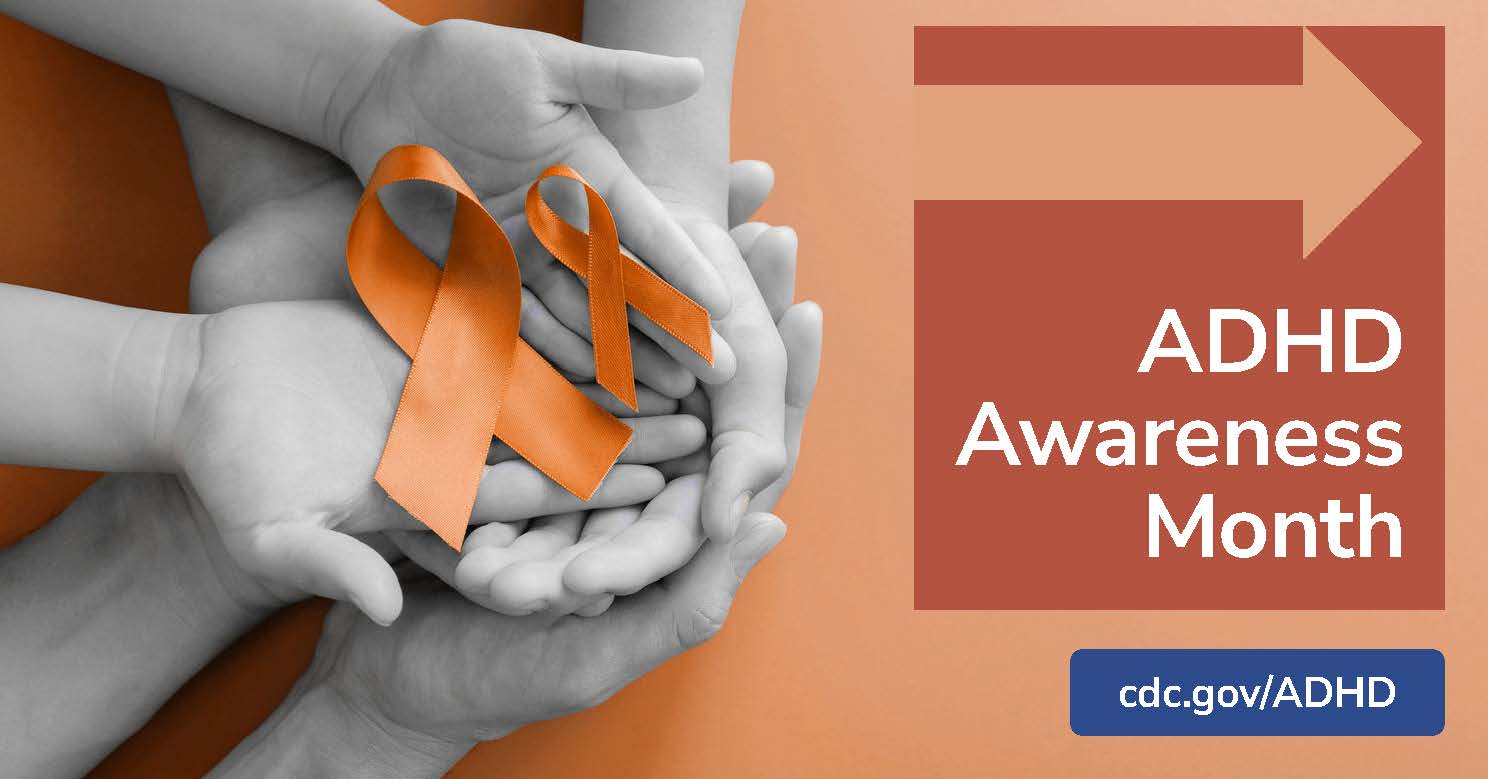
Each year in October, we observe ADHD Awareness Month. While ADHD Awareness Month occurs in October, this toolkit can be used all year round! We continue to learn and share information about "The Many Faces of ADHD."
ADHD symptoms start in childhood and often continue into adulthood, but they may look different in adults. The way ADHD impacts daily living may change across a person's lifetime. The needs for support and treatment may differ for adults and children. Learn more about ways you can support children and adults with ADHD.
Partner with CDC
Join us as an ADHD Awareness Month partner! Use your voice and your platforms to raise awareness, encourage inclusion, and help connect people to support services and one another. The goal of ADHD Awareness Month is to share the information, support, and treatment needed for people with ADHD to thrive.
This partner toolkit provides a one-stop shop for free resources, including social media content and links to educational materials. Examples of how to engage with your audiences include
- Posting ADHD awareness graphics and messages and using hashtags such as: #ADHD, #ADHDAwareness
- Starting conversations around the topic of ADHD in adults. Conversation starters could include questions such as "How does ADHD show up in your life?" or "What are ways that help you manage ADHD?"
- Sharing information about ADHD from CDC's funded partners at the National Resource Center (NRC), a program of CHADD–Children and Adults with ADHD.
CHADD's National Resource Center on ADHD

Resources
Share these resources with as many groups as possible. These resources can help raise awareness and allow all of us to better support people with ADHD.
Find resources for:
Learn more about ADHD and the resources available for families by visiting:

CDC Resources
CDC provides free materials and resources on ADHD for everyone to use and share.
CHADD's National Resource Center on ADHD
CHADD's National Resource Center on ADHD (NRC) is a national clearing house for the latest evidence-based information on ADHD.
Helpline information
Learn more about a variety of topics on ADHD in adults by visiting:
CDC Resources
CDC collects data on ADHD in adults and works with partners to improve the lives of people with ADHD.
CHADD's National Resource Center on ADHD
National Institute of Mental Health (NIMH)
States can play an important role in treatment for people with ADHD. CDC provides states with information and resources to help guide decision-making.

Learn how teachers, parents, and healthcare providers can work together to help children with ADHD do well in school.
CHADD's National Resource on ADHD
The NRC provides information for teachers and school administrators from experts on how to help students with ADHD in the classroom.
- Information for teachers and school administrators
- School services and accommodations
- ADHD toolkits for parents, caregivers, and educators
- Webinars for Early Childhood Educators
ChangeLab Solutions
Positive discipline practices at school can help make school routines more predictable and achievable for children.
American Academy of Pediatrics (AAP)
AAP recommends that the school environment, program, or placement is a part of any ADHD treatment plan.
Sample social media content
Use these sample posts, graphics, and videos on your own personal or organization's handles to raise ADHD awareness by engaging with your audiences and sharing resources with them to better support people with ADHD. Spread the word and tag our partners @CHADD_ADHD, too!
Follow CDC on CDC Facebook, CDC X (@CDCgov), CDC Instagram (@cdcgov), and CDC LinkedIn


Download and share these videos about ADHD in adults to your favorite social media platforms and consider using the sample text provided in your post.



X (formerly Twitter)
- Healthcare providers: October is #ADHDAwareness Month. Let's expand our efforts to educate and support individuals with ADHD
- Do you care for someone with #ADHD? Check out CDC's ADHD resources for you and the person you care for: https://www.cdc.gov/adhd/php/communication-resources/index.html
- Without the right treatment and support, ADHD can have a serious impact on health and well-being. This ADHD Awareness Month, talk with your primary healthcare provider to learn more about the different treatments for ADHD. This CDC resource can help you get started: https://www.cdc.gov/adhd/treatment/index.html
- This #ADHDAwareness Month, we encourage you to raise awareness by sharing your ADHD experience and using the hashtags #ADHDAwarenessIsKey. Find this and other shareable graphics from CDC. Link in bio. https://www.cdc.gov/adhd/php/across-the-lifetime-toolkit/
- Public health attention is on #ADHD as it affects a large number of children and adults. ADHD symptoms may vary and look different at different ages. To learn more about ADHD symptoms, find CDC's link in bio: https://www.cdc.gov/adhd/diagnosis/index.html
- Healthcare providers: We're excited to share CDC's new ADHD Toolkit, which includes links to clinical trainings and resources to help your practice support patients living with ADHD across the lifetime! Take a look: https://www.cdc.gov/adhd/php/across-the-lifetime-toolkit/