



Key points
- Frostbite is a dangerous condition that can happen when a person is exposed to extremely cold temperatures.
- Stay safe this winter by learning more about frostbite, including who is most at risk, signs and symptoms, and what to do if someone develops frostbite.
Overview
What is frostbite?
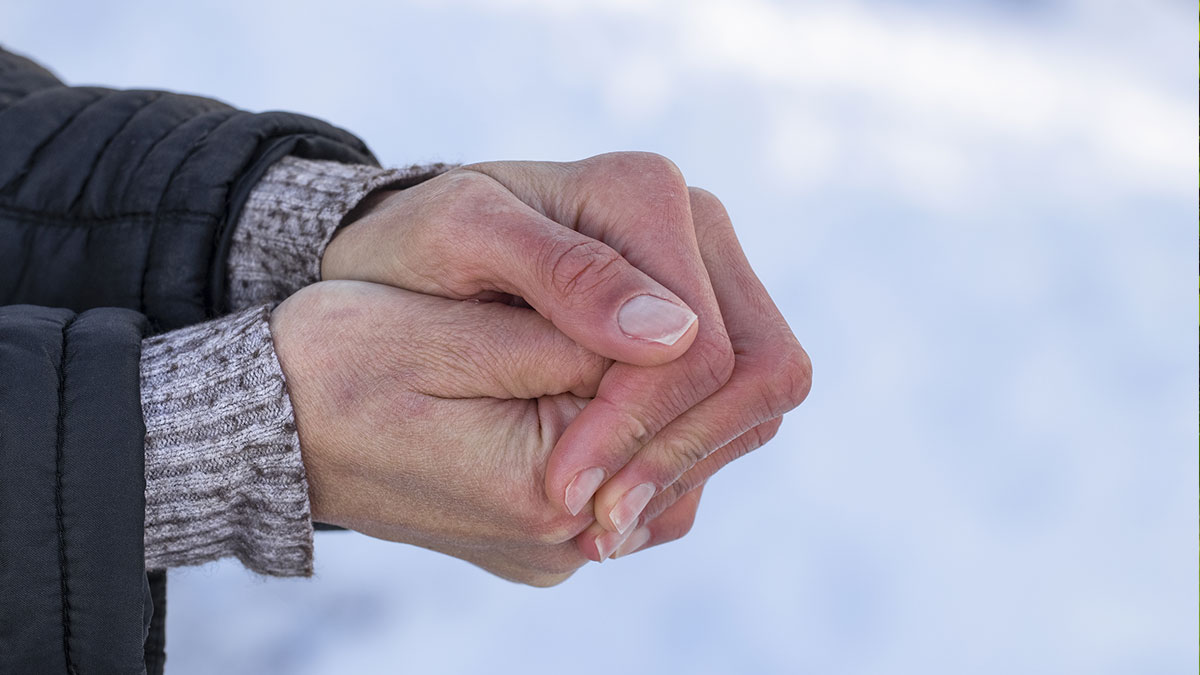
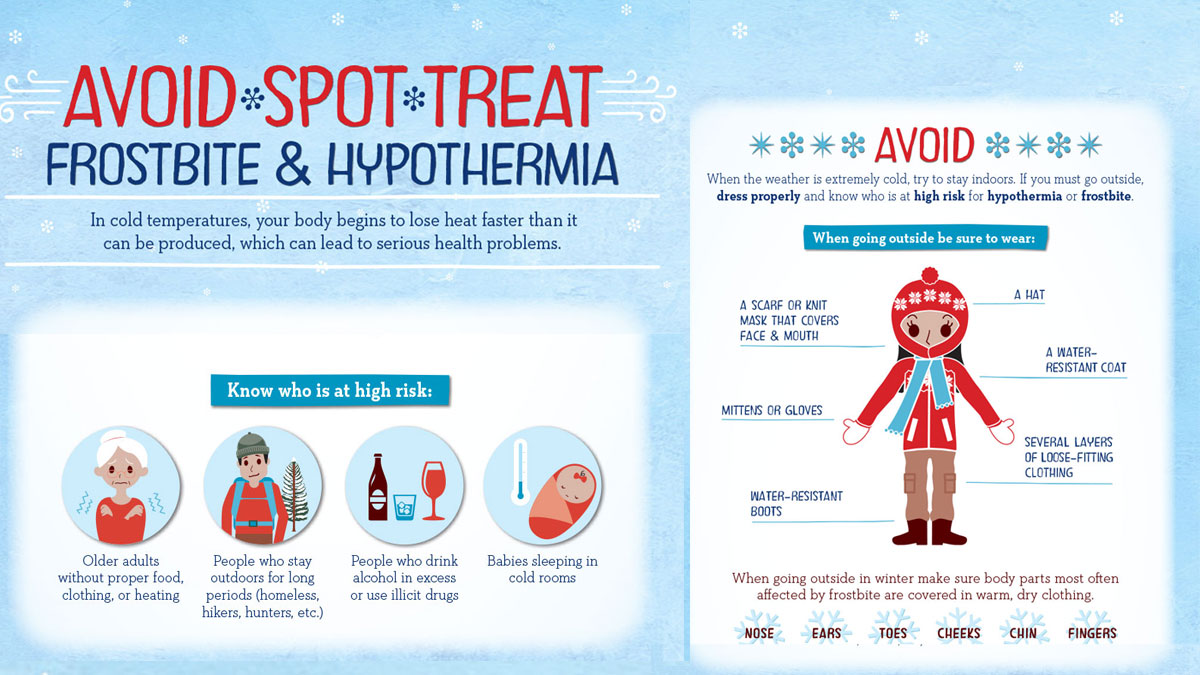
Frostbite is a type of injury caused by freezing. It leads to a loss of feeling and color in the areas it affects, usually extremities such as the nose, ears, cheeks, chin, fingers, and toes. Frostbite can permanently damage the body, and severe cases can lead to amputation (removing the affected body part).
Risk factors
You may have a greater chance of developing frostbite if you:
- Have poor blood circulation
- Are not properly dressed for extremely cold temperatures
What to look out for
If you notice redness or pain in any skin area, get out of the cold or protect any exposed skin—frostbite may be beginning.
Any of the following signs may point to frostbite:
- A white or grayish-yellow skin area
- Skin that feels unusually firm or waxy
- Numbness
A person who has frostbite may not know they have it until someone else points it out because the frozen parts of their body are numb.
Don't wait— take action
If you notice signs of frostbite on yourself or someone else, seek medical care. Check to see if the person is also showing signs of hypothermia. Hypothermia is a more serious condition and requires emergency medical care.
If (1) a person shows signs of frostbite, but no signs of hypothermia and (2) immediate medical care is not available, do the following:
- Get the person into a warm room as soon as possible.
- Unless absolutely necessary, do not walk on feet or toes that show signs of frostbite—this increases the damage.
- Do not rub the frostbitten area with snow or massage it at all. This can cause more damage.
- Put the areas affected by frostbite in warm—not hot—water (the temperature should be comfortable to the touch for unaffected parts of the body).
- If warm water is not available, warm the affected area using body heat. For example, you can use the heat of an armpit to warm frostbitten fingers.
- Do not use a heating pad, heat lamp, or the heat of a stove, fireplace, or radiator for warming. Affected areas are numb and can easily burn.
Don't substitute these steps for proper medical care. Frostbite should be checked by a health care provider. And remember, hypothermia is a medical emergency and immediate medical care is necessary.
Be prepared.
Taking a first aid or emergency resuscitation (CPR) course is a good way to prepare for health problems related to cold weather. Knowing what to do is an important part of protecting your health and the health of others.
Being prepared is your best defense against having to deal with extremely cold weather. By preparing your home and car ahead of winter storms or other winter emergencies, and by taking safety precautions during extremely cold weather, you can reduce your risk of developing health problems related to cold weather.
This page was last updated on this date. Updates may include minor edits, image changes, or other modifications to page content.
The information on this page was last reviewed by subject matter experts to ensure accuracy.