



Key points
This chapter provides general guidance for vaccine-preventable disease surveillance, describing the disease background/epidemiology, case investigation and reporting/notification, disease case definitions, and activities for enhancing surveillance, case investigation, and outbreak control for congenital rubella syndrome.
Disease Description
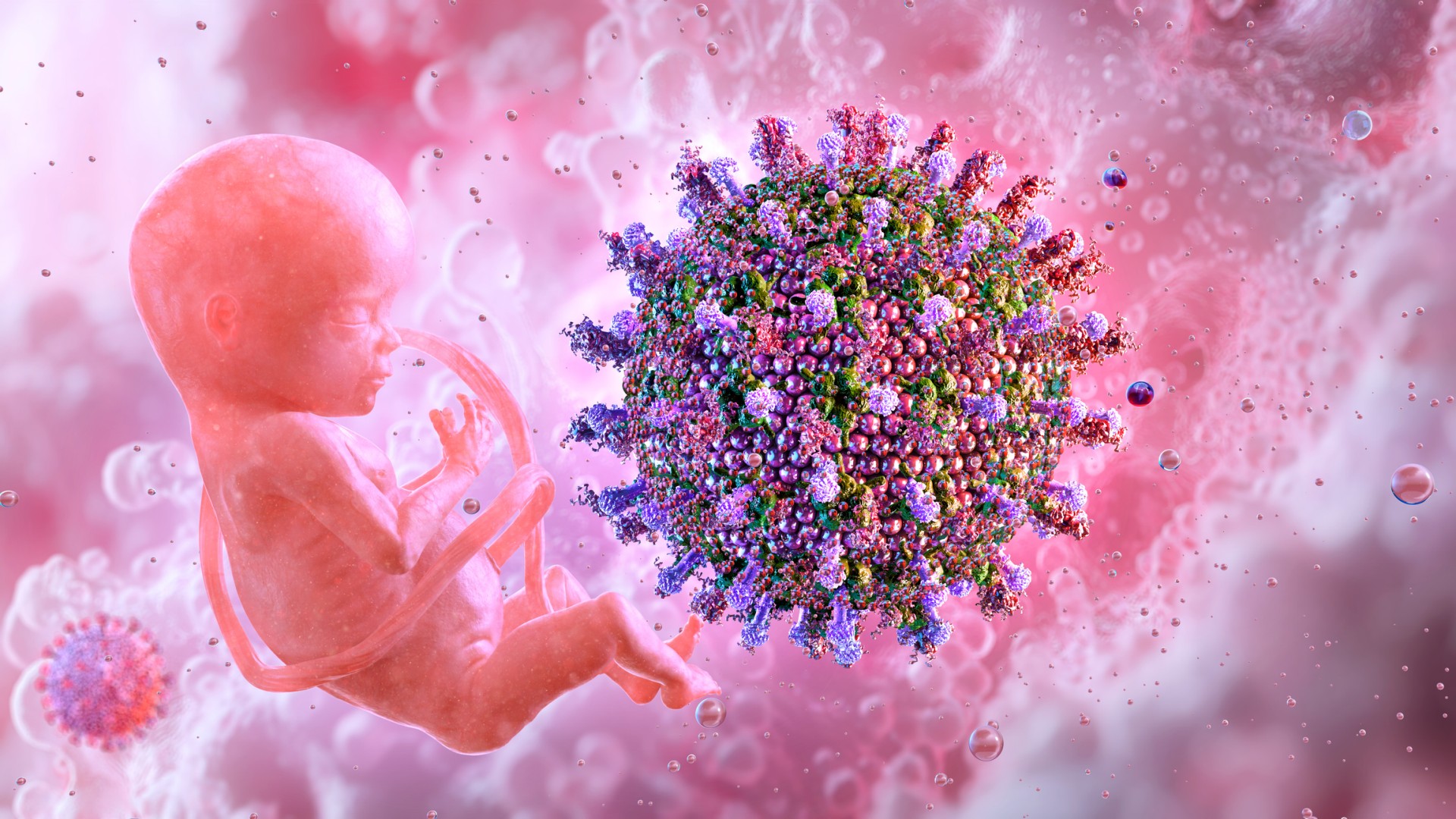
Congenital rubella syndrome (CRS) is an illness in infants that results from maternal infection with rubella virus during pregnancy. When rubella virus infection occurs during early pregnancy, serious consequences—such as miscarriages, stillbirths, and a constellation of severe congenital anomalies in infants—can result. The risk of congenital infection and resulting anomalies is highest during the first 12 weeks of gestation and decreases thereafter; congenital anomalies are rare after rubella infection in the 20th week (or later) of gestation.123 Common signs of CRS include cataracts, congenital heart disease, hearing impairment, and developmental delay. Infants with CRS often present with more than one of these signs but may also present with a single sign, most commonly hearing impairment. See Chapter 14, "Rubella," for more information on rubella infection.
Background
The link between congenital cataracts and maternal rubella virus infection was first recognized in 1941 by an Australian ophthalmologist, Norman Gregg, who had noticed an unusual number of infants with cataracts following a rubella epidemic in 1940.4 In the prevaccine era, rubella was an endemic disease with epidemics occurring every 6–9 years, and the burden of CRS was high. During the 1962–1965 global rubella pandemic, an estimated 12.5 million rubella cases occurred in the United States, resulting in 2,000 cases of encephalitis, 11,250 therapeutic or spontaneous abortions, 2,100 neonatal deaths, and 20,000 infants with CRS.5
In 1969, live attenuated rubella vaccines were licensed in the United States. The goal of the rubella vaccination program began as prevention of congenital rubella virus infections, including CRS.5 In 2004, an independent panel of internationally recognized experts in public health, infectious diseases, and immunizations reviewed the available data on rubella epidemiology and unanimously agreed that rubella elimination (i.e., the absence of year-round endemic transmission) had been achieved in the United States.6 The elimination of rubella and CRS in the United States was reconfirmed in 2011 and in 2014.789 In the years following, the goal for the rubella vaccination program, both domestically and globally, has shifted in aim to reach and maintain elimination of endemic rubella circulation.9
By 2023, 175 World Health Organization (WHO) member countries had incorporated rubella-containing vaccines into their routine national immunization programs, leading to elimination in 99 countries. However, rubella remains endemic in many parts of the world, and it is estimated that approximately 30,000 infants worldwide are born each year with CRS.1011 Because of international travel, imported cases of rubella and resulting CRS cases still occur in the United States. During 1998–2017, 41 of the 47 reported U.S. CRS cases (89%) occurred among infants whose mothers were born outside the United States. During 2005–2017, all except one of 15 confirmed CRS cases were associated with international travel (CDC, unpublished data).
To maintain elimination status, the United States should continue to maintain high vaccination rates among children; ensure that women of childbearing age, particularly women in the United States who were born outside of the United States, are vaccinated; and maintain effective surveillance for both rubella and CRS.
Vaccination
For specific information on vaccinationA with rubella virus-containing vaccines, refer to the Pink Book, which provides general recommendations, including vaccine scheduling and use, immunization strategies for providers, vaccine contents, adverse events and reactions, vaccine storage and handling, and contraindications and precautions.
Case Definition
Case definition for case classification
The following case definition for CRS was approved by the Council of State and Territorial Epidemiologists (CSTE) and published in 2009.12
Suspected: An infant who does not meet the criteria for a probable or confirmed case but who has one or more of the following findings:
- cataracts,
- congenital glaucoma,
- congenital heart disease (most commonly patent ductus arteriosus or peripheral pulmonary artery stenosis),
- hearing impairment,
- pigmentary retinopathy,
- purpura,
- hepatosplenomegaly,
- jaundice,
- microcephaly,
- developmental delay,
- meningoencephalitis, OR
- radiolucent bone disease.
Probable: An infant who does not have laboratory confirmation of rubella infection but has at least two of the following, without a more plausible etiology:
- cataracts or congenital glaucoma,
- congenital heart disease (most commonly patent ductus arteriosus or peripheral pulmonary artery stenosis),
- hearing impairment, OR
- pigmentary retinopathy;
OR
An infant who does not have laboratory confirmation of rubella infection but has at least one or more of the following, without a more plausible etiology:
- cataracts or congenital glaucoma,
- congenital heart disease (most commonly patent ductus arteriosus or peripheral pulmonary artery stenosis),
- hearing impairment, OR
- pigmentary retinopathy;
AND one or more of the following:
- purpura,
- hepatosplenomegaly,
- microcephaly,
- developmental delay,
- meningoencephalitis, or
- radiolucent bone disease.
Confirmed: An infant with at least one of the symptoms clinically consistent with congenital rubella syndrome listed above, and laboratory evidence of congenital rubella infection demonstrated by:
- isolation of rubella virus, OR
- detection of rubella-specific immunoglobulin M (IgM) antibody, OR
- infant rubella antibody level that persists at a higher level and for a longer period of time than expected from passive transfer of maternal antibody (i.e., rubella titer that does not drop at the expected rate of a 2-fold decline per month), OR
- a specimen that is PCR-positive for rubella virus.
Infection only (congenital rubella virus infection [CRI]): An infant without any clinical symptoms or signs of CRS but with laboratory evidence of infection demonstrated by:
- isolation of rubella virus, OR
- detection of rubella-specific IgM antibody, OR
- infant rubella antibody level that persists at a higher level and for a longer period of time than expected from passive transfer of maternal antibody (i.e., rubella titer that does not drop at the expected rate of a two-fold decline per month), OR
- a specimen that is PCR-positive for rubella virus.
Comment: In probable cases, either or both of the eye-related findings (cataracts and congenital glaucoma) should be considered as a single complication. In cases classified as infection only, if any compatible signs or symptoms (e.g., hearing impairment) are identified later, the case is reclassified as confirmed CRS.
Epidemiologic classification of internationally imported and US-acquired
Congenital rubella syndrome cases will be classified epidemiologically as internationally imported or US-acquired, according to the source of infection in the mother, using the definitions below, which parallel the classifications for rubella cases.
Internationally imported case: To be classified as an internationally imported CRS case, the mother must have acquired rubella infection outside the United States, or in the absence of documented rubella infection, the mother was outside the United States during at least some of the period when she may have had exposure to rubella that affected her pregnancy (from 21 days before conception and through the first 24 weeks of pregnancy).
US-acquired case: A US-acquired case is one in which the mother acquired rubella from a documented exposure in the United States. US-acquired cases are subclassified into 4 groups as described in the rubella case classification section in Chapter 14, "Rubella."
States may also choose to classify cases as "out-of-state-imported" when imported from another state in the United States. For national reporting, however, cases will be classified as either internationally imported or US-acquired.
Laboratory Testing
Diagnostic tests used to confirm CRS include serologic assays and molecular detection of rubella virus.
Serologic Testing
Serologic testing can be performed to detect both rubella-specific immunoglobulin G and M antibodies (IgG and IgM, respectively). No single serologic laboratory test can confirm every true case of CRS with 100% certainty. Therefore, results must be interpreted alongside other clinical, laboratory, and epidemiologic evidence.
IgM
When a fetus is infected with rubella virus, it mounts its own immune response producing rubella-specific IgM antibodies. These antibodies can be detected in serum within the first six months of life. Since maternal IgM does not cross the placenta, detection of rubella-specific IgM in a newborn usually supports CRS diagnosis. If IgM result is negative at birth in a suspect case, a follow-up sample should be tested one month later.
Due to potential false-positive results from IgM cross-reactivity with other causes of viral exanthems, IgM testing results should be interpreted alongside additional laboratory testing, such as RT-PCR, and/or an epidemiologic link to a confirmed case.
IgG
Serum collected shortly after birth for rubella-specific IgG detection cannot confirm CRS, as the newborn's IgG contains both maternal antibodies transferred transplacentally and fetal IgG produced in response to congenital infection. Therefore, it is recommended to test suspected CRS patients by IgG at six months of age or later, before the administration of the first dose of a rubella-containing vaccine. By this time, maternal antibodies have typically declined, and persisting rubella IgG is likely produced by an infant indicating congenital infection.
This approach is particularly useful when cases are missed at birth and rubella-specific IgM is no longer detectable. In such situations, the detection of rubella-specific IgG may suggest congenital rubella infection, particularly in countries where rubella has been eliminated or is near elimination, as unexposed infants would not typically exhibit rubella-specific IgG.
Molecular Testing
RT-PCR
For CRS diagnosis, both respiratory and urine samples should be obtained to increase the likelihood of detecting viral material. RT-PCR testing has the highest sensitivity within the first three months of birth and should be performed as soon as possible once CRS is suspected. Serum specimens for IgM testing could be collected at the same time as samples taken for RT-PCR.
While RT-PCR is highly sensitive, a negative result may not rule out CRS, especially when there is strong clinical or epidemiologic suspicion. Test results can be affected by the timing of specimen collection as well as the quality and handling of clinical specimens. Therefore, negative RT-PCR results should be interpreted within the clinical and epidemiologic context of the case to assess the likelihood of congenital infection. Compared to postnatal rubella, infants with CRS typically shed large amounts of virus over an extended period. As such, if the RT-PCR result from the initial specimen is negative, a second specimen collected within the first three months of life is recommended. RT-PCR detection of rubella RNA is particularly useful for confirming cases when serologic results are inconclusive.
Rubella Virus Sequencing (Genotyping)
Viral genetic information can be used to confirm detection of wild-type rubella virus and support molecular epidemiologic surveillance. Molecular epidemiologic surveillance provides critical data to help establish or rule out links between cases and outbreaks, identify potential source countries, trace transmission pathways, and document the absence of endemic rubella circulation, which is essential for maintaining elimination status.1314 All RT-PCR positive specimens for CRS should be submitted for sequencing to the CDC or one of the APHL Vaccine Preventable Disease Reference Centers.
For detailed information and for specific information on specimen collection and shipment refer to Chapter 22, "Laboratory Support for the Surveillance of Vaccine-Preventable Diseases."
Specimen collection
Specimen collection and shipping are important steps in obtaining laboratory diagnosis or disease confirmation for vaccine preventable diseases. Specific instructions for specimen collection and shipping for rubella specimens may be obtained from the CDC Rubella Laboratory website or by contacting the CDC Viral Vaccine Preventable Diseases Branch (Table 1). Specimens for virus isolation and sequencing should be sent to CDC as directed by the State Health Department.
- A central website for requesting lab testing;
- The form required for submitting specimens to CDC (See Form # CDC 0.5034);
- Information on general requirements for shipment of etiologic agents Appendix 24) —although written to guide specimen submission to CDC, this information may be applicable to submission of specimens to other laboratories; and
- The CDC Infectious Diseases Laboratories Test Directory, which not only contains a list of orderable tests for that institution, but also detailed information such as appropriate specimen types, collection methods, specimen volume, and points of contact.
The APHL/CDC Vaccine Preventable Disease Reference Centers perform real-time RT-PCR and genotyping for rubella.
For additional information on laboratory testing for rubella and for specific information on specimen collection and shipment, see Chapter 22, "Laboratory Support for the Surveillance of Vaccine-Preventable Diseases."
Reporting and Case Notification
Case reporting within a jurisdiction
Each state and territory (jurisdiction) has regulations or laws governing the reporting of diseases and conditions of public health importance.15 CRS is nationally notifiable and should be reported in a timely manner to state or local health departments; the specific requirements may differ by state.15 The Congenital Rubella Syndrome Case Report Worksheet is included as Appendix 17, to serve as a guide for data collection during investigation of reported cases.
Case notification to CDC
CRS is an immediately notifiable disease. Provisional notifications of CRS cases should be reported promptly (within 24 hours16) by the state health department to the CDC directly by e-mail (RubellaReport@cdc.gov). Notification of confirmed cases using the event code 10370 should then be electronically reported by the state health department to the National Notifiable Diseases Surveillance System (NNDSS) with the next regularly scheduled electronic transmission. Case notification should not be delayed due to incomplete information. Data previously submitted to NNDSS should be updated with any new available information following completion of case investigations.
Information to collect
The following data elements are epidemiologically important and should be collected during case investigation. Additional information may be collected at the direction of the state or local health department.
- Demographic information
- Child:
- Name
- Address
- Date of Birth
- Age
- Sex
- Race
- Ethnicity
- Country of birth
- Residency (e.g., Does the case-patient reside in the United States or is a foreign visitor?)
- Mother:
- Name
- Address
- Date of Birth
- Age
- Race
- Country of birth
- Residency (e.g., Does the case-patient reside in the United States or is a foreign visitor?)
- Child:
- Reporting source
- State
- County
- Date first reported to a health department
- Clinical Presentation
- Symptoms or syndromes
- Cataracts
- Hearing impairment
- Developmental delay
- Type of congenital heart defect
- Pigmentary retinopathy
- Purpura
- Radiolucent bone disease
- Hepatosplenomegaly
- Meningoencephalitis
- Microcephaly
- Other
- Symptoms or syndromes
- Outcome
- If hospitalized,
- Date of hospitalization
- Reason for hospitalization (if known)
- Duration of hospitalization
- If deceased,
- Date of death
- Results of postmortem examination
- Death certificate diagnoses
- If hospitalized,
- Laboratory
- Molecular tests
- Specimen source (i.e., throat/NP swab, urine)
- Test type (RT-PCR, genotyping, cell culture, or other molecular tests)
- Date of specimen collection
- Test results
- Serological tests
- Test type (IgM, IgG, avidity)
- Date of specimen collection
- Test Results
- Molecular tests
- Epidemiological
- Transmission setting (e.g., infection acquired at home, healthcare setting, travel, event)
- Source of transmission (e.g., age, vaccination status, relationship to decedent)
- Import status (international import or US-acquired case, see section “Case Definition”)
- Travel history in the 23 days prior to symptom onset, including destinations and flight or maritime information
- Date of return to United States
- Relationship to outbreak (Is case part of an outbreak or is it sporadic?)
- Number of contacts
- Maternal history
- Number of doses of rubella-containing vaccine received
- Type(s) of vaccine received (rubella, MMR, MMRV)
- Date(s) of dose(s) of rubella-containing vaccinations received
- Country of vaccination
- If not vaccinated, reason
- History of documentation of rubella virus infection or disease during pregnancy
- History of pregnancies within and outside the United States (including country and years of pregnancies)
- Rubella laboratory results
- Travel outside the U.S. during pregnancy (countries visited with dates)
- Contact with foreign travelers during pregnancy
- Number of doses of rubella-containing vaccine received
Case and Contact Investigations
All reports of suspected CRS cases should be investigated immediately.
Cases of US-acquired CRS are sentinel events indicating the presence of rubella virus infections in a community that may have been previously unrecognized. Rubella is an infectious disease for which up to 50% of cases are asymptomatic, and investigation of an apparently isolated case could reveal additional cases. Therefore, health agencies should consider a single case of rubella as a potential outbreak. The Congenital Rubella Syndrome Case Report worksheet (Appendix 17) is used to collect clinical and laboratory information on cases of CRS that are reported by jurisdiction and local health departments. CRS cases are classified by year of patient's birth.
Confirm a diagnosis of CRS
The diagnosis of a single case of US-acquired CRS in a community should result in intensified rubella and CRS surveillance and an investigation to determine where the mother was exposed to rubella virus. If the mother was exposed in a different jurisdiction, jurisdiction/state health officials should contact the other jurisdiction to alert public health officials to possible rubella virus circulation.
Infants with CRS may present with various manifestations of the syndrome, depending on timing of the infection in pregnancy. Infants born to women infected with rubella virus during pregnancy should be evaluated for infection and CRS. However, depending on the gestational age of the infant at the time of the mother's infection, symptoms may not be apparent; if maternal rubella occurs after 20 weeks gestation, the only congenital anomaly may be hearing impairment. Furthermore, some children are infected in utero but have no congenital anomalies.
Laboratory confirmation should be sought in all suspected CRS cases, regardless of signs or symptoms.
Conduct laboratory evaluation of exposed pregnant women
Pregnancy status should be determined for all women with childbearing potential who have been in contact with a rubella or CRS case.
Regardless of symptom history, a blood specimen should be collected as soon as possible, tested for the presence of rubella IgG and IgM antibodies, as well as IgG avidity, and stored for possible retesting. See "Laboratory Support for Surveillance of Vaccine-Preventable Diseases" for information on serologic evaluation of pregnant women exposed to rubella.
Prevent Transmission from Infants with CRS
Cases of US-acquired rubella have occurred among susceptible persons providing care for infants with CRS.17 Because infants can shed the virus for prolonged periods (up to 1 year of age or longer), they should be considered infectious until at least 1 year of age or until 2 clinical specimens obtained 1 month apart are negative for rubella virus by RT-PCR or culture. The majority of infants shed virus for 3 months after birth, and screening typically starts at 3 months of age when a decline in rubella shedding would reasonably be expected. Infants with CRS should be placed in contact isolation during any hospital admission before 1 year of age or until the infant is no longer considered infectious. In addition, health officials should consider excluding infants with CRS from childcare facilities until they are no longer considered infectious. Persons having contact with infants with CRS should have documented evidence of immunity to rubella virus (see Chapter 14, "Rubella"). Caregivers should be informed of the potential risk of the infants to susceptible pregnant contacts. For additional information on case management and transmission prevention, refer to the Red Book.
Conducting active surveillance
Surveillance for CRS should be implemented when confirmed or probable rubella cases are documented in a setting where pregnant women might have been exposed18. Women who contract rubella virus while pregnant should be monitored for birth outcome, and appropriate testing should be performed on the infant after birth. Healthcare providers should evaluate infants with signs consistent with CRS and collect specimens for rubella-specific IgM antibody detection and RT-PCR for virus detection to aid in diagnosis.
Given the elimination of CRS in the United States, all identified rubella cases are expected to be import-associated, and thus, surveillance efforts should focus on identifying the source of importation. Additional guidelines for enhancing surveillance are given in Chapter 19, "Enhancing Surveillance."
Authors and Suggested Citation
Nicole Wiley, MPH; Adria Mathis, MSPH; Kelley Raines, MPH; Thomas D Filardo, MD; Min-hsin Chen, PhD; Ludmila Perelygina, PhD; David Sugerman, MD; Tatiana Lanzieri, MD
Content source:
National Center for Immunization and Respiratory Diseases
- The decision to vaccinate is a personal one. People should consult with their healthcare provider to understand their options to get a vaccine and should be informed about the potential risks and benefits associated with vaccines.
- Peckham CS. Clinical and laboratory study of children exposed in utero to maternal rubella. Arch Dis Child. Aug 1972;47(254):571–7. doi:10.1136/adc.47.254.571
- Webster WS. Teratogen update: congenital rubella. Teratology. Jul 1998;58(1):13–23. doi:10.1002/(sici)1096-9926(199807)58:1<13::Aid-tera5>3.0.Co;2-2
- Miller E, Cradock-Watson JE, Pollock TM. Consequences of confirmed maternal rubella at successive stages of pregnancy. Lancet. Oct 9 1982;2(8302):781–4. doi:10.1016/s0140-6736(82)92677-0
- Gregg NM. Congenital cataract following German measles in the mother. 1941. Epidemiol Infect. Aug 1991;107(1):iii-xiv; discussion xiii-xiv. doi:10.1017/s0950268800048627
- National Communicable Disease Center. Rubella surveillance. Bethesda, MD: U.S. Department of Health, Education, and Welfare; 1969.
- Centers for Disease Control and Prevention (CDC). Elimination of rubella and congenital rubella syndrome—United States, 1969–2004. MMWR Morb Mortal Wkly Rep. Mar 25 2005;54(11):279–82.
- Grant GB, Reef SE, Dabbagh A, Gacic-Dobo M, Strebel PM. Rubella and congenital rubella syndrome control and elimination—global progress, 2000–2014. Wkly Epidemiol Rec. Sep 25 2015;90(39):510–6.
- Centers for Disease Control and Prevention (CDC). Documentation and verification of measles, rubella and congenital rubella syndrome elimination in the Region of the Americas: United States National Report 2012. Atlanta, GA: CDC; 2012.
- World Health Organization (WHO). Measles and Rubella Strategic Framework: 2021–2030. World Health Organization; 2020.
- Robertson SE, Featherstone DA, Gacic-Dobo M, Hersh BS. Rubella and congenital rubella syndrome: global update. Rev Panam Salud Publica. Nov 2003;14(5):306–15. doi:10.1590/s1020-49892003001000005
- Lebo E, Vynnycky E, Alexander JP Jr., et al. Estimated current and future congenital rubella syndrome incidence with and without rubella vaccine introduction —19 countries, 2019–2055. MMWR Morb Mortal Wkly Rep 2025;74:305–11. http://dx.doi.org/10.15585/mmwr.mm7418a3.
- Rubella vaccines: WHO position paper. Wkly Epidemiol Rec. Jul 15 2011;86(29):301–16.
- Reef SE, Strebel P, Dabbagh A, Gacic-Dobo M, Cochi S. Progress toward control of rubella and prevention of congenital rubella syndrome—worldwide, 2009. The Journal of Infectious Diseases. 2011;204(suppl_1):S24–S27. doi:10.1093/infdis/jir155
- Reef SE, Redd SB, Abernathy E, Kutty P, Icenogle JP. Evidence used to support the achievement and maintenance of elimination of rubella and congenital rubella syndrome in the United States. The Journal of Infectious Diseases. 2011;204(suppl_2):S593–S597. doi:10.1093/infdis/jir420
- Roush S, Birkhead G, Koo D, Cobb A, Fleming D. Mandatory reporting of diseases and conditions by health care professionals and laboratories. JAMA. 1999;282(2):164–70. doi:10.1001/jama.282.2.164
- CDC. Protocol for public health agencies to notify CDC about the occurrence of nationally notifiable conditions, 2025.
- Greaves WL, Orenstein WA, Stetler HC, Preblud SR, Hinman AR, Bart KJ. Prevention of rubella transmission in medical facilities. Jama. Aug 20 1982;248(7):861–4.
- McCauley MM, Pope AE, Reef SE, Smith SF, Rowe-West B, Zimmerman LA. Control and prevention of rubella: evaluation and management of suspected outbreaks, rubella in pregnant women, and surveillance for congenital syndrome. Journal Issue. Morbidity and Mortality Weekly Report (MMWR): Recommendations and Reports. 2001;50(12):1–24. https://stacks.cdc.gov/view/cdc/13496