



Release
NCHS Media Inquiries
Approximately, 3 in 10 U.S. adults and children reported having a seasonal allergy, eczema, or food allergy in 2024, according to new data from CDC's National Center for Health Statistics. Almost 7% of adults in the U.S. and 5% of children have a food allergy.
The data are captured in two new reports from the National Health Interview Survey: "Diagnosed Allergic Conditions Among Adults: United States, 2024" and "Diagnosed Allergic Conditions Among Children Ages 0−17 Years: United States, 2024."
Findings from the adults' report include—
- About one quarter (25.2%) of adults have a seasonal allergy, 7.7% have eczema, and 6.7% have a food allergy.
- White, non-Hispanic adults are more likely to have a seasonal allergy (28.5%) compared to Black, non-Hispanic (24.4%); Hispanic (16.5%) and Asian, non-Hispanic (17.2%) adults.
- The percentage of adults with eczema is higher among women (9.5%) compared to men (5.7%).
- Black, non-Hispanic adults are more likely to have a food allergy (9.9%) compared to Hispanic (5.4%); White, non-Hispanic (6.4%), and Asian, non-Hispanic (5.5%) adults.
Highlights from the children's report include—
- 1 in 5 children (20.6%) have a seasonal allergy, 12.7% have eczema, and 5.3% have a food allergy.
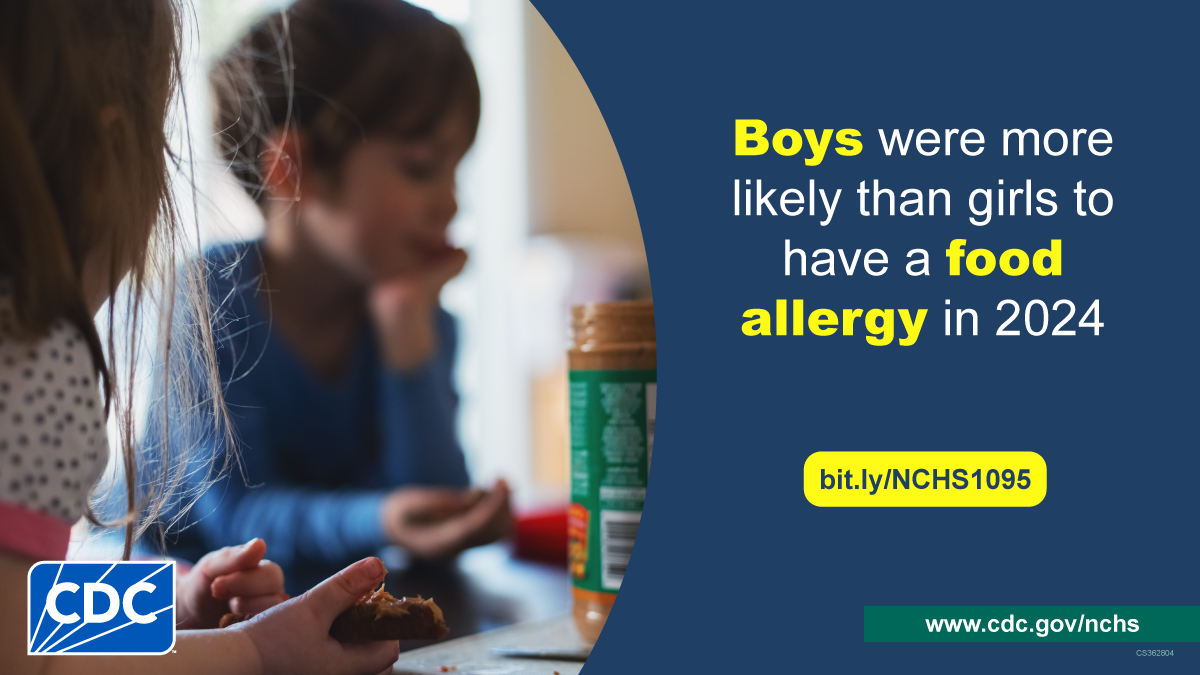
- Boys (5.9%) are more likely to have a food allergy than girls (4.7%).
- Children 6–11 years are most likely to have eczema (12.7%), followed by children 0–5 years (14.0%), and children 12–17 years (11.6%).
- Children living in rural areas (25.6%) were more likely to have a seasonal allergy compared with children living in urban areas (19.8%).
The reports are available on the CDC/NCHS website.
Content Source:
About the National Center for Health Statistics