



What to know
The US Flu Vaccine Effectiveness (VE) network is designed to provide estimates of clinical effectiveness of U.S.-licensed flu vaccines by age group and by influenza virus type and subtype.
Overview
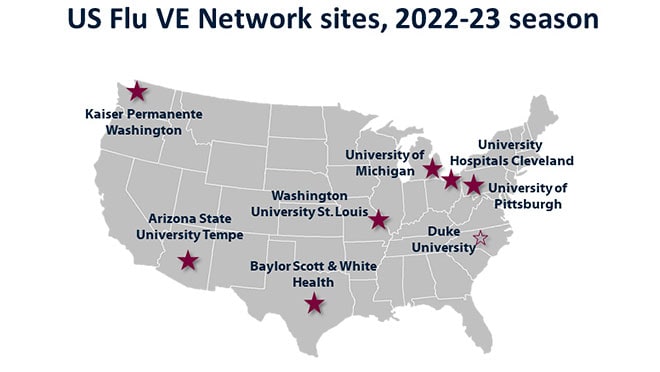
The network consists of seven study sites and one coordinating center (Duke University) spread across the United States:
- Arizona State University (Arizona)
- University of Michigan (Michigan)
- Washington University in St. Louis (Missouri)
- University Hospitals of Cleveland (Ohio)
- University of Pittsburgh (Pennsylvania)
- Baylor Scott & White Health (Texas)
- Kaiser Permanente Washington (Washington)
About the network
Enrollment in annual studies to measure VE begins when respiratory virus activity increases locally and continues through the end of the season.
The study uses a test-negative design, which compares flu vaccination rates among people with confirmed flu illness versus people with similar illness who do not have flu based on laboratory tests. More information on the study methods used by the US Flu VE Network is available at How Flu Vaccine Effectiveness and Efficacy Are Measured.
Vaccination status is defined as receipt of at least one dose of the current season's flu vaccine according to medical records, immunization registries, and/or self-report.
Patients are eligible if they are 8 months or older (and therefore eligible to be fully vaccinated against flu) and have reported acute respiratory illness with new or worsening cough within the last 7 days.
Eligible patients, or their parent or legal guardian, complete an enrollment interview and answer basic questions regarding their flu vaccination status, age, underlying health conditions, and other characteristics. Flu vaccination status is later confirmed by reviewing records and immunization databases.
Following enrollment, a respiratory specimen is collected and tested for influenza virus using reverse transcription polymerase chain reaction (RT-PCR) laboratory testing. Specimens are then tested to determine the influenza virus type and subtype if applicable (i.e., H1N1 or H3N2).
Flu vaccine effectiveness estimates are typically adjusted for study site, age, sex, self-rated general health status, race, Hispanic ethnicity, interval from onset to enrollment, and calendar time of illness.