



Key points
- Having a family health history of a birth defect, developmental disability, newborn screening disorder, or genetic condition makes you more likely to have a baby with this condition.
- Talk to your healthcare provider if you have concerns about your or your partner's family health history.

Overview
Planning for pregnancy
Thinking about having a baby? Do you have a family health history of a birth defect, developmental disability, newborn screening disorder, or genetic condition? If so, you might be more likely to have a baby with this condition.
Learning more about your family health history before you get pregnant can give you time to address any concerns. Remember to consider the family health history of both potential parents, not just mom.
Be sure to discuss any concerns with your healthcare provider. Testing before you get pregnant can give you time to think about what the results mean for you. In some cases, results might impact your pregnancy planning.
During pregnancy
Expecting a baby? You might be wondering whether your baby will have mommy's eyes or daddy's dimples. But your baby will inherit much more than that.
Learn about both parents' family health history to give your baby the best start possible. Do either of you have a family health history of a birth defect, developmental disability, newborn screening disorder, or genetic condition? If so, your baby might be more likely to have this condition.
Knowing if your baby is more likely to have a condition can help you find and address potential health problems early. Your healthcare provider might recommend genetic counseling and testing based on your or your partner's family health history.
Reasons for genetic counseling
Based on your family health history, your healthcare provider might refer you for genetic counseling. Other reasons for genetic counseling include having had
- Infertility (trouble getting pregnant),
- 2 or more miscarriages,
- A previous pregnancy or child with a genetic condition or birth defect, or
- A baby who died at less than 1 year of age.
After genetic counseling, you might decide to have genetic testing for conditions that could affect your baby. If a genetic disorder runs in your family, make sure that your test includes your family's genetic change, if known.
How carrier screening works
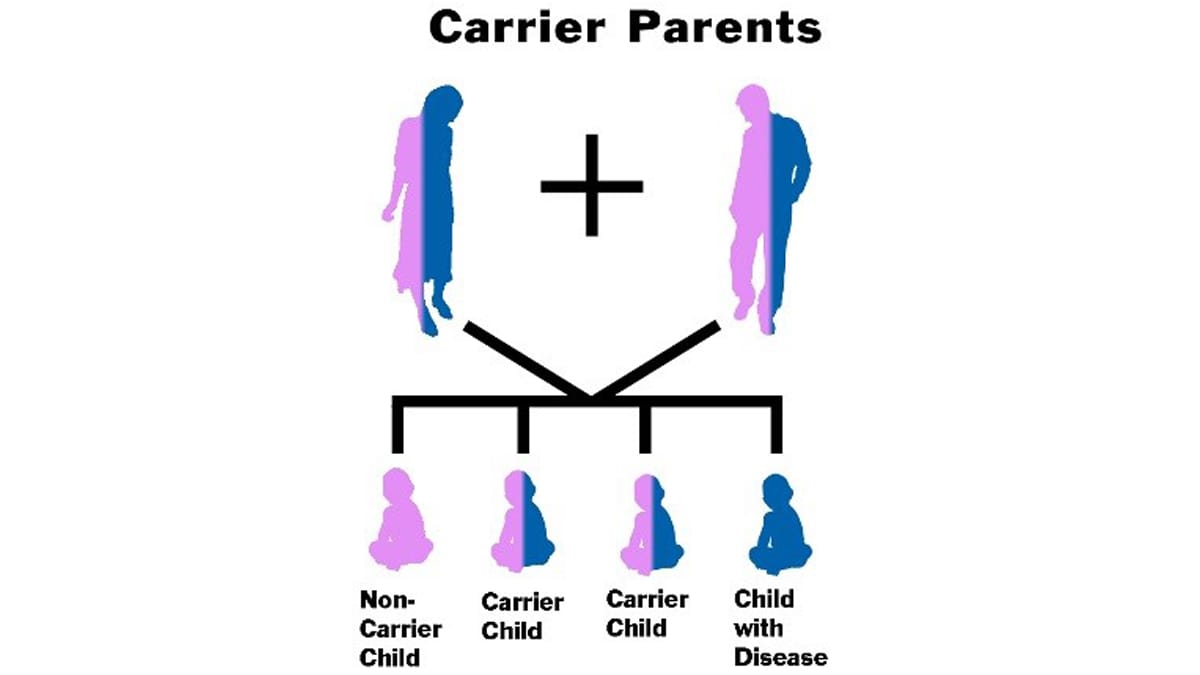
Parents can have a baby with a genetic condition even though neither parent has it. Babies inherit two copies of each gene, one from each parent. Some genetic conditions only occur if both copies of the gene related to the condition do not work properly. In cases like these, each parent has one copy of the gene that works properly and one that does not. If the baby inherits both non-working copies of the gene, the baby has the condition. The parents are "carriers" for the condition, meaning that they don't have the condition but can have children with it.
Your healthcare provider might ask if you want to have a type of screening called carrier screening. Carrier screening checks if you are a carrier for certain common genetic conditions. If one of these genetic conditions runs in your family, you might need different or additional testing. Current guidelines1 recommend
- Offering carrier screening for cystic fibrosis and spinal muscular atrophy to all women
- Checking all women for hemoglobinopathies (blood disorders that affect red blood cells) such as sickle cell disease and thalassemia
- Offering fragile X testing to women with a family health history of fragile X syndrome or intellectual disability suggestive of fragile X syndrome
- If either partner is of Ashkenazi, Eastern European, or Central European Jewish descent, offering carrier screening for genetic conditions that are more common in this population, such as Canavan disease
- Testing one partner first if both have this ancestry
- If either partner is of Ashkenazi, Eastern European, or Central European Jewish; French-Canadian; or Cajun descent, offering screening for Tay-Sachs disease
- Testing one partner first if both have this ancestry
- Having carrier screening done before pregnancy when possible
If the results show that you are a carrier for a genetic condition, share this information with your family members. Your partner will need to have carrier screening to know if together you could have a baby with the condition.
Collecting family health history
- Gather family health history information before seeing your healthcare provider.
- Collect family health history using the online tool, My Family Health Portrait.
- Tell your healthcare provider if you have any family members with a genetic condition, chromosomal abnormality, developmental disability, birth defect, or newborn screening disorder. Let them know about family members with other problems at birth or during infancy or childhood. This is especially important if you have had a previous pregnancy or child affected by one of these conditions.
- Talk to affected family members or their caregivers, if possible, to find out their specific diagnoses. Ask for a copy of their genetic or diagnostic test results, if any, to share with your healthcare provider.
- Alert your healthcare provider if you have had a previous preterm birth, miscarriage, stillbirth, or a child who died from sudden infant death syndrome (SIDS).
Follow your healthcare provider's recommendations. For example, having a previous pregnancy or child affected by spina bifida or anencephaly might change what your healthcare provider recommends. Your healthcare provider might recommend taking a higher than normal dose of the B vitamin, folic acid, before and during pregnancy.
This page was last updated on this date. Updates may include minor edits, image changes, or other modifications to page content.
The information on this page was last reviewed by subject matter experts to ensure accuracy.
- American College of Obstetricians and Gynecologists. Committee Opinion No. 691: Carrier screening for genetic conditions. Obstet Gynecol. 2017;129(3):e41-e55.