


At a glance
Colorectal Cancer Control Program award recipients have found innovative ways to increase screening in their communities.
Patient navigator helps patients get colonoscopies in Iowa
Sometimes growths that aren't normal, called polyps, form in the colon or rectum. Over time, some polyps may turn into cancer. A colonoscopy is a screening test that looks at the entire colon and rectum to see if a person has polyps or colorectal (colon) cancer. During a colonoscopy, polyps can be removed before they turn into cancer.
Some patients with low incomes have a hard time going to their colonoscopy appointment. This may happen for many reasons:
- They don't have a ride to the appointment.
- They don't have someone to be with them during and after the appointment. This is needed because patients are given medicine that makes them sleep during a colonoscopy. Patients need a caregiver to make sure they get home safely.
- Getting ready for the colonoscopy can be confusing and hard to do. Patients can only drink clear liquids on the day before the colonoscopy. They also have to drink a medicine that empties their colon so the doctor can see anything that isn't normal.
- They are afraid of being told they have colorectal cancer.
If a patient misses their colonoscopy appointment, the clinic may not let the patient reschedule it. The patient then has to schedule an appointment at another clinic. This makes it less likely that the patient will get a colonoscopy.
Patient navigator helps solve problems that cause missed appointments
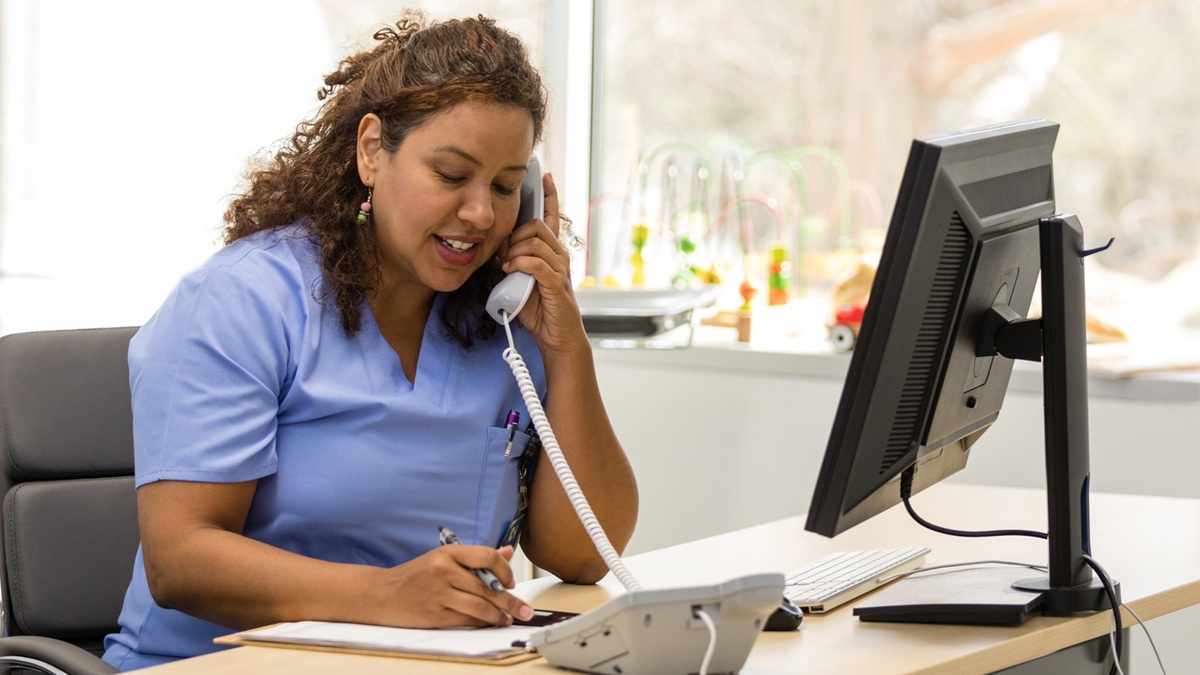
In 2023, only 18% of patients at the Community Health Center Southeastern Iowa who needed a colonoscopy got one. In response, a patient navigator at the health center began helping patients get colonoscopies. First, the patient navigator called patients who were told they needed a colonoscopy to find out if they had scheduled an appointment. A few days before the appointment, the patient navigator called patients again. The patient navigator asked patients if they had their medicine and knew how to get ready for the colonoscopy. The patient navigator made sure patients knew where and when their appointment was, had transportation, and had a person to go with them and take them home.
The patient navigator helped solve problems that could stop the patient from getting a colonoscopy. If a patient didn't have a ride to the appointment, the patient navigator asked the doctor if the patient could take a taxi. If the doctor approved, the patient navigator arranged for a taxi. Patients who didn't have someone with them at the appointment or at home afterward stayed at the doctor's office for 2 hours after their colonoscopy so they would be awake when they left.
In May through August 2024, the patient navigator helped 53 patients get their colonoscopy. Of these 53 patients, 44 completed the procedure and only 3 missed their appointment.
Partnerships and education increase screening in North Carolina
Colorectal cancer screening can prevent cancer and save lives. Preventing colorectal cancer or finding it early can lower health program costs. Treating colorectal cancer that is found at a late stage can cost 2 to 4 times more than treating cancer found in an early stage.
Many adults are not getting screened as recommended. In 2023, colorectal cancer was the fourth most common cancer and cause of cancer death in North Carolina. To increase screening and improve program services, the North Carolina Partnership to Increase Colorectal Cancer Screenings hosted a 2-day workshop for its health care partners. The workshop participants learned about motivational interviewing. This means asking questions that focus on the patient and encourage them to make a behavior change, such as getting screened for colorectal cancer. Participants also learned about tools and resources to help support screening services.
Two health systems, Blue Ridge Health and Kintegra Health, started sending text messages to educate patients about colorectal cancer screening and remind them about appointments. These health systems also used clinician education, motivational interviewing, and patient navigation to help improve their screening programs. Now, clinics are using electronic reminders and patient navigation to encourage patients to get screened.
The North Carolina Partnership to Increase Colorectal Cancer Screenings program worked with 17 clinics in 3 health systems. Clinics reported an average 10% increase in screening in the first year, and one clinic had a 25% increase. Through this project:
- 34,845 patients in North Carolina were screened.
- 233 follow-up colonoscopies were completed. A follow-up colonoscopy is done after a person has abnormal results on a stool test.
- 166 patients had polyps removed, including 14 that were precancerous.
- 2 patients were diagnosed with colorectal cancer and referred to treatment.
Creating strong partnerships and finding ways to help people get screened has increased colorectal cancer screening. This approach supports the program's long-term plans to prevent cancer or find it early. Over the next 5 years, the program plans to add 7 new clinics to the program each year.
South Carolina improves tracking of screening test use
Colorectal cancer screening can be done with different kinds of tests. AnMed Primary Care Williamston is a health care system in South Carolina. Some of its patients are screened for colorectal cancer using a stool test. In 2022, staff used a paper list to track when stool test kits were ordered, given to patients, and returned to clinics. The paper list also had information about sending reminders to patients. Only about half (52%) of patients returned their completed stool test kits on time. Staff found several problems with their system:
- Sometimes the information on the paper list was not correct or missing.
- Staff didn't know how many stool test kits were ordered and returned.
- Staff didn't know which patients needed to be contacted with reminders to return the stool test kit.
Clinic staff found a way to improve the tracking system for stool test kits. A computer system was set up to track stool test orders for patients and test kits that were completed and returned to the clinic. Now, staff can track which patients received a stool test kit but didn't return it, so they can send a reminder. The computer system can also create reports that show which patients are due for colorectal cancer screening. Doctors can review patient charts before their appointments and talk about screening with patients who are 45 or older.
Changes to the tracking system made a difference. In 2023, about 75% of patients completed and returned their stool test kits—a 23% increase in 1 year. AnMed Primary Care Williamston plans to continue using the computer system to track colorectal cancer screening and follow up with patients. Staff will review the process to make sure it continues to work.